SEMARANG — Universitas Negeri Semarang (UNNES) expanded access to higher education for international students from low- and lower-middle-income countries in 2025 by providing scholarships, tuition fee waivers, accommodation assistance, and living allowances. Through various international scholarship schemes, UNNES seeks to reduce the financial barriers that international students face in accessing higher education and pursuing their studies in Indonesia.
This commitment is reflected in UNNES Rector’s Decree No. B/948/UN37/HK.02/2025, dated 5 September 2025. Of the 22 international students awarded International Undergraduate Program (IUP) and NEXTShip scholarships for the 2025/2026 academic year, 15 students, or 68.2%, came from low- and lower-middle-income countries, based on the World Bank’s country income classifications applicable in 2025.
This assistance forms part of UNNES’s broader international scholarship provision. In September 2025, the university welcomed 48 new international students, 39 of whom received support through the IUP, NEXTShip, Developing Countries Partnership Scholarship (KNB), and The Indonesian AID Scholarship (TIAS) schemes.
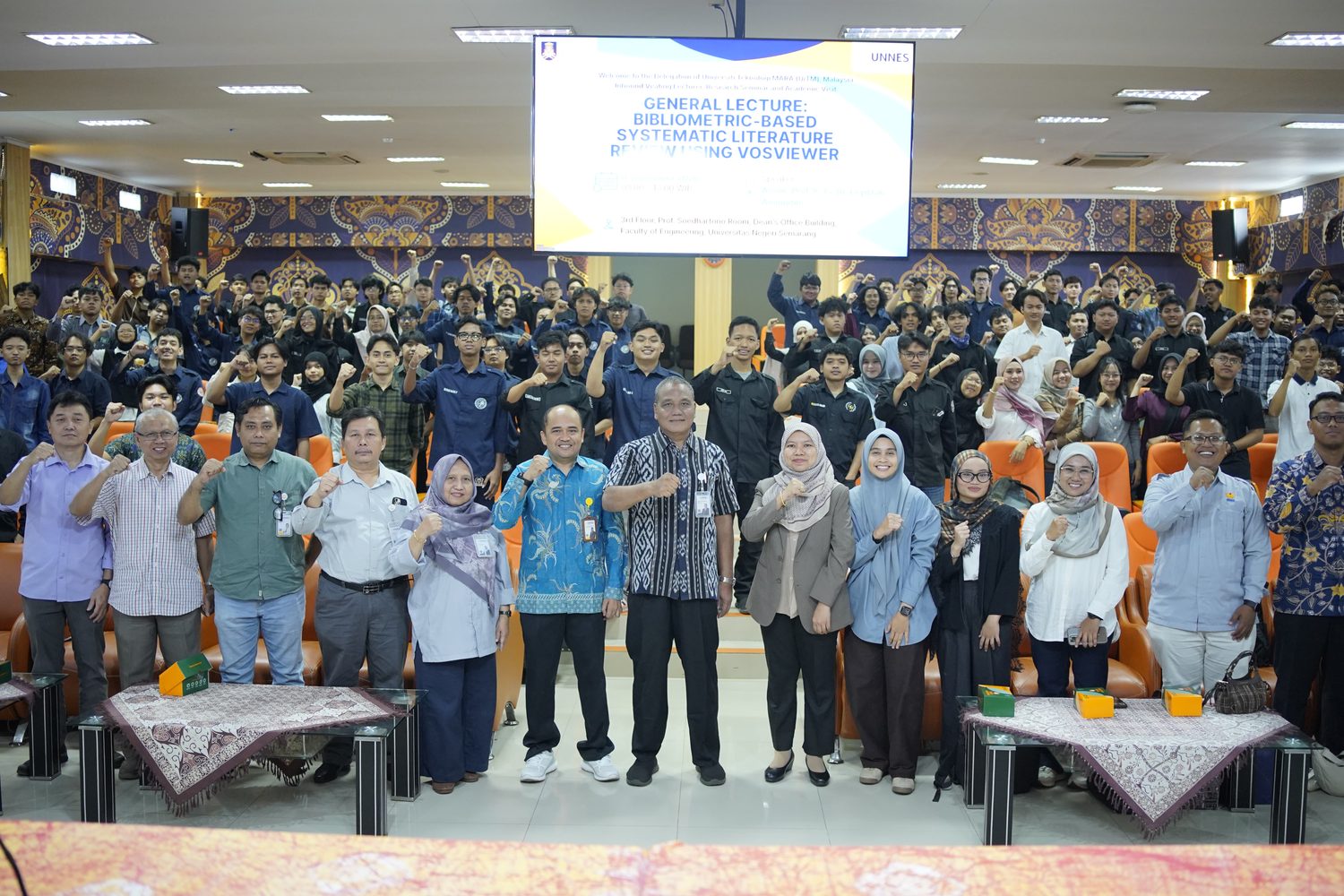
110 Active International Students from Diverse Countries
In 2025, UNNES had 110 active international students from various countries. They were enrolled in undergraduate, master’s, and doctoral programmes in fields including management, accounting, law, public health, civil engineering, informatics engineering, language education, development economics, and other disciplines.
These international students came from countries across Asia, Africa, Europe, and the Pacific region, including Timor-Leste, Kyrgyzstan, Thailand, Myanmar, Tajikistan, Kazakhstan, Nigeria, China, Pakistan, South Sudan, and Bangladesh.
The diversity of students’ countries of origin and academic disciplines reflects UNNES’s international reach. Financial assistance through various scholarship schemes is one of the university’s efforts to expand educational opportunities for students from diverse national and economic backgrounds.
Fifteen Scholarship Recipients from Low- and Lower-Middle-Income Countries
According to the appendix to Rector’s Decree No. B/948/UN37/HK.02/2025, 22 students received IUP and NEXTShip scholarships. Of these, 15 students came from nine countries classified as low-income or lower-middle-income economies.
They comprised one student from South Sudan, one from Sudan, one from Yemen, two from Myanmar, five from Kyrgyzstan, one from Bangladesh, one from Nigeria, two from Pakistan, and one from the Philippines.
The remaining seven recipients came from Kazakhstan and Thailand. This categorisation refers to the World Bank’s income classification for fiscal year 2026, which took effect on 1 July 2025.
Consequently, 68.2% of the IUP and NEXTShip scholarship recipients appointed by UNNES in September 2025 came from countries within these income groups.
The recipients pursued studies across various disciplines, including public health, management, chemical engineering, law, development economics, language education, information technology education, natural science education, curriculum development, and sports education.
Tuition Fee Waivers and Living Allowances
UNNES established the funding components for its international scholarships through Rector’s Decree No. T/725/UN37/HK.02/2025, dated 25 June 2025, concerning the IUP and NEXTShip scholarship components.
The support includes waivers for registration fees and tuition fees, known as Uang Kuliah Tunggal (UKT). Accommodation assistance, living allowances, visa support, and domestic arrival travel assistance are also available, subject to the applicable provisions and each recipient’s entitlements.
For undergraduate students, tuition fee waivers are provided for eight semesters, while master’s students receive support for a