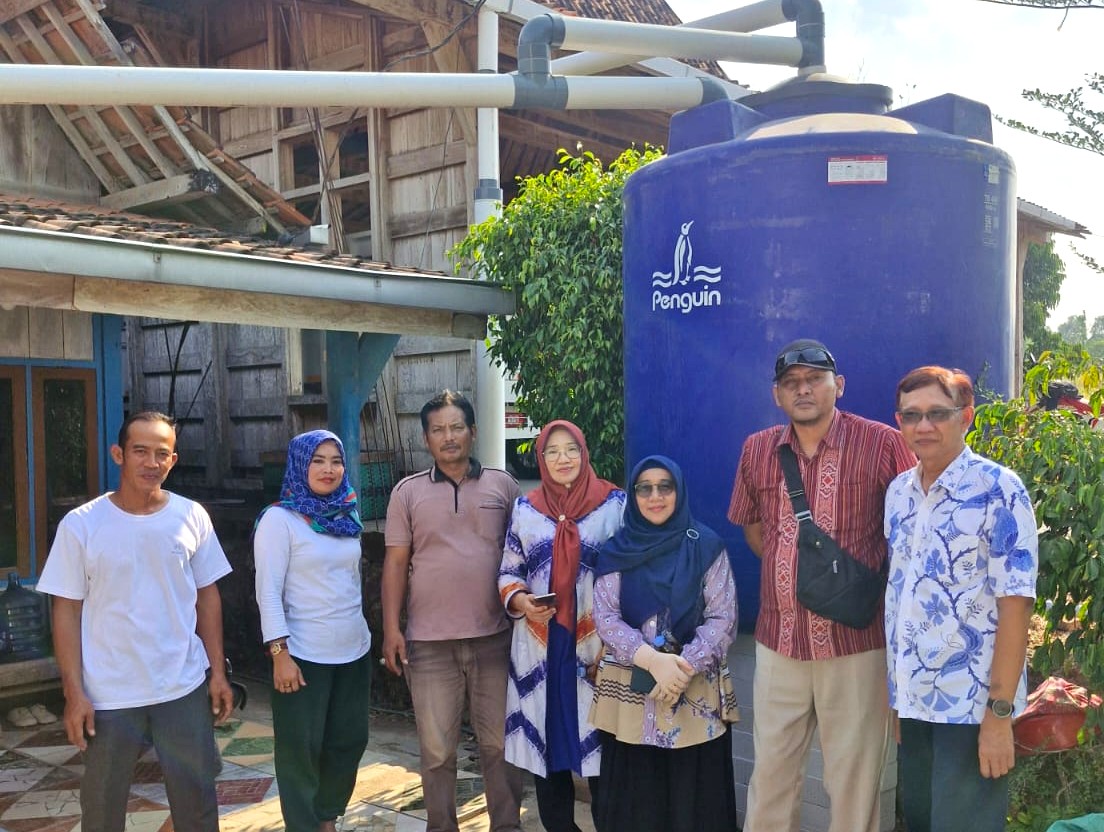
Universitas Negeri Semarang (UNNES) contributes to evidence-based policymaking through research, scientific assessments, and institutional collaborations with government agencies and public institutions. By connecting academic expertise with government planning and public-sector challenges, UNNES provides research-based recommendations to support policy development, improve public services, and strengthen institutional governance. These initiatives demonstrate the university’s role in translating scientific knowledge into practical contributions to regional and national policymaking.
Contributing Scientific Evidence to Central Java Biodiversity Policy
In 2025, UNNES contributed to the formulation of the Central Java Biodiversity Management Master Plan (Rencana Induk Pengelolaan Keanekaragaman Hayati or RIP-KH) through scientific consultation, research-based recommendations, and engagement with government agencies and other stakeholders.
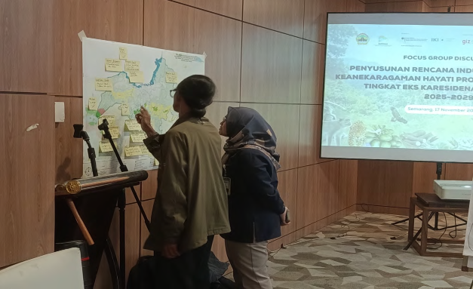
One of the activities took place during a technical consultation for the former Semarang Residency area on November 17, 2025. The consultation brought together representatives of government institutions, universities, nongovernmental organizations, and other stakeholders to discuss biodiversity challenges, conservation priorities, and regional management strategies.
UNNES academics contributed scientific perspectives to the policy formulation process. Rifa’atunnisa was invited as a discussion formulator and respondent, providing scientific input and recommendations on biodiversity management priorities. The contributions addressed the importance of strengthening biodiversity data, identifying environmental pressures, establishing ecological baselines, and developing monitoring and evaluation approaches to support adaptive management.
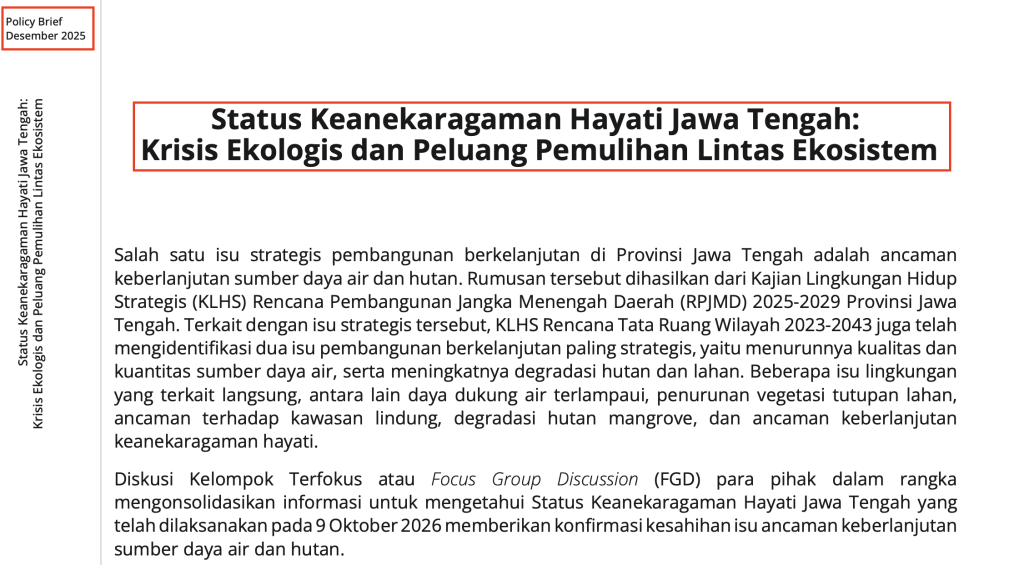
The broader assessment and consultation process was also documented in the December 2025 policy brief, Status Keanekaragaman Hayati Jawa Tengah: Krisis Ekologis dan Peluang Pemulihan Lintas Ekosistem. The publication presents biodiversity challenges, governance issues, and opportunities for ecosystem recovery, providing a policy-oriented reference for regional conservation planning.
Through this engagement, UNNES connected scientific expertise with the regional government’s biodiversity policy development process, demonstrating the contribution of academic research to evidence-informed environmental governance.
Developing Policy Recommendations for Community-Based Mental Health Services in Temanggung
UNNES also contributed to local public policy through collaborative research on community-based mental health services in Temanggung Regency, Central Java.
The initiative was developed by lecturers from the Faculty of Social and Political Sciences (FISIP) UNNES, Eka Yuniati, Fadly Husain, and Atika Wijaya, in collaboration with Universitas Gadjah Mada (UGM). Field activities took place from August to September 2025 and involved engagement with stakeholders responsible for supporting people with mental health conditions, including community-based rehabilitation institutions and local health service providers.
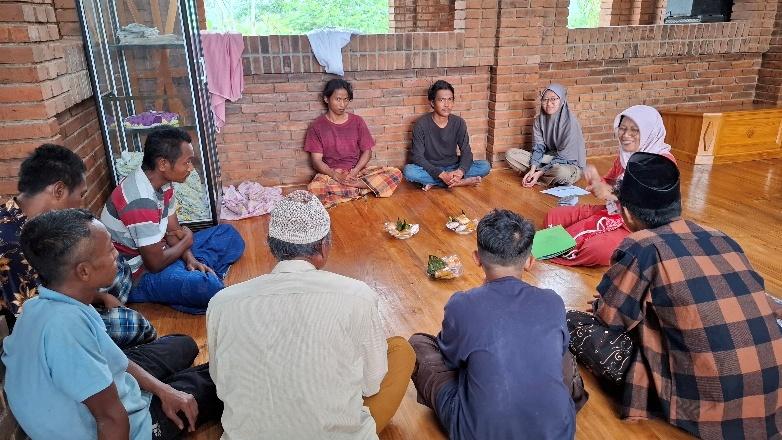
The research examined the role of community institutions, particularly rehabilitation boarding schools, in supporting people with mental health conditions. It identified the need for stronger coordination between local government, community health centers (Puskesmas), village authorities, mental health cadres, religious leaders, and community-based rehabilitation institutions.
Based on these findings, the research team developed policy recommendations for the Temanggung Regency Government. These included establishing mental health coordination forums at the sub-district level, strengthening referral mechanisms, improving psychosocial training for rehabilitation caregivers, clarifying cooperation procedures between formal health services and community institutions, and expanding social service support.
The recommendations aim to improve coordination among stakeholders and integrate community-based initiatives into local public service systems. This research demonstrates how collaboration between universities can generate practical policy inputs to address regional social and public health challenges.
Strengthening Legal Research through Collaboration with PPATK
At the national level, UNNES expanded its policy-oriented research partnerships through cooperation between its Faculty of Law (FH) and the Financial Transaction Reports and Analysis Center (PPATK).
On July 3, 2025, FH UNNES and PPATK signed an Implementation Agreement (IA) to support data collection for research and legal studies. The collaboration focuses on strengthening efforts to prevent and combat money laundering and terrorist financing in Indonesia.
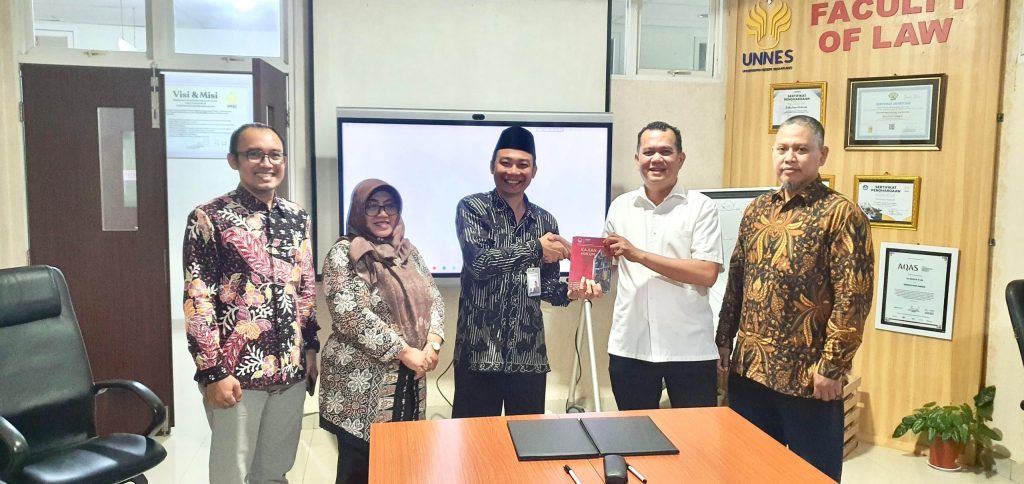
The agreement provides an institutional basis for academic involvement in research requiring relevant data and legal analysis. Through this collaboration, FH UNNES contributes academic expertise to examining legal and financial governance challenges, while supporting PPATK’s efforts to strengthen evidence-based approaches to financial crime prevention.
The partnership is expected to generate comprehensive legal studies and strategic policy recommendations for PPATK. It also illustrates the role of universities in supporting national institutional development through research collaboration with government agencies.
Exploring Future Research Partnerships with Batang and Kendal Regency Governments
In addition to established research-related collaborations, UNNES continued to expand opportunities for policy-oriented research with regional governments in 2025.
On July 12, 2025, the Faculty of Law UNNES initiated discussions with the Batang Regency Government. The meeting involved the Regent of Batang, M. Faiz Kurniawan, and regional government officials. Discussions explored potential cooperation in education, research, community service, legal assistance, research-based policy formulation, and capacity-building for government personnel.
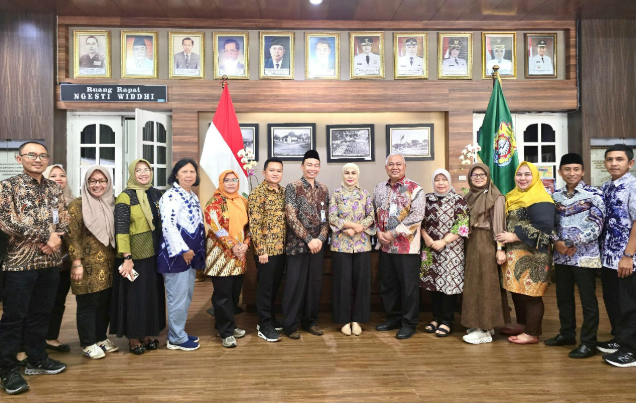
A similar initiative took place on July 25, 2025, when the Faculty of Law and the Institute for Research and Community Service (LPPM) UNNES visited the Kendal Regency Government. The meeting, attended by the Regent, Regional Secretary, and relevant heads of regional government agencies, explored opportunities for collaboration in legal studies, public policy advocacy, research, community service, and human resource development.
These engagements represent initial steps toward establishing research partnerships with the two regional governments. They demonstrate UNNES’s efforts to expand academic contributions to regional legal development and evidence-informed policymaking.
Advancing Evidence-Based Governance through Research Collaboration
Through its 2025 initiatives, UNNES demonstrates several ways in which university research and academic expertise can contribute to public policymaking. Its involvement in Central Java’s biodiversity policy formulation connects scientific assessments with regional conservation planning, while the collaborative mental health research in Temanggung provides practical recommendations for strengthening local public services.
Furthermore, the Implementation Agreement with PPATK establishes a formal framework for research and legal studies supporting national financial governance. Engagements with the Batang and Kendal Regency Governments also open opportunities for future research partnerships addressing regional policy and legal challenges.
Together, these initiatives illustrate UNNES’s commitment to connecting academic research with government priorities and public-sector needs. By providing scientific evidence, policy recommendations, and research collaboration, UNNES contributes to more responsive, accountable, and evidence-informed governance, supporting Sustainable Development Goal 16 (Peace, Justice and Strong Institutions).