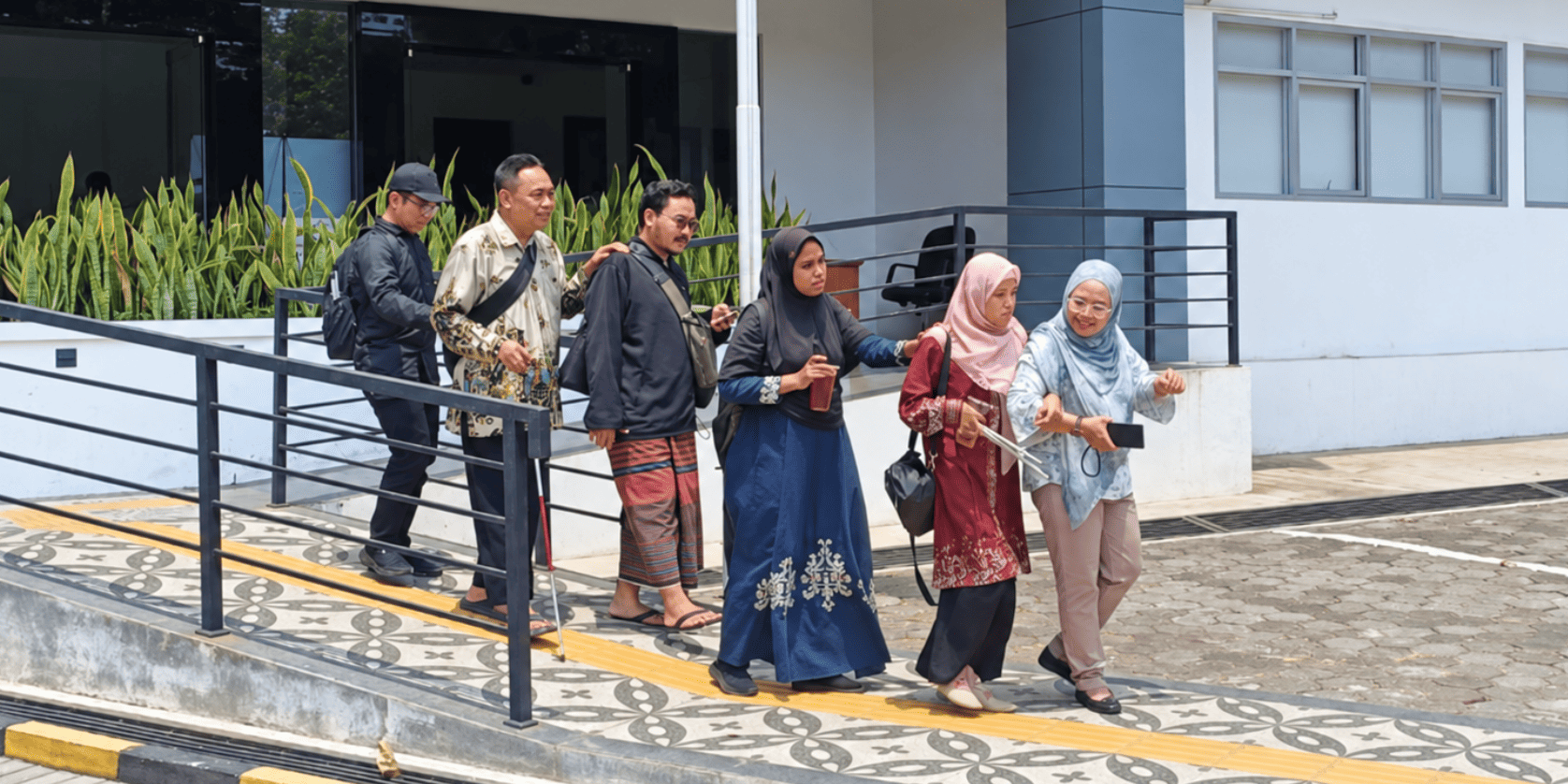
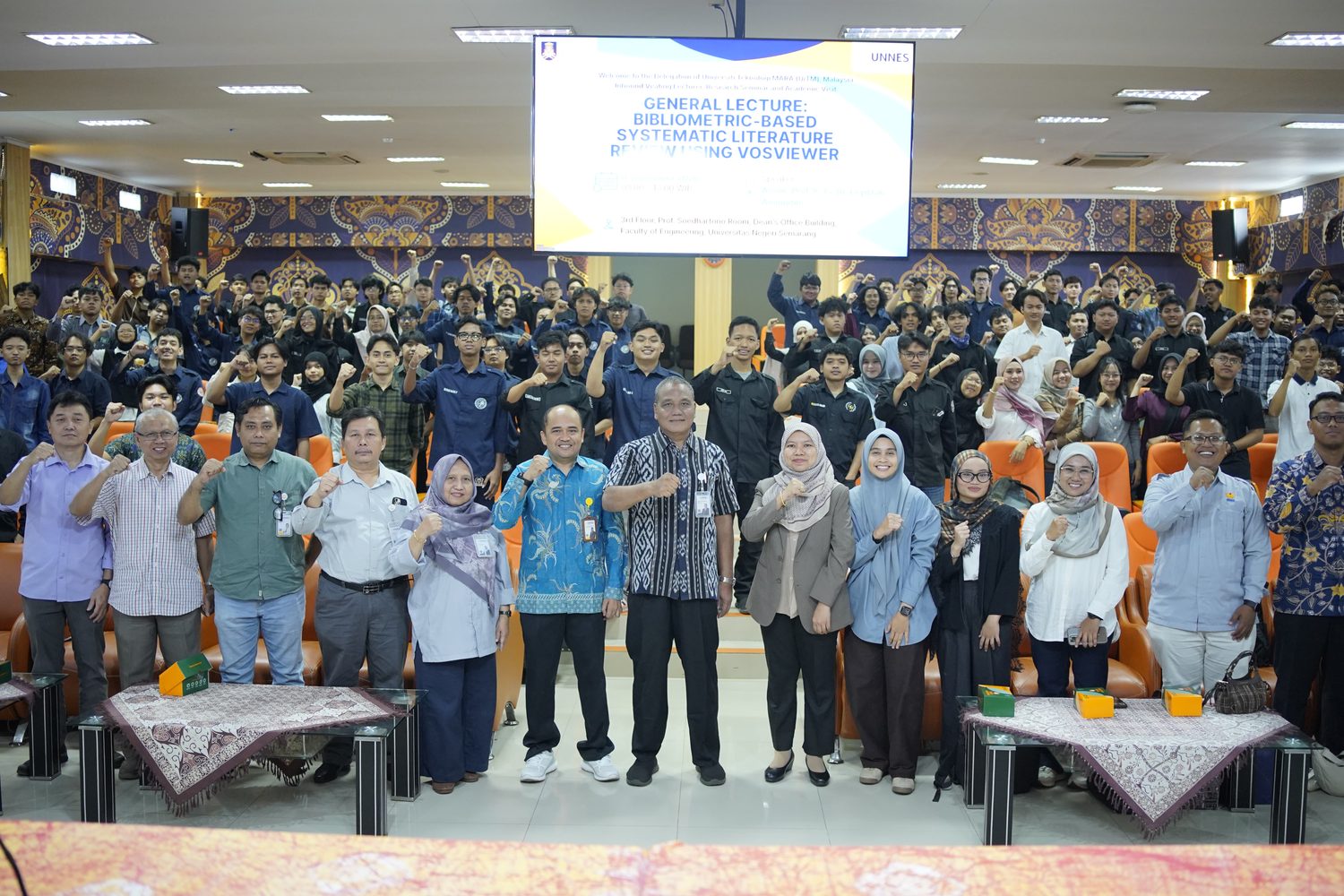
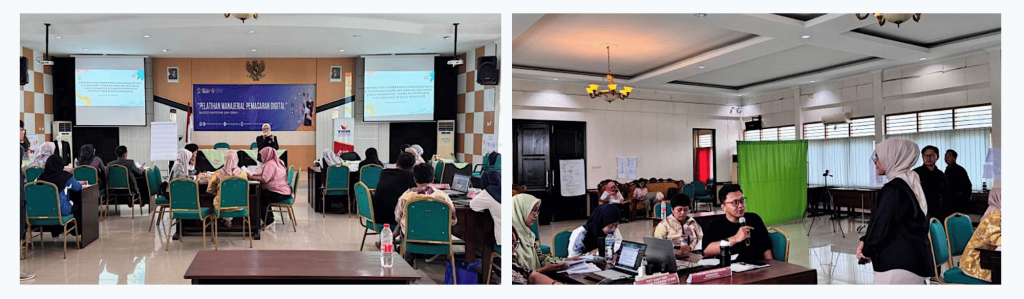
Universitas Negeri Semarang (UNNES) organizes ad hoc vocational training (54 programs) and programmed annual executive education (39 programs) in 2025 at the university for the general public, including those not attending the university, domestic and international: community members, teachers, company executives, law enforcement officers, government staff, and vocational high school students. Ad hoc programs include vocational training on recent topics such as resilience to prevent self-harm (June 12), deep learning for English teaching (July 27 – August 3), digital marketing management (June 18), reproductive health (June 14, 2025), and office document management (January 17). Programmed executive education includes annual programs like Brevet tax training and certification (May 10-31), Test of Proficiency in English Language preparation (June 4-5), PEKERTI instructional skills building (July 21-15), AA applied approach training (September 23-26), and international summer course (January 3-13, June 18-20). Ad hoc vocational training and programmed executive education are promoted through the UNNES website and social media, allowing the general public to register for the events.
In support of Sustainable Development Goal 4 (SDG 4), which aims to ensure inclusive and equitable quality education and promote lifelong learning opportunities for all, UNNES actively extends its educational services beyond enrolled students. As part of its mission as a conservation and inclusive university, UNNES regularly organizes these programs. These programs are designed to enhance professional skills, community empowerment, and global collaboration, ensuring that education at UNNES remains accessible to everyone regardless of institutional affiliation.
Open to General Public
UNNES’s open education initiatives cater to a diverse range of participants. The programs include both domestic and international participants, reflecting UNNES’s growing role as a center for lifelong learning. By hosting these open courses on campus and through its outreach initiatives, UNNES bridges academic knowledge with practical skills that address real-world challenges in professional, industrial, and social contexts.
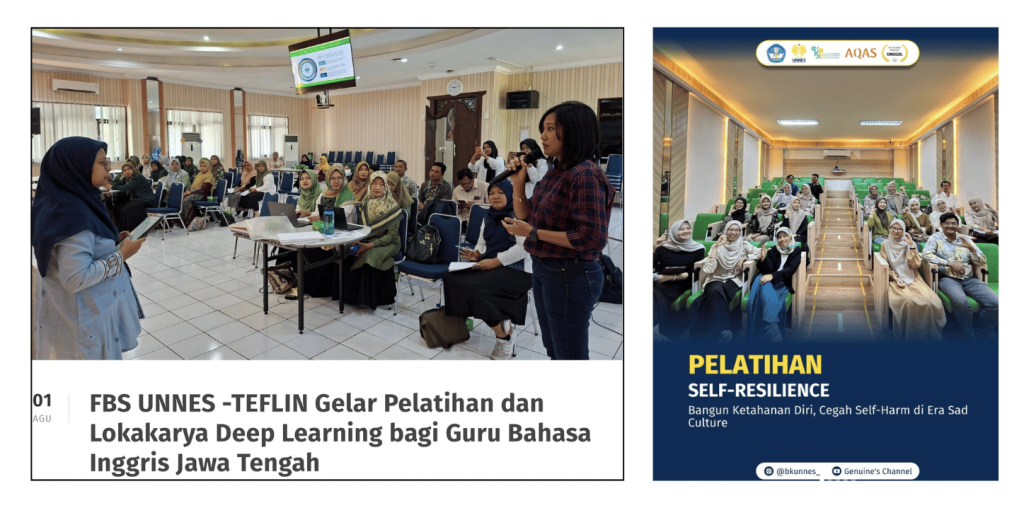
English teachers in Central Java, for example, register as participants in a training and workshop on deep learning for English teaching (July 27 – August 3, 2025), where they learn how to implement deep learning in the current curriculum policy as they create lesson plans and instructional materials towards fulfilling mindful, meaningful, and joyful English learning.
Ad hoc vocational training on resilience to prevent self-harm (June 12, 2025) is also open to the public for registration. Among the attendees are counselors, psychologists, young activists, and the school management team. The training is to address current issues on self-harm cases in educational institution settings. Skills for building self-resilience and recalling them when needed are explained and practiced in the program.
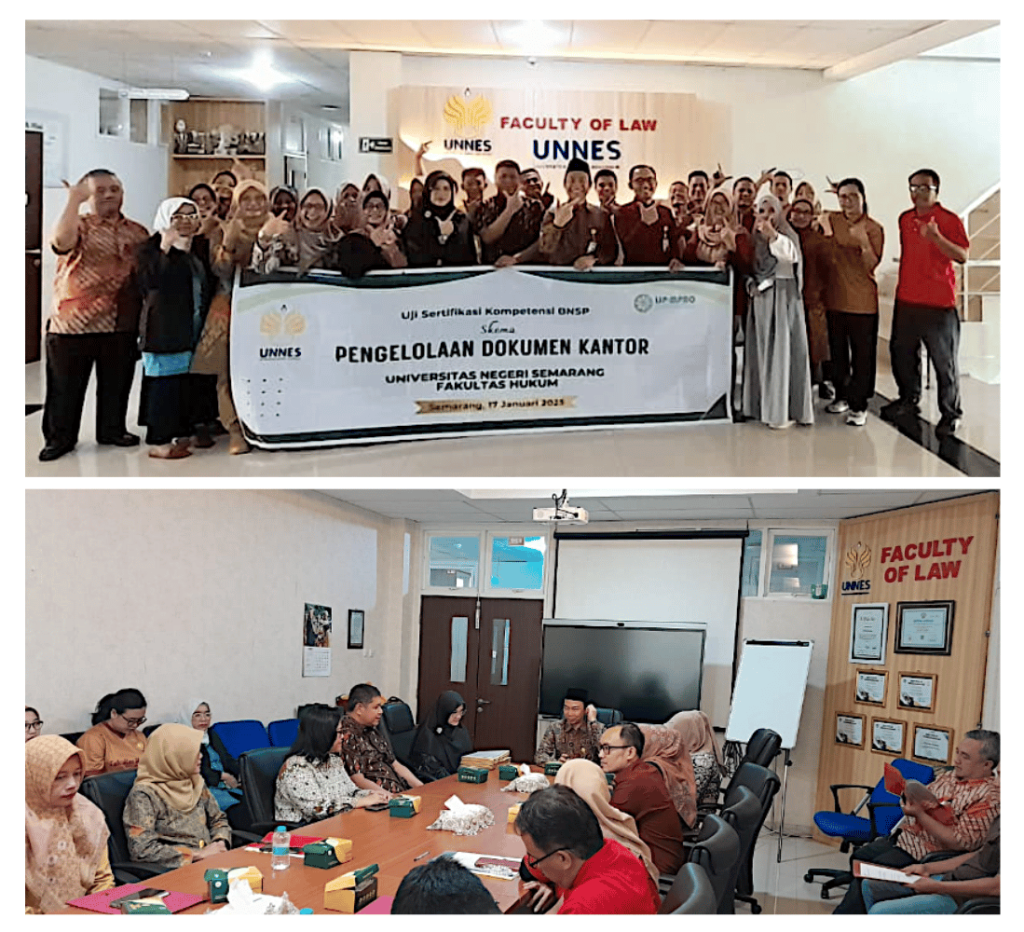
Gunungpati government officials register for the ad hoc vocational training on office document management (January 17, 2025). They develop practical skills in organizing, storing, and systematically retrieving office documents. The training helps Gunungpati government officials maintain accurate records and support more efficient administrative services. The skills strengthen their professional credibility and demonstrate their ability to manage office documents effectively.
Ad Hoc Vocational Training
The ad hoc vocational training and programmed executive education cover a wide array of topics that are both locally relevant and globally applicable. Subjects include finance, psychology and counseling, waste management, taxation, national security, culture, and eco-conservation. Each topic is carefully designed to meet the evolving needs of participants and society, with a focus on skill-building, innovation, and sustainable development. This diversity of themes ensures that participants—from government workers to community entrepreneurs, for example- can apply the knowledge gained directly to their respective fields.
A number of notable programs highlight UNNES’s commitment to inclusive and impactful learning within diverse themes. For example, digital marketing management training (June 18, 2025) focuses on empowering young entrepreneurs to level up their digital advertising, growth hacking, and structured outreach strategies, addressing the recent need to develop young entrepreneurs into business owners.
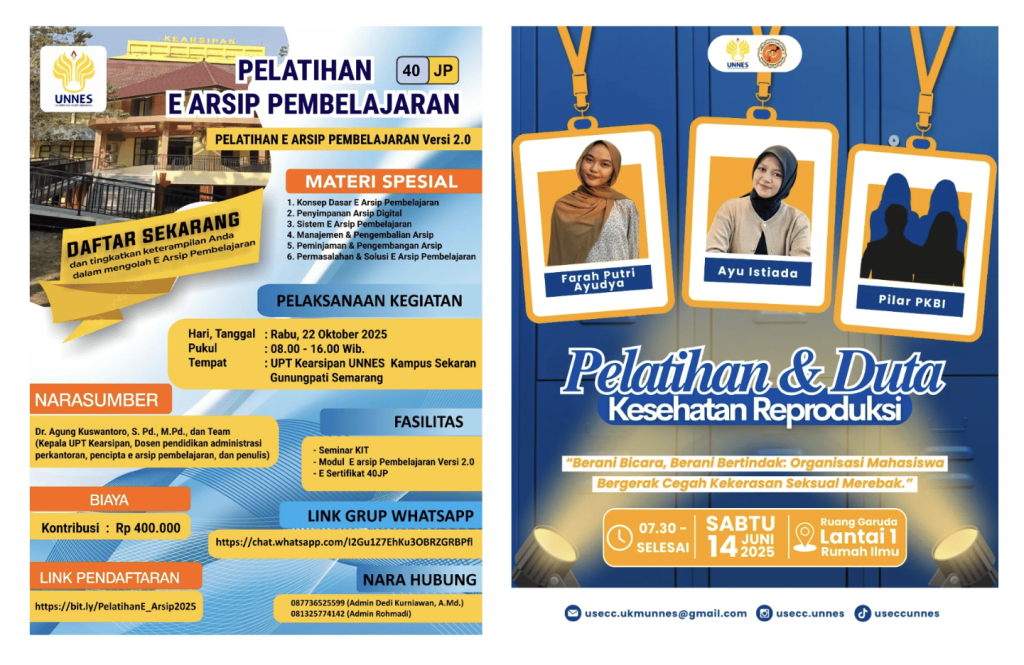
Training on electronic archives for learning (October 22, 2025) helps participants develop practical skills in storing, organizing, and retrieving digital learning records. The training addresses the urgent needs of educational institutions, which are increasingly aware of the importance of archiving today. The participants learn to manage archive access, borrowing, and returns more efficiently. These skills help them maintain reliable records and improve administrative support for teaching and learning. Registered participants come from different educational institutions across 10 cities in Java (librarians, school management teams, teachers, university staff, government officials).
The reproductive health training to become a reproductive health ambassador (June 14, 2025) answers the call to raise awareness of sexual abuse among young people. A group of young activists, high school students, high school counselors, psychologists, and health officials register for the program. In this training, participants strengthen their understanding of reproductive health and sexual violence prevention. They develop the confidence to discuss sensitive issues responsibly and guide peers towards appropriate support. As reproductive health ambassadors, the participants can promote awareness, respectful relationships, and a safer campus environment.
Programmed Annual Executive Education
UNNES hosts annual executive education programs across various fields, attracting the general public each year to receive training for purposes such as career preparation, professional development, or certification. Some of the programmed annual executive education programs are listed below.
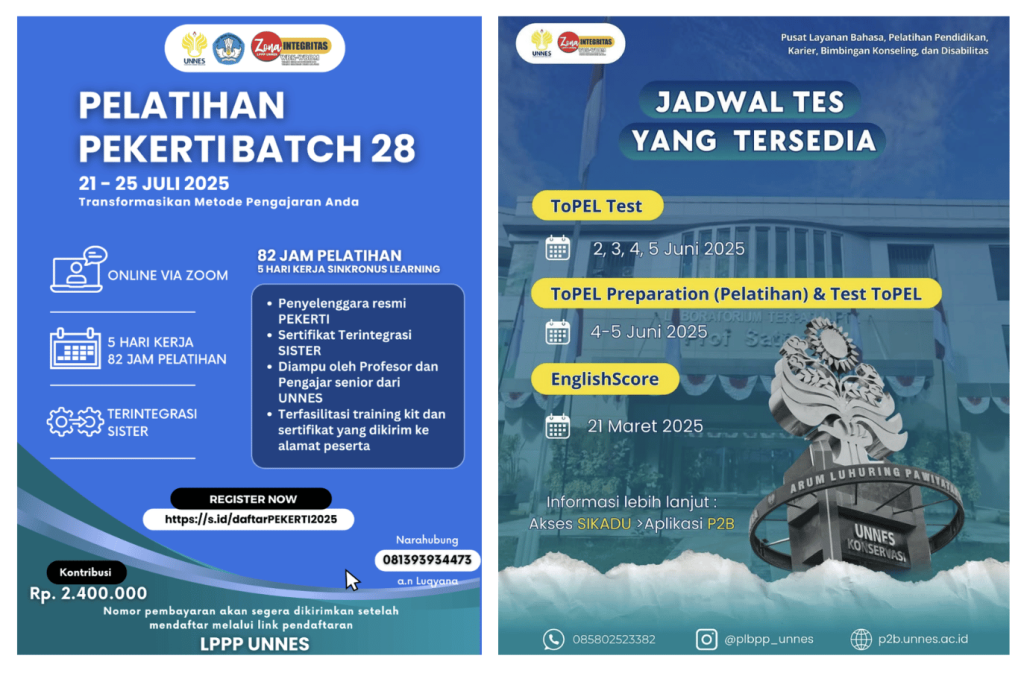
Participants in PEKERTI instructional skills training (July 21-25, 2025) strengthen their skills in planning, delivering, and evaluating university teaching. Participants are faculty members from various universities in Indonesia. They learn to design more engaging lessons and select teaching methods that support student learning. These skills will help them improve classroom practice and develop their professional competence as lecturers.
ToPEL (Test of Proficiency in English Language) preparation training (June 5-6, 2025) attracts a wide range of participants, including those seeking jobs, schools, and scholarships. Participants develop English language skills and become familiar with the ToPEL test format. Guided preparation helps them identify areas for improvement and approach the test with greater confidence. Stronger English proficiency can support their academic studies, professional communication, and career development.
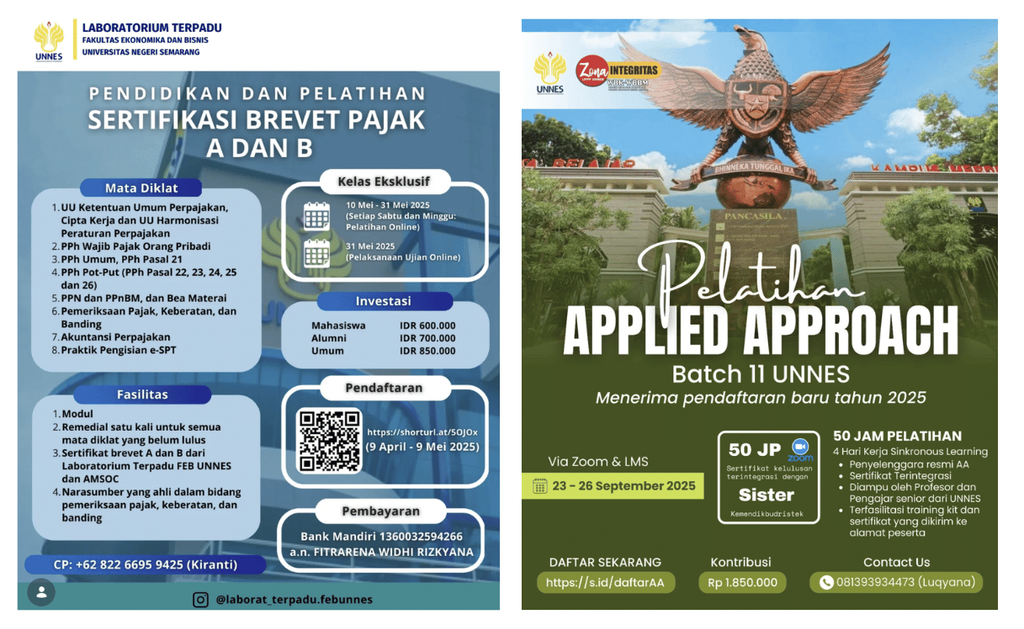
The Brevet A and B Tax training (May 10-31, 2025) is attended by participants (entrepreneurs, school administrators, company staff, university graduates, teachers, university staff) seeking practical knowledge of Indonesian tax regulations and procedures. In the training, they develop skills in calculating taxes, preparing tax reports, and completing electronic tax forms. The training teaches competencies that help them manage tax responsibilities more accurately and prepare for work in accounting and taxation. The Brevet A and Brevet B tax certification programs are open to the general public, helping individuals and professionals gain national certification in taxation and improve financial literacy.
The Applied Approach training (September 23-26, 2025) participants who are the university faculty member deepen their ability to design effective courses, learning materials, and assessments. They learn to apply teaching approaches that encourage active participation and meaningful learning. These skills help them improve teaching quality and respond more effectively to students’ learning needs.
International Programmed Annual Executive Education
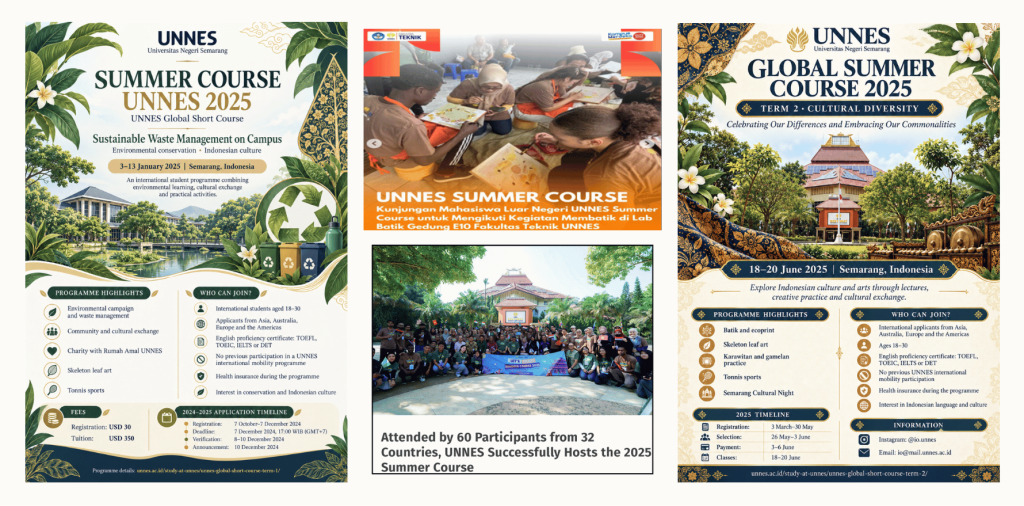
Expanding beyond national borders, UNNES has also hosted international participants through its summer course programs. In 2025, a summer course brought together 60 international participants from 32 countries (including Pakistan, Tanzania, Egypt, Myanmar, Sri Lanka, Nigeria, Yemen, India, Bangladesh, Somalia, Sierra Leone, Afghanistan, Algeria, the Philippines, Madagascar, Kazakhstan, Japan, South Korea, Palestine, Papua New Guinea, among others).
This diversity is the spirit of UNNES in embracing cultural differences and encouraging cross-cultural understanding among international students. This program focused on Indonesian culture and art, sustainable waste management on campus, hands-on learning experiences in traditional dance, gamelan music, batik making, and eco-printing. These activities not only promote cultural understanding but also serve as an avenue for global collaboration and educational diplomacy, showcasing UNNES’s leadership in integrating local wisdom with international learning.
Through its comprehensive executive and vocational training initiatives, UNNES continues to embody the principles of SDG 4 by providing lifelong learning opportunities for all. Its programs connect knowledge, culture, and practice—empowering individuals to improve their professional and personal competencies while contributing to sustainable community development. By offering open, inclusive, and globally connected learning experiences, UNNES reinforces its role as a university dedicated to education without boundaries, ensuring that learning remains accessible, practical, and transformative for everyone.