Enhancing National Competitiveness: Synergizing Business Incubation and Intellectual Property Rights in UNNES’ Excellence Spin-Off Industry
SEMARANG — As Universitas Negeri Semarang (UNNES) strengthens its position as a Legal Entity State University (PTN-BH), the commercialization of academic research and innovation is entering a new phase. The university is moving beyond its traditional role as a center for scientific publications and patents toward transforming academic innovations into commercially viable business entities. Through a systematically developed entrepreneurship ecosystem, UNNES actively converts the intellectual achievements of its academic community into legally established spin-off companies capable of competing in commercial markets.
This strategic initiative demonstrates UNNES’ commitment to supporting national economic independence through a knowledge-based economy. The development of more than a dozen spin-off enterprises reflects the university’s growing capacity to translate academic expertise into commercially applicable innovations across various industries, including appropriate technology manufacturing, applied information technology, herbal formulations, food processing, and agrotechnology.
The Central Role of Business Incubation: Transforming Innovative Products into Independent Industries
The development of spin-off enterprises at UNNES is closely linked to the university’s business incubator and institutional entrepreneurship development units. Business incubation provides structured support throughout the innovation development process, helping researchers transform laboratory-scale innovations with high Technology Readiness Levels (TRLs), locally known as Tingkat Kesiapterapan Teknologi (TKT), into commercially viable products with sufficient Market Readiness Levels (MRLs).
Through structured incubation programmes, aspiring young entrepreneurs and academic researchers receive comprehensive mentoring and assistance in several key areas:
- Market Validation and Business Model Development: Transforming academic prototypes into Minimum Viable Products (MVPs) that respond to the needs of society and industry partners, including stakeholders from the business and industrial sectors (Industri, Dunia Usaha, dan Dunia Kerja or IDUKA).
- Management Acceleration and Access to Capital: Strengthening the professional financial management, operational capabilities, and business governance of spin-off enterprises while facilitating access to investment opportunities and strategic partnerships.
- Product Standardization and Regulatory Compliance: Assisting enterprises in meeting applicable technical and commercial requirements, including product distribution permits, Indonesian Food and Drug Authority (BPOM) certification, Halal certification, and industrial safety standards.
Intellectual Property Rights Protection as the Foundation of Business Legality and Valuation
The development of UNNES’ spin-off industries is supported by a strong foundation of Intellectual Property Rights (IPR) protection. Close collaboration between the Business Incubator and the Intellectual Property Rights Center of the Institute for Research and Community Service (LPPM) helps ensure that incubated research innovations receive appropriate legal protection before entering commercial markets.
The expansion of spin-off enterprises at UNNES is also driven by active collaboration between lecturers and students in developing innovative products and technologies based on intellectual property. This cross-generational collaboration continuously generates innovations in business models and technological applications.
In business model development, the integration of academic research and market-oriented strategies has contributed to the establishment of franchise partnerships, integrated supply chain systems, and trade secret protection for formulations used in processed food products and agrotechnology.
Meanwhile, in the technological sector, university research teams develop digital system architectures and applied software supported by copyright protection for computer programmes.
Applied research conducted in university laboratories and workshops also contributes to innovations in engineering and the creative industries with significant commercial potential.
In engineering, collaboration between lecturers and students supports the development of appropriate technology machinery, automation instruments, and applied materials protected through patents and other relevant intellectual property mechanisms.
In the creative sector, artistic expression and product innovation are supported through industrial design registrations and copyright protection for lifestyle products, ergonomic furniture, and environmentally friendly herbal formulations developed through conservation-oriented research.
The active involvement of lecturers and students in protecting intellectual property across these strategic sectors strengthens business valuation and increases the commercial bargaining power of university-developed innovations among industry partners.
Through comprehensive legal protection and continuous mentoring from the Business Incubator and LPPM Intellectual Property Rights Center, academic innovations are prepared for independent and sustainable commercialization, reinforcing UNNES’ contribution to the national industrial ecosystem.
Applications of Intellectual Property Rights
The practical application of intellectual property protection is reflected in the research initiative entitled “Cultivation and Post-Harvest Processing Technologies to Strengthen Sustainable Agribusiness in Durian and Coffee Commodities.”
This intellectual property-based research has been translated into commercial applications in the processed food and beverage industry. The initiative emphasizes extraction quality, food safety standards, and the preservation of authentic local commodity characteristics while strengthening product competitiveness in commercial markets.
In the information technology sector, university research teams develop digital architectures and applied software protected by computer programme copyrights. This approach is further demonstrated through the e-Tourism intellectual property initiative, an integrated information system platform designed to support tourism destination data management and mapping through legally protected digital applications.
Applied research in university laboratories and technical workshops also produces engineering innovations with commercial potential.
In engineering, lecturer–student collaboration supports the fabrication of appropriate technology machinery, automation instruments, and applied materials protected through patents.

One example is the intellectual property associated with the Welding Method, which protects technical procedures and specifications for efficient metal joining. This innovation contributes to the development of manufacturing processes that prioritize structural safety, material durability, and industrial machinery performance.
Mapping UNNES’ Incubated and Intellectual Property-Based Spin-Off Industry Portfolio
The integration of intensive business incubation and intellectual property protection has supported the development of a diverse portfolio of spin-off enterprises at UNNES. These enterprises operate across four major industrial sectors.
1. Manufacturing, Furniture, and Engineering Materials
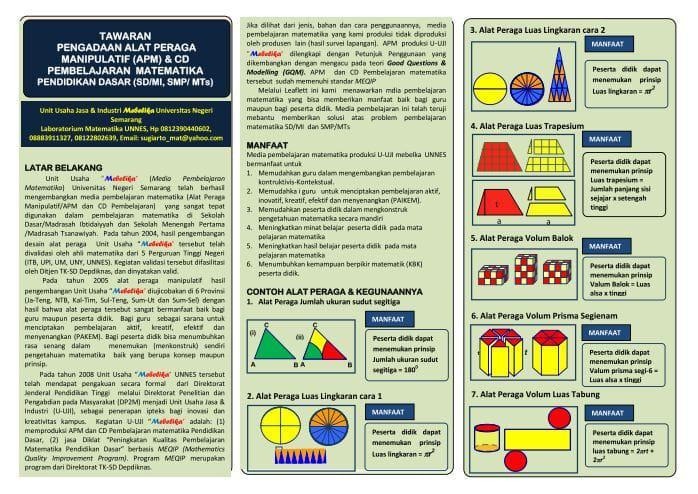
Mebelika
Mebelika is a design-oriented business specializing in modern ergonomic furniture supported by industrial design protection. By combining environmentally conscious prefabrication techniques with registered aesthetic designs, Mebelika aims to meet demand for high-quality locally manufactured interior products with export potential.
CV. Sekar Techno Park and CV. RITS
These two legally established business entities focus on manufacturing technical equipment, appropriate industrial machinery, and engineering materials. Supported by applied intellectual property, both enterprises contribute to meeting equipment and technological needs across the business and industrial sectors.
2. Information Technology and Smart Systems
Smartech
Smartech serves as a digital transformation enterprise specializing in software development, automation systems, and smart city and smart campus solutions.
Its technological development incorporates intellectual property protection for computer programmes, including application codes and software architectures. This protection supports the commercialization of digital platforms for institutional and private-sector clients.
3. Agrifood Processing and Creative Culinary Industries
Best Tea Nusantara
Best Tea Nusantara operates in the tea-based beverage industry through a business partnership model supported by trade secret protection and registered trademarks.
Business incubation assistance has supported its expansion into dozens of franchise outlets, creating opportunities for entrepreneurship and employment.
NanasQu and Co SPICE
NanasQu and Co SPICE develop processed pineapple products and ready-to-use spice formulations using research-based food processing approaches.
Intellectual property protection for product formulations, combined with food certification and quality standards, supports product consistency, safety, and competitiveness in modern retail markets.
Pentol Soultan and Uncrus
Pentol Soultan and Uncrus represent innovative culinary businesses that combine contemporary food products with brand development and hygienic production processes.
Through business incubator mentoring, these enterprises strengthen their product identity, quality management, and market positioning, particularly among younger consumers and broader community markets.
4. Herbal Products, Beauty, and Sustainable Lifestyle Industries
Moenta, Rayszava Mijun, and Gondo Arum Asri
These enterprises utilize local biological resources and conservation-based research to develop body care products, herbal formulations, and environmentally friendly lifestyle products.
Their product development is supported by intellectual property protection, while industrial incubation assistance facilitates product safety testing and compliance with applicable certification and distribution requirements.
Through these processes, university-developed herbal products are better positioned to compete with established commercial brands while promoting the sustainable use of local biological resources.
Strategic Impacts on the University Ecosystem and Regional Economy
The commercialization of research through incubated spin-off enterprises generates significant multiplier effects for both the university and the wider economy.
For UNNES as a Legal Entity State University (PTN-BH), the development of commercially viable spin-off enterprises strengthens its portfolio of Revenue-Generating Activities (RGA) and contributes to the achievement of institutional Key Performance Indicators (Indikator Kinerja Utama or IKU), particularly those related to the utilization of lecturers’ research and innovations by society and industry.
Beyond institutional benefits, these spin-off enterprises contribute to regional economic development by creating new employment opportunities, facilitating direct technology transfer, and strengthening collaboration between universities and industry.
Through the integration of business incubation, intellectual property protection, and research commercialization, UNNES demonstrates how higher education institutions can transform academic knowledge into practical industrial solutions.
These initiatives reinforce the university’s role in advancing a knowledge-based economy, promoting sustainable entrepreneurship, and strengthening Indonesia’s competitiveness through research-driven innovation.