Universitas Negeri Semarang (UNNES) continues to strengthen its commitment to sustainable energy management through regular energy reviews aimed at identifying buildings with high electricity consumption, detecting potential energy wastage, and implementing targeted efficiency improvements across university facilities. As part of its ongoing energy assessment, UNNES has identified three faculties as priority areas for energy efficiency improvements: (i) UNNES west building (ii) UNNES East Building and (iii) UNNES Training Center. These findings provide a basis for evaluating electricity consumption patterns and developing more effective energy management strategies within academic and administrative buildings.
The energy review process forms part of UNNES’s institutional commitment to achieving carbon neutrality by 2045, as established through Rector’s Decree No. B/3669/UN37/HK.02/2024. To ensure a more accurate assessment, UNNES recognizes the importance of evaluating electricity consumption in relation to building floor area, operational hours, occupancy, and equipment requirements. One relevant indicator is Energy Use Intensity (EUI), expressed in kilowatt-hours per square metre per year (kWh/m²/year). By comparing electricity consumption against building floor area, energy reviews can distinguish between buildings with naturally high energy demands and those exhibiting potentially inefficient energy utilization.
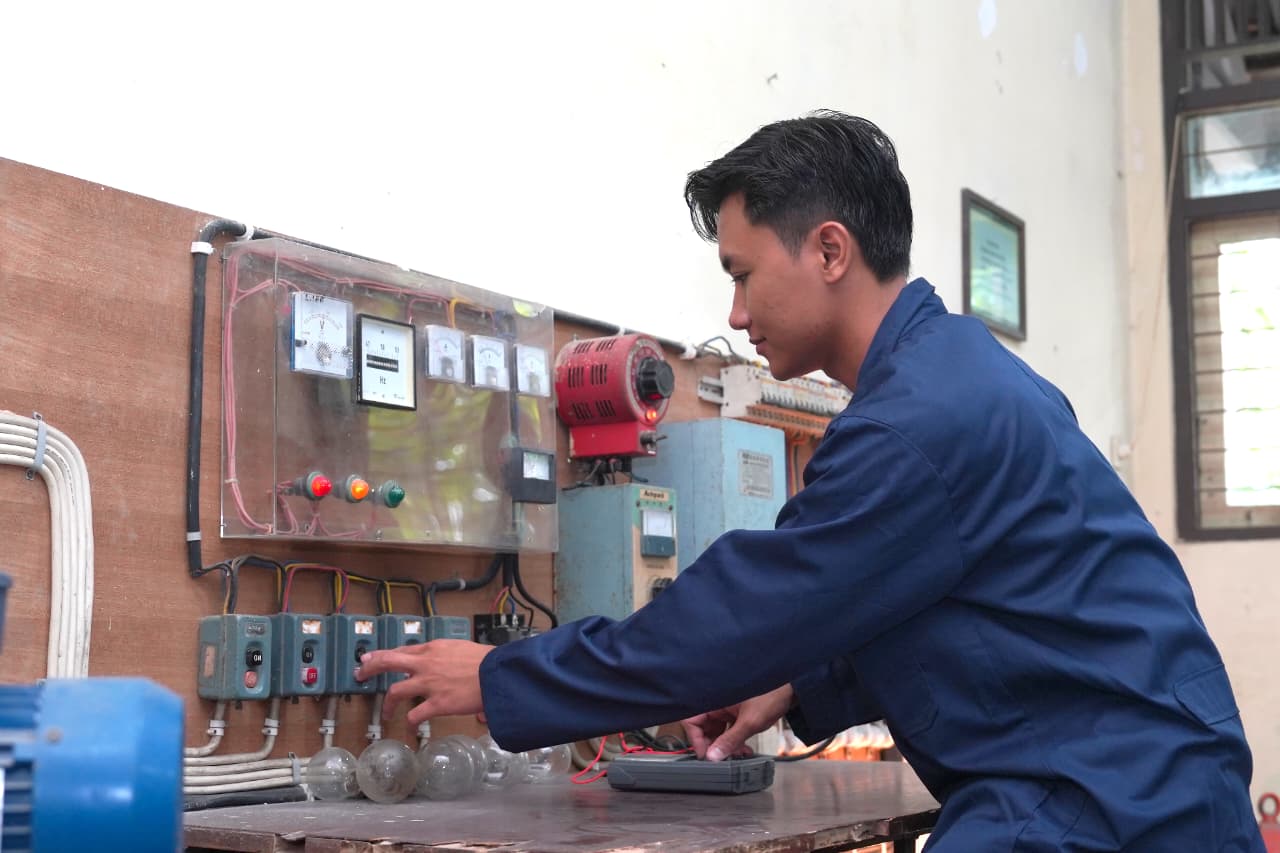
Based on the priority areas identified, energy efficiency evaluations can focus on electricity-intensive systems, particularly air conditioning, lighting, laboratory equipment, ventilation, and electrical appliances. Potential improvements include optimizing equipment operating schedules, reducing electricity consumption in unoccupied rooms, conducting regular maintenance, and gradually replacing conventional equipment with energy-efficient alternatives. These measures are consistent with UNNES’s institutional Green Building Policy.
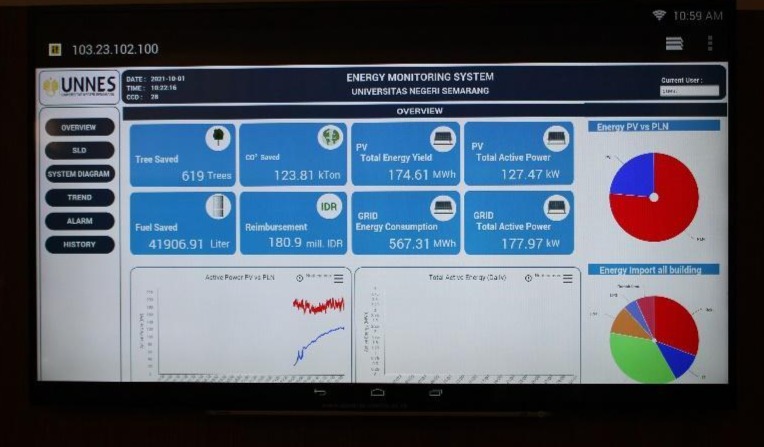
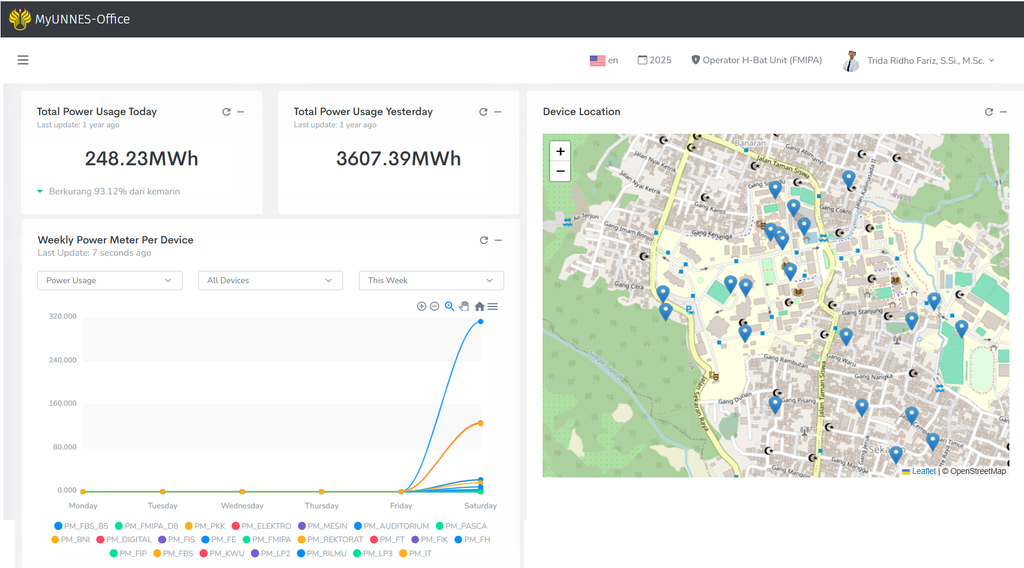
UNNES has also strengthened its energy management infrastructure through the installation of solar photovoltaic systems and online energy monitoring technologies across major campus buildings. These systems support the university’s broader efforts to monitor energy performance and improve the management of electricity consumption. Further integration of faculty-level electricity records, building floor-area data, and operational schedules can provide a more comprehensive basis for evaluating energy efficiency across university facilities.
Through systematic energy reviews, targeted efficiency improvements, and institutional energy management policies, UNNES continues to advance its commitment to Sustainable Development Goal 7 (Affordable and Clean Energy), SDG 11 (Sustainable Cities and Communities), and SDG 13 (Climate Action). These initiatives also reinforce the university’s long-term vision of achieving carbon neutrality by 2045 while creating a more energy-efficient and environmentally responsible academic environment.