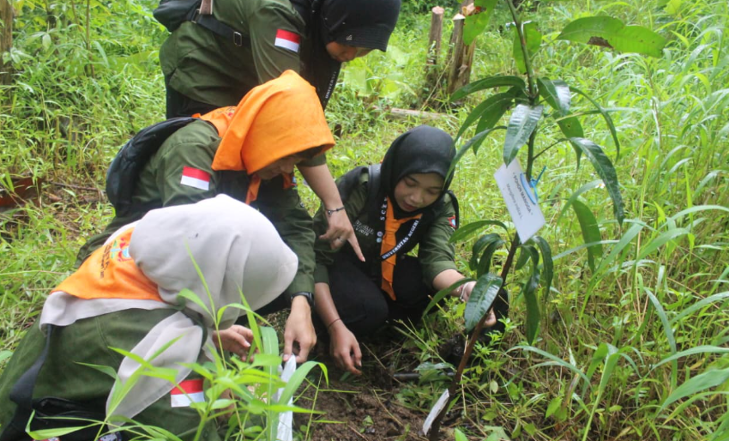



The Environmental Science Study Program, Faculty of Mathematics and Natural Sciences (FMIPA), Universitas Negeri Semarang (UNNES), implemented Project-Based Learning (PjBL) with a Case-Based approach in the Environmental Drainage course through a biopore installation project. This course is taught by Trida Ridho Fariz, M.Sc., and Putri Alifa Kholil, M.Ling., as a form of applied learning that is closely aligned with real-world environmental issues.
Unlike large-scale and demanding projects, this PjBL activity was designed as a micro project that is light, flexible, and engaging. Students were able to continue their other academic activities without losing the core learning objectives. The biopore installation process also became an enjoyable collaborative learning experience, as it was carried out together in the field.
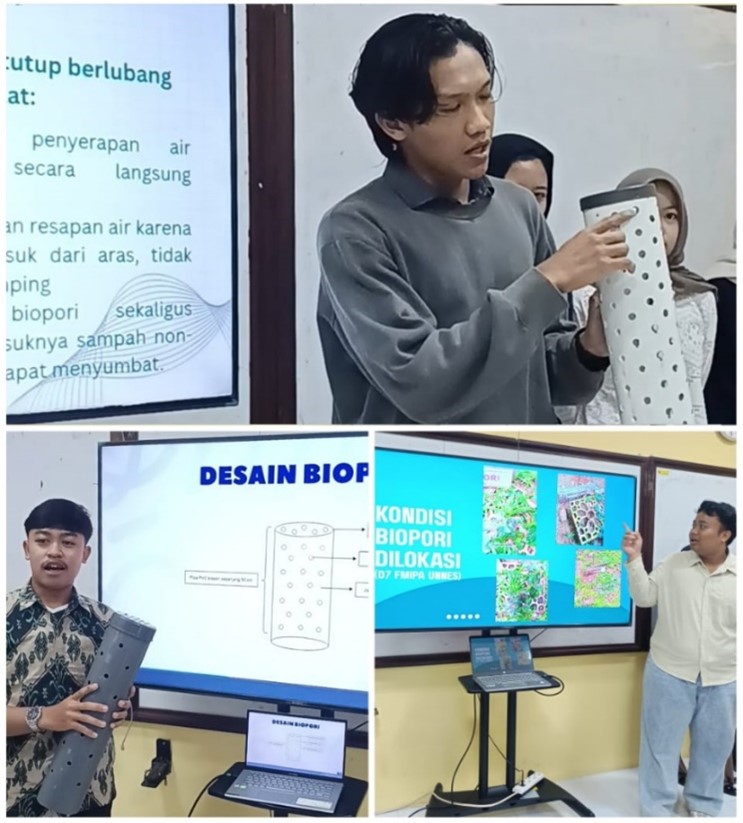
The learning stages began with problem identification, namely determining points or areas within the FMIPA UNNES campus that are prone to waterlogging during rainfall. Once the locations were identified, students designed the form and specifications of the biopores and presented their designs in class. After the designs were approved, the activity continued with the collective installation of biopores, which was conducted on 17 December 2025.
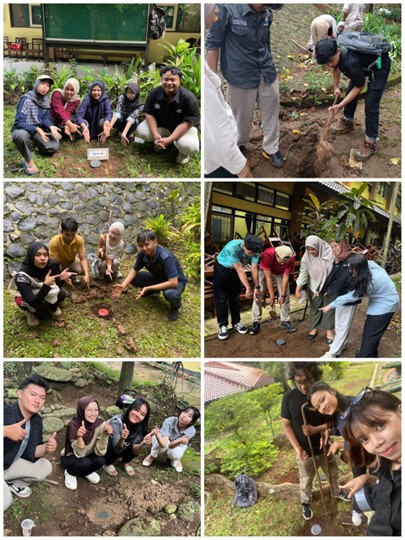
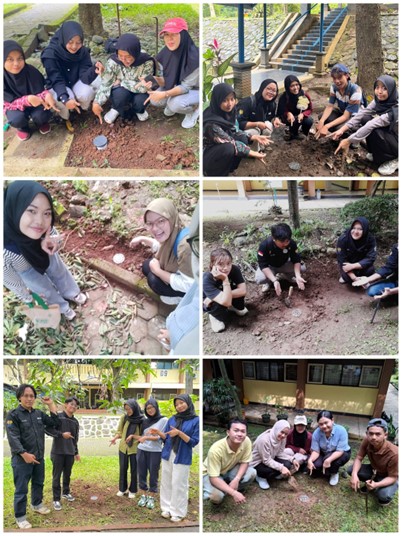
This activity supports the achievement of the Sustainable Development Goals (SDGs), particularly goals related to sustainable water management and urban environmental resilience. The implementation of biopores serves as an example of a simple yet impactful action to reduce surface runoff and enhance groundwater infiltration.
The implementation of this project is considered appropriate not merely because UNNES is recognized as a conservation-oriented campus, but also because, from a hydrological perspective, UNNES is located within the Garang Watershed, one of the priority watersheds in Central Java. Therefore, learning in environmental drainage is not only conceptual but also contextual, contributing directly to regional environmental issues.