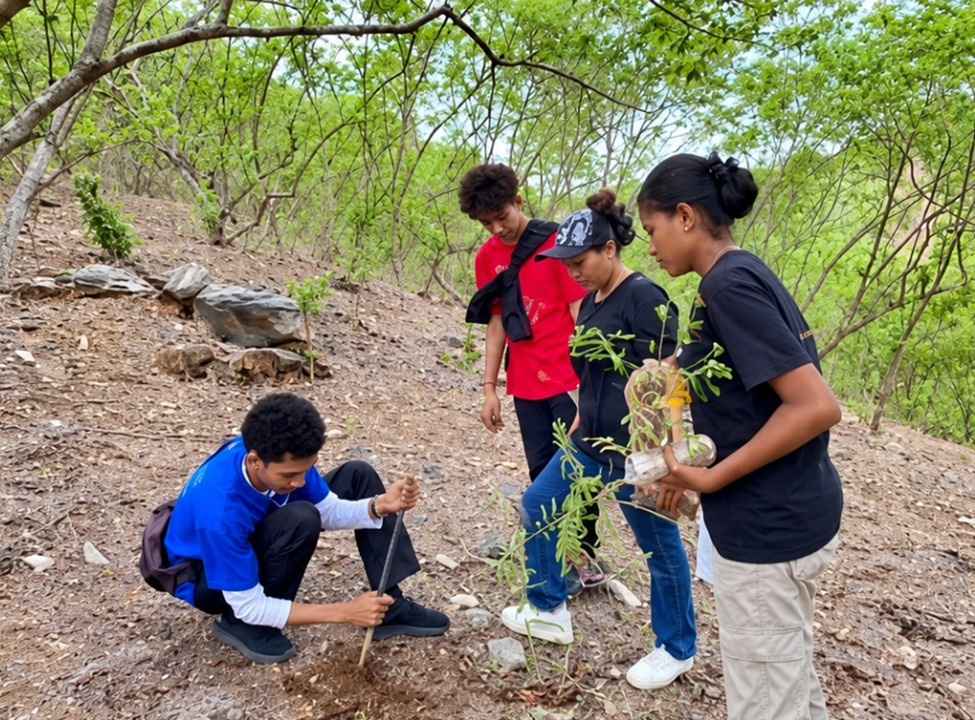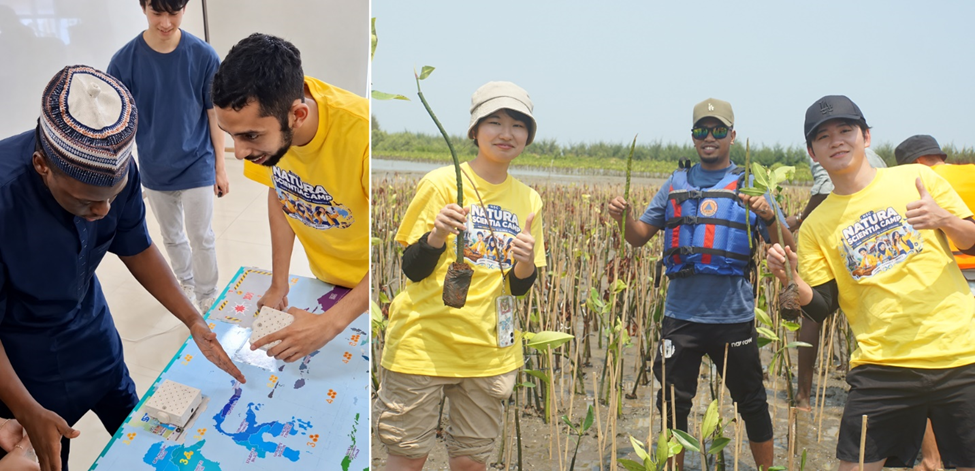



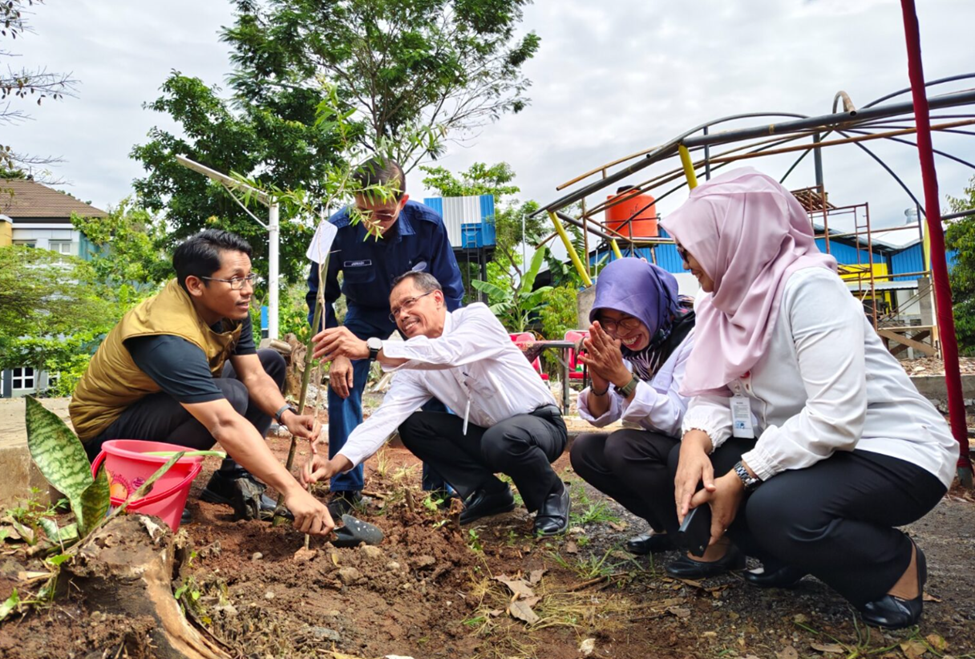
Semarang – The Faculty of Mathematics and Natural Sciences (FMIPA), Universitas Negeri Semarang (UNNES), continues to strengthen its commitment to sustainable development through a strategic partnership with PT PLN (Persero) Central Java Transmission Main Unit, the Semarang City Government, and local communities. Through PT PLN’s Corporate Social and Environmental Responsibility (TJSL) Program, FMIPA UNNES contributes to the development of the Right of Way (ROW) 416–418 corridor in Wonolopo, Semarang, transforming it into a productive, safe, and environmentally sustainable area through community empowerment, environmental conservation, and science-based vegetation management. The program was officially launched at the UNNES Ecofarm Unit on Friday, 7 November 2025.
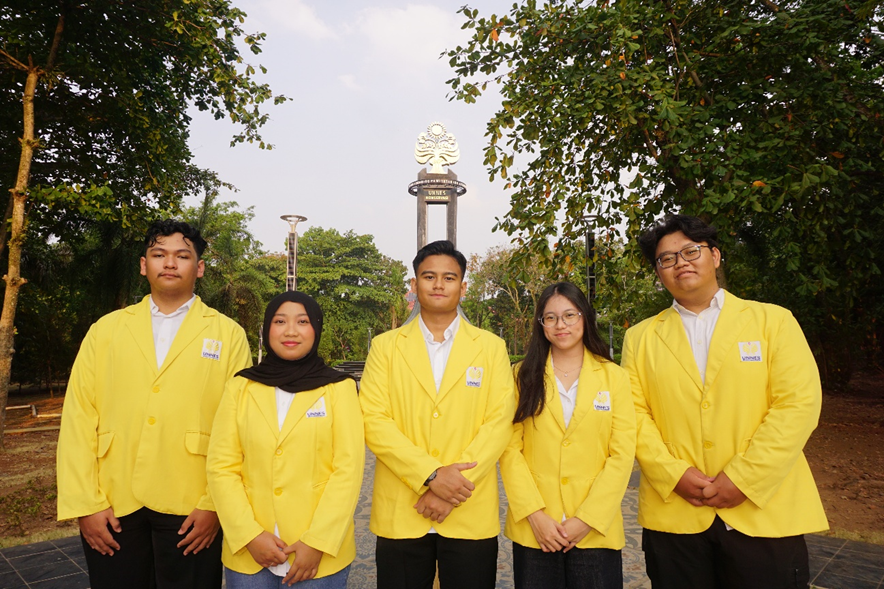
This collaboration represents a concrete example of a multi-stakeholder partnership involving higher education institutions, industry, local government, and communities in supporting the achievement of the Sustainable Development Goals (SDGs). In this initiative, FMIPA UNNES serves not only as an academic partner but also as a provider of scientific expertise, technical recommendations, and research-based assistance to ensure that conservation, environmental rehabilitation, and community empowerment activities are implemented effectively, safely, and sustainably. The academic team involved includes Prof. Amin Retnoningaih, Prof. Nana Kariada, and Prof. Masturi from FMIPA UNNES, together with Prof. Juhadi, Prof. Eva Banowati, and Wahid Akhsin Budi Nur Sidiq, S.Pd., M.Sc. from the Faculty of Social and Political Sciences (FISIP) UNNES.
The community empowerment program focuses on two major activities: providing goat farming assistance to farmers living beneath the transmission corridor and rehabilitating the environment through the planting of productive and conservation-value tree species. The selected species include durian, avocado, and calliandra, which possess both high ecological and economic value while being more suitable for cultivation beneath Extra High Voltage Overhead Transmission Lines (SUTET) than fast-growing trees such as sengon. This approach enables local communities to utilize the land productively without compromising the safety or reliability of the national electricity transmission system.
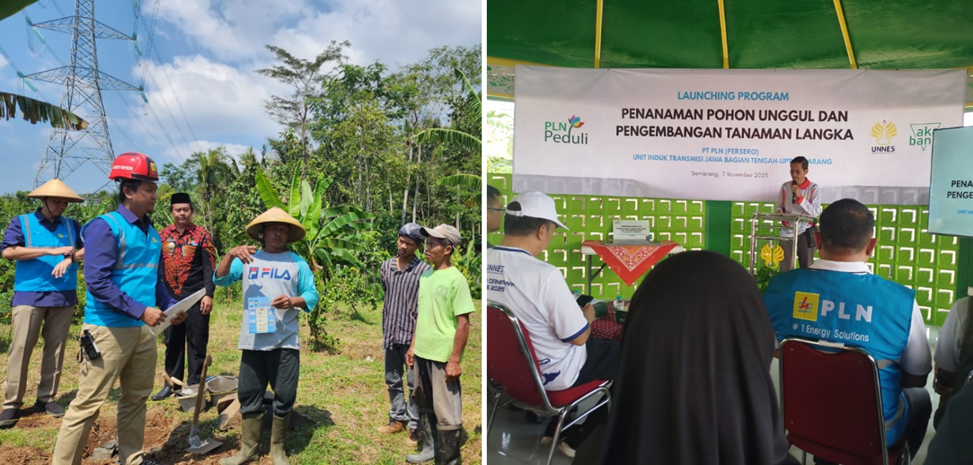
During the implementation of the program, FMIPA UNNES academics provided technical recommendations on selecting plant species appropriate for the characteristics of the ROW area. Vegetation selection considered transmission line safety, biodiversity conservation, land rehabilitation, increased vegetation cover, carbon sequestration, erosion control, and economic benefits for local communities. Through this science-based approach, the land beneath the transmission corridor is transformed from merely an electricity infrastructure corridor into productive green space that supports environmental conservation and climate change adaptation.
Ahmad Firdaus, Senior Manager of Finance, Communication, and General Affairs of PT PLN (Persero) Central Java Transmission Main Unit, stated that the program provides at least three strategic benefits. First, ecological benefits through safer vegetation management and improved environmental quality. Second, economic benefits by increasing community income through livestock farming and productive tree cultivation. Third, operational benefits by improving the reliability of the electricity transmission network through vegetation management that complies with transmission safety standards. According to him, collaboration with UNNES academics is essential to ensuring that the TJSL program is implemented based on scientific studies, thereby generating long-term benefits for both society and the environment.
Beyond providing technical recommendations, the UNNES academic team also contributed to developing a conservation-based community empowerment model integrating environmental, social, and economic dimensions. This approach transforms the land beneath transmission lines into productive spaces capable of supporting agriculture, livestock farming, vegetation conservation, and sustainable community welfare improvement.
UNNES Vice Rector for Academic and Student Affairs, Prof. Zaenuri, who is also a lecturer at FMIPA UNNES, expressed his appreciation for the collaboration. According to him, the partnership between UNNES and PLN represents not only the implementation of corporate social responsibility but also the realization of UNNES’s vision as a Conservation-Oriented University. The involvement of professors from multiple disciplines demonstrates UNNES’s commitment to providing scientific expertise, knowledge transfer, and research-based solutions for both industry and local government. “Programs like this demonstrate that collaboration among academia, industry, government, and communities can generate direct benefits for society while safeguarding environmental sustainability,” he stated.
Appreciation was also expressed by the Head of the Semarang City Cooperative Office, Shoti’ah, S.P., who noted that the program aligns closely with the Semarang City Government’s policies to strengthen urban farming and promote productive community-based economic development. Given the limited availability of land in urban areas, utilizing the space beneath transmission lines for livestock farming and productive tree planting offers an innovative solution that enhances community welfare while improving environmental quality. She expressed hope that this collaborative model involving universities, local government, state-owned enterprises, and local communities could be replicated in other parts of Semarang City.
Through this program, FMIPA UNNES demonstrates its active role as an expert provider for industry and government in advancing sustainable development. The synergy among UNNES, PT PLN (Persero), the Semarang City Government, and local communities illustrates how land beneath electricity transmission lines can be optimized as areas for environmental conservation, ecosystem rehabilitation, climate change adaptation, and science-based community economic empowerment. The program serves as a model of how academic expertise and research outcomes can be translated into tangible ecological, social, and economic benefits. This initiative contributes to the achievement of the Sustainable Development Goals (SDGs), particularly SDG 17 (Partnerships for the Goals) through partnerships among universities, the private sector, local government, and communities, as well as the provision of scientific expertise to external partners; SDG 11 (Sustainable Cities and Communities) through the development of productive, safe, and environmentally sustainable urban spaces; SDG 15 (Life on Land) through land rehabilitation, vegetation conservation, and biodiversity enhancement; SDG 13 (Climate Action) through tree planting, increased vegetation cover, carbon sequestration, and climate change adaptation measures; and SDG 8 (Decent Work and Economic Growth) through sustainable community economic empowerment based on agriculture and livestock development.