


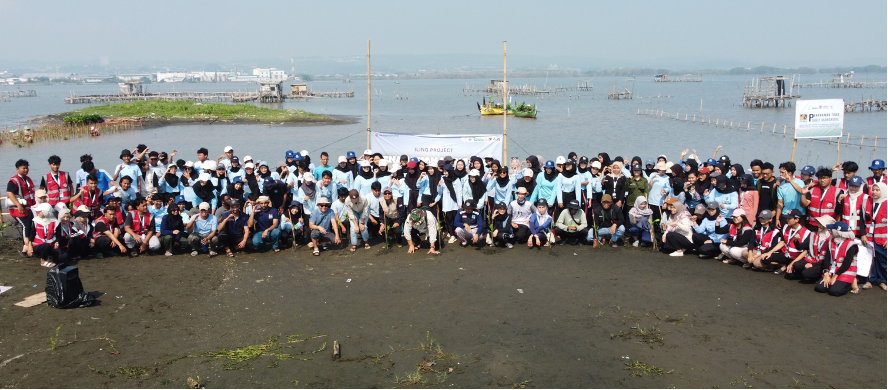
Semarang, June 21, 2025 – A total of 7,000 mangrove seedlings were planted at Mangunharjo Beach, Semarang City, through the ILING PROJECT 2025 organized by Environmental Science students of FMIPA UNNES. With the theme “One Action, One Solution, Collaboration for the Ocean,” the event involved cross-disciplinary collaboration and participation from international students.
This year, ILING PROJECT was joined not only by UNNES Environmental Science students but also by Science Education students and international students from Ghana, Timor-Leste, and Pakistan. The activity also saw participation from Abrasea Indonesia and Environmental Science students from Universitas Ivet (UNISVET) Semarang.
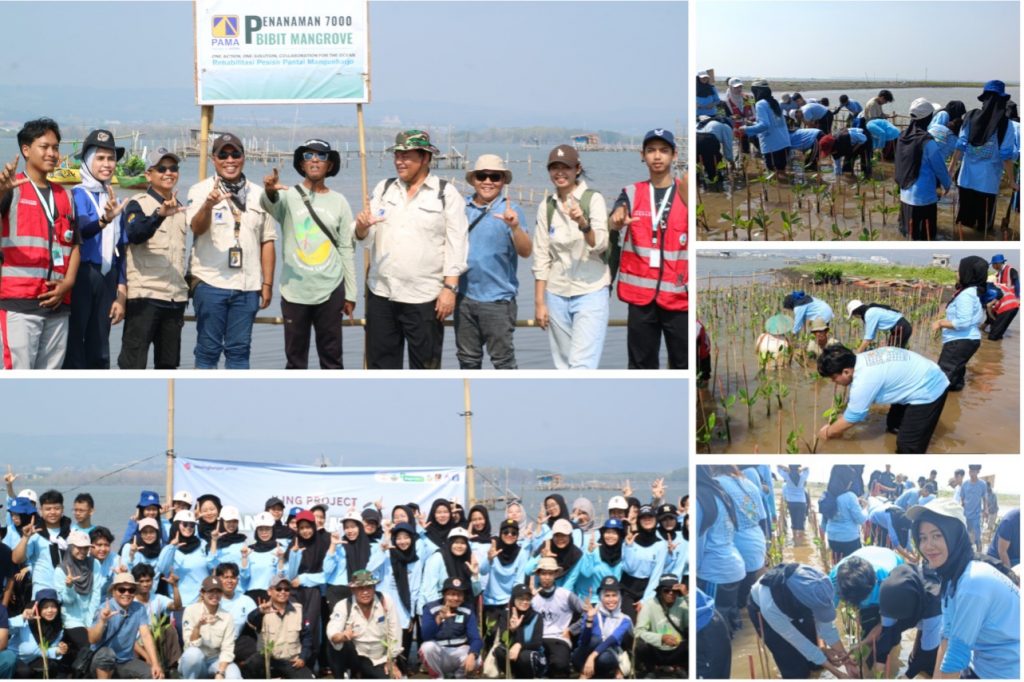
The event was sponsored by PT. PAMA and Kawasan Industri Wijayakusuma, with support from the Mangrove Lestari Farmers Group as field partners. Several lecturers from the Environmental Science and Science Education programs also attended, including: Abdul Jabbar, S.Si., M.Ling., Trida Ridho Fariz, S.Si., M.Sc., Amnan Haris, S.Si., M.Ling., Dr. Andhina Putri Heriyanti, S.T., M.Si., Hendra Febriyanto, M.Pd., M. Ahganiya Naufal, S.Si., M.Si., Yeni Setyowati, S.Pd., M.Pd and Putri Alifa Kholil, S.T., M.Ling.
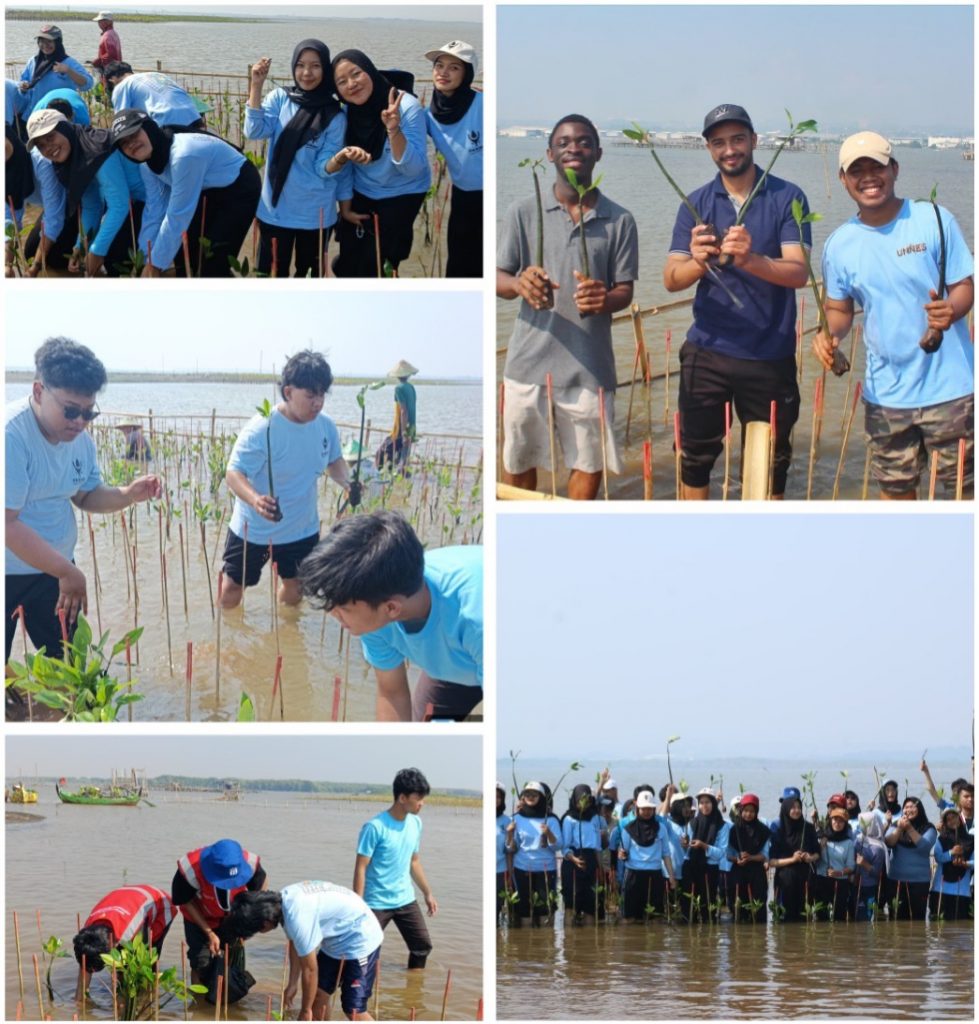
The planting of 7,000 mangrove seedlings is part of the Low-Carbon and Climate-Resilient Development initiative, supporting climate change mitigation and adaptation efforts. This activity aligns with the Sustainable Development Goals (SDGs), particularly SDG 13 (Climate Action), SDG 14 (Life Below Water), SDG 15 (Life on Land), SDG 17 (Partnerships for the Goals), SDG 11 (Sustainable Cities and Communities).
Mangrove restoration not only reduces disaster risks and rehabilitates coastal ecosystems but also indirectly boosts local economies through sustainable fisheries. Since 2021, ILING PROJECT by UNNES Environmental Science students has demonstrated FMIPA UNNES’s tangible contributions to conservation efforts, particularly in natural resource and environmental preservation. This cross-disciplinary and international collaboration proves that synergy among academia, industry, and communities can create sustainable solutions for Semarang’s coastal environment.