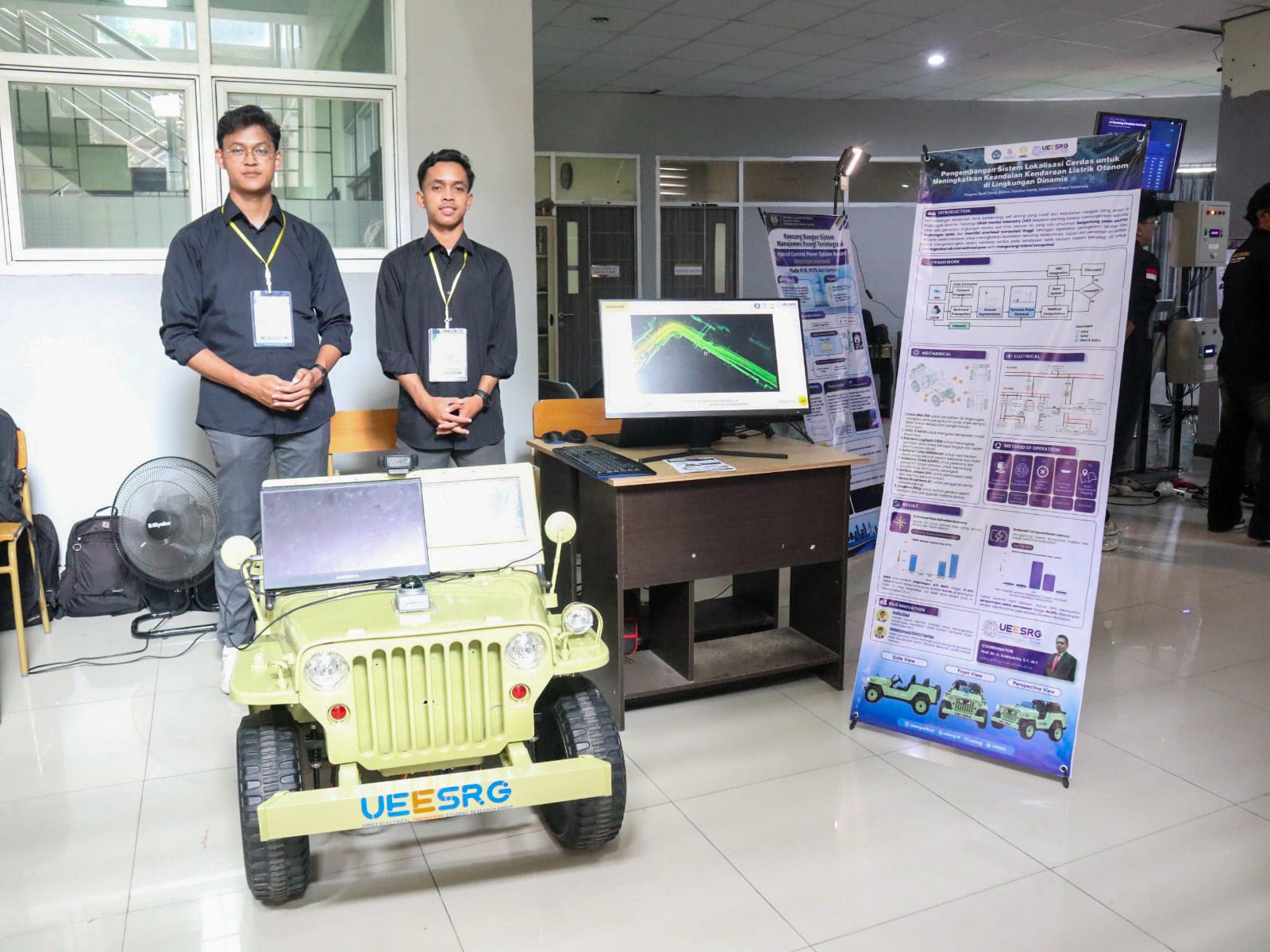




SEMARANG — Two Computer Engineering students from the Faculty of Engineering, Universitas Negeri Semarang (FT UNNES), Rizal Ramadhan and Rama Fahrizal Kusuma, unveiled TARVIS (Toll Automation, Recognition & Vision Intelligent System), a smart toll gate prototype integrating Computer Vision and the Internet of Things (IoT). The innovation was showcased during the EXPO Capstone exhibition at Building E11, FT UNNES, on Wednesday (November 11, 2026).
TARVIS was engineered to tackle recurring traffic bottlenecks at toll plazas, particularly when heavy vehicles such as buses and trucks create long queues at regular lanes while dedicated small-vehicle lanes remain underutilized. By automating vertical barrier height adjustments based on real-time traffic analysis, TARVIS enables small-vehicle toll gates to temporarily accommodate heavy vehicles during peak congestion—shifting traffic management from purely manual operator observation to data-driven automation.
A key strength of TARVIS lies in its ability to process existing online toll road CCTV feeds, eliminating the need to install additional physical cameras at the gate. The live video stream undergoes a multi-stage artificial intelligence pipeline to evaluate lane conditions continuously.
Within the Computer Vision architecture, the system employs YOLOv8 to detect and localize vehicles across video frames, paired with a Convolutional Neural Network (CNN) to classify vehicles by type and toll category based on visual features. To ensure tracking reliability and prevent duplicate counts, the developers integrated ByteTrack, which assigns a unique identification number to each vehicle across consecutive frames. Processing is concentrated strictly within a designated Region of Interest (ROI), where a virtual Counting Line tallies approaching heavy vehicles based on their direction of travel and assigned IDs.
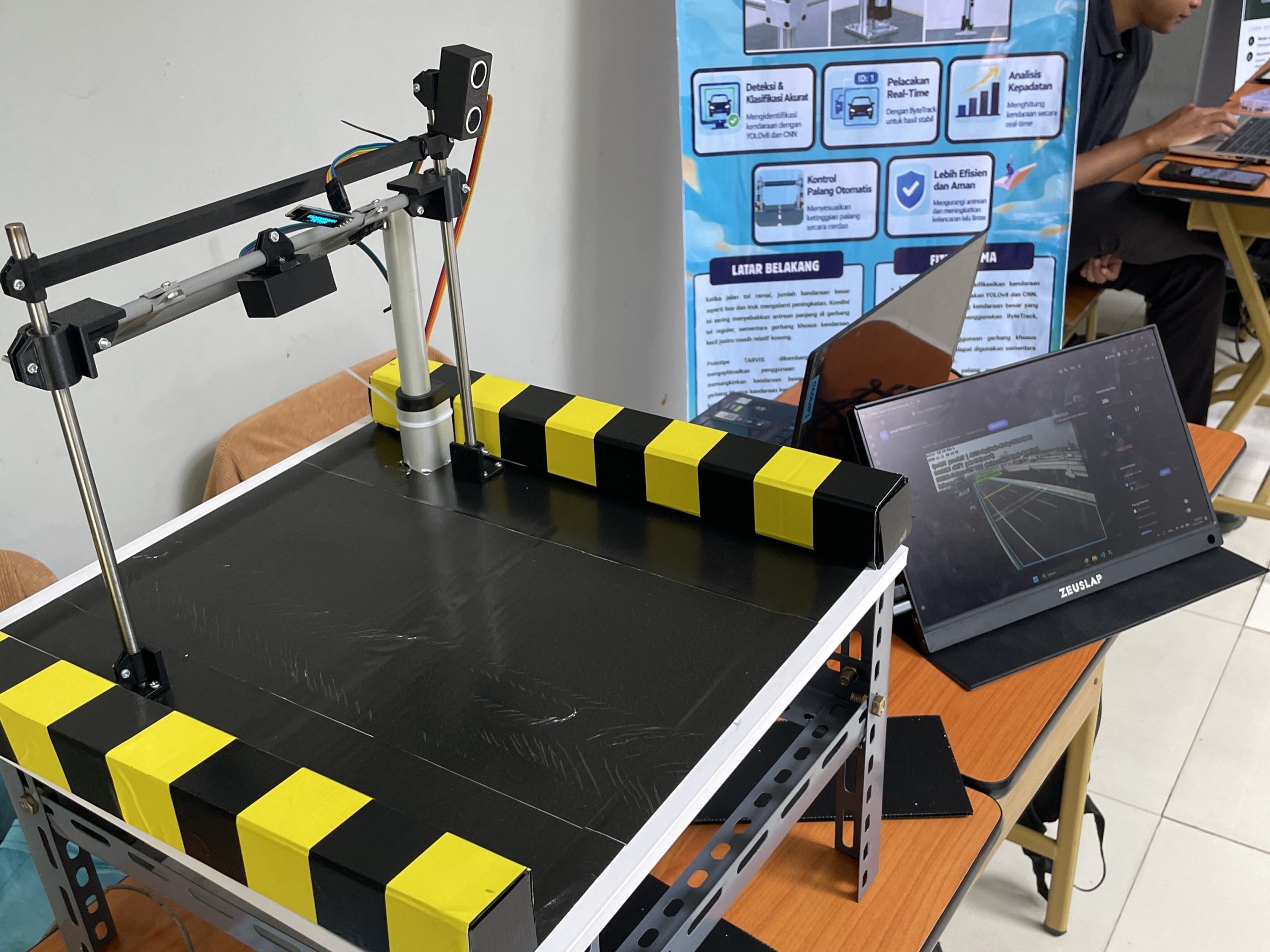
All detection, classification, tracking, and queue metrics are visualized on a centralized monitoring dashboard. Once the count of approaching heavy vehicles meets or exceeds an operator-defined threshold, the server transmits a command to an ESP32 microcontroller to trigger a linear actuator. This mechanism raises the toll barrier vertically, expanding overhead clearance to safely accommodate larger vehicles.
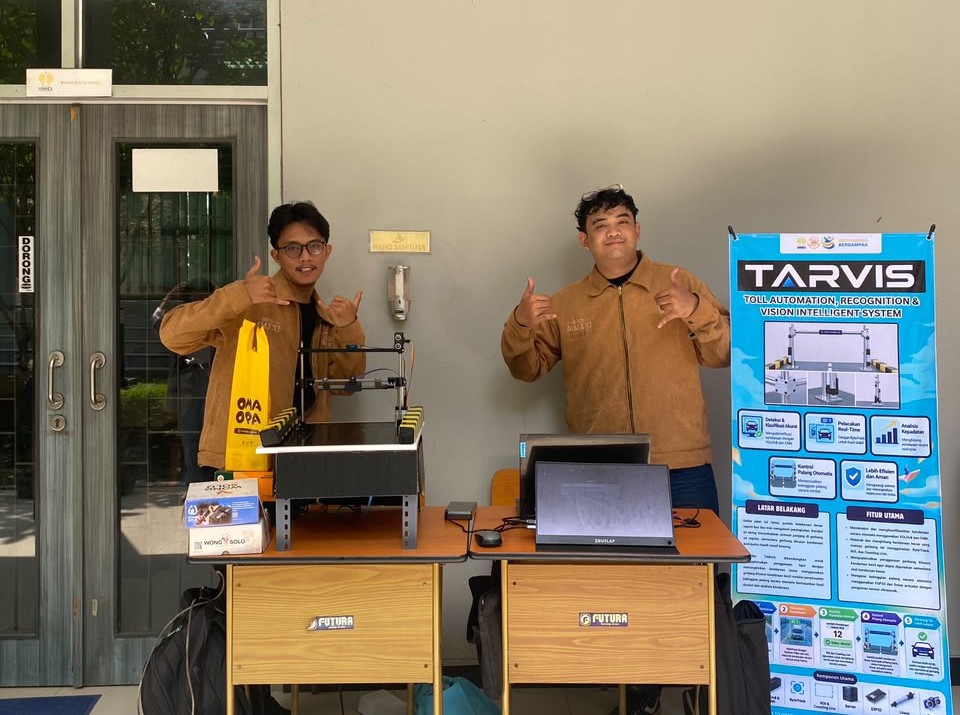
To safeguard passing vehicles, TARVIS incorporates an ultrasonic sensor positioned beneath the barrier as an automated safety interlock, preventing the gate arm from descending while a vehicle remains in the lane. Once the sensor confirms the lane is clear and the designated interval has elapsed, the ESP32 signals the actuator to lower the barrier back to its standard position. The prototype also features an integrated LED screen to display real-time gate status and operational messages for motorists.
From a development standpoint, Ramadhan and Kusuma completed the prototype on October 1, 2026, following a rapid 30-day build cycle with a total fabrication cost of IDR 1.5 million (Rp1,500,000). The project demonstrates how cloud-accessible CCTV analytics can be seamlessly linked with embedded IoT hardware to deliver responsive, cost-effective mechanical control.
Showcased at FT UNNES’s EXPO Capstone, TARVIS directly advances SDG 9 (Industry, Innovation, and Infrastructure) by modernizing transportation infrastructure through intelligent automation and resilient engineering design. Through accessible, high-impact applied research, UNNES Computer Engineering students continue to contribute practical technological solutions to enhance national mobility and infrastructure efficiency.