



SEMARANG — Dua mahasiswa Program Studi Teknik Komputer, Fakultas Teknik Universitas Negeri Semarang (FT UNNES), Rizal Ramadhan dan Rama Fahrizal Kusuma, menghadirkan terobosan teknologi transportasi bertajuk TARVIS (Toll Automation, Recognition & Vision Intelligent System). Purwarupa gerbang tol cerdas berbasis Computer Vision dan Internet of Things (IoT) tersebut dipamerkan dalam gelaran EXPO Capstone di Gedung E11 FT UNNES, Rabu (11/11/2026).
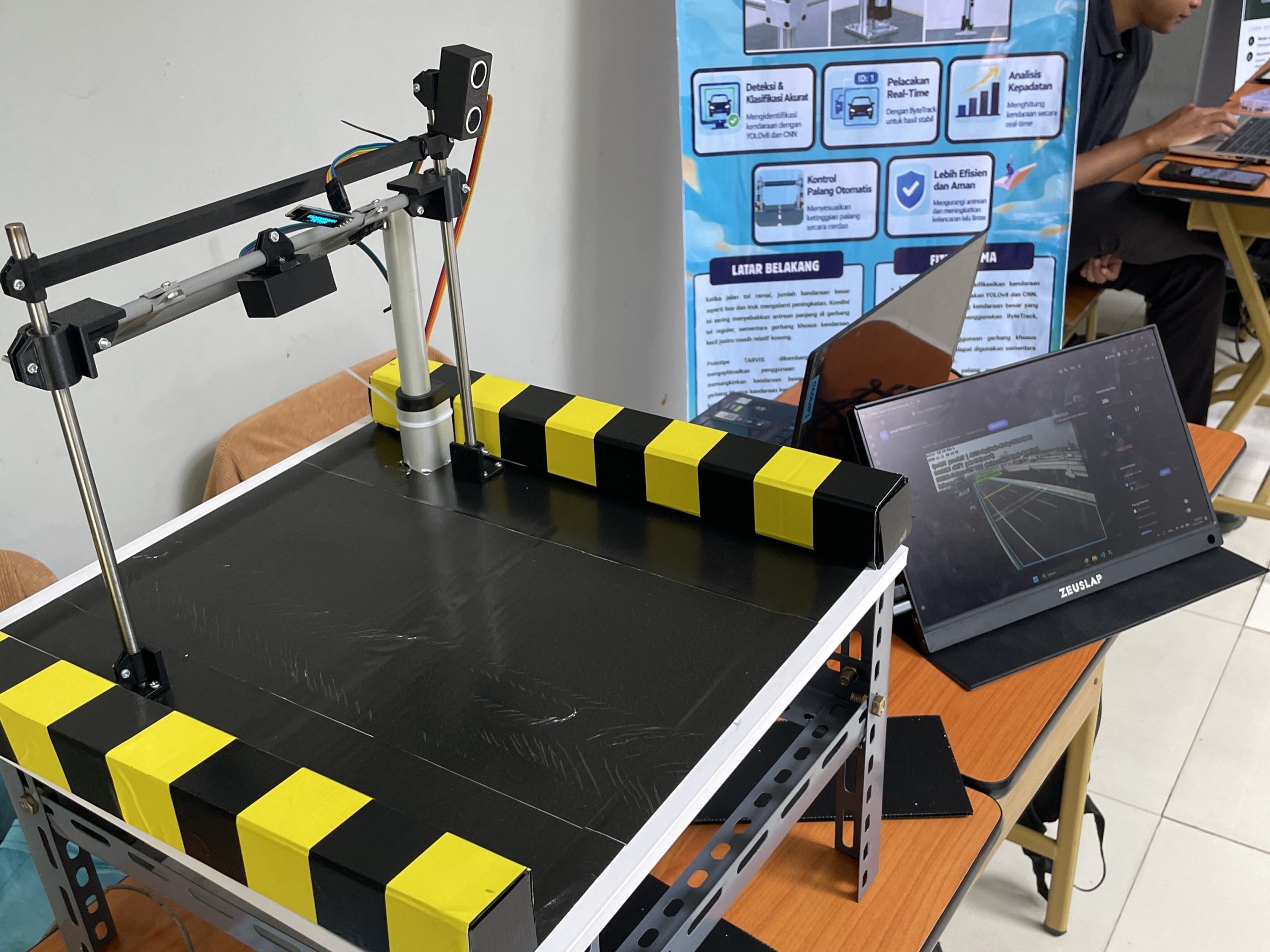
Pengembangan TARVIS berangkat dari persoalan klasik kepadatan lalu lintas di gerbang tol, khususnya ketika terjadi penumpukan antrean kendaraan besar seperti bus dan truk pada lajur reguler. Di saat yang sama, gerbang tol khusus kendaraan kecil sering kali memiliki kapasitas lajur yang belum termanfaatkan secara optimal. Melalui TARVIS, gerbang khusus kendaraan kecil dapat difungsikan secara fleksibel untuk melayani kendaraan besar secara sementara guna mengurai kemacetan, dengan mekanisme pengaturan ketinggian palang yang bekerja otomatis berdasarkan analisis kondisi lalu lintas.
Keunggulan utama TARVIS terletak pada kemampuannya memanfaatkan aliran video CCTV jalan tol yang sudah tersedia secara daring (online), sehingga implementasinya tidak memerlukan pemasangan kamera tambahan pada infrastruktur fisik gerbang. Aliran video tersebut diproses secara waktu nyata (real-time) menggunakan rangkaian algoritma kecerdasan buatan yang terintegrasi.
Pada tahap pemrosesan visual, sistem mengandalkan algoritma YOLOv8 untuk mendeteksi keberadaan serta posisi kendaraan pada setiap frame video, yang kemudian dikombinasikan dengan Convolutional Neural Network (CNN) guna mengklasifikasikan jenis dan golongan kendaraan berdasarkan karakteristik visualnya. Untuk memastikan akurasi data, tim menyematkan teknologi ByteTrack yang memberikan identitas unik (ID) pada setiap objek guna melacak pergerakan kendaraan antar-frame sekaligus mencegah penghitungan ganda. Analisis difokuskan secara presisi melalui penetapan Region of Interest (ROI) pada area pengamatan tertentu, sebelum akhirnya fitur garis hitung virtual (Counting Line) mengakumulasi jumlah kendaraan besar yang melaju menuju gerbang tol sesuai arah pergerakannya.
Seluruh hasil deteksi, klasifikasi, pelacakan, hingga kepadatan antrean disajikan secara terpusat melalui dashboard pemantauan. Ketika jumlah kendaraan besar mencapai atau melampaui ambang batas yang telah ditetapkan operator, server secara otomatis mengirimkan instruksi kepada mikrokontroler ESP32 untuk mengaktifkan linear actuator. Komponen mekanis ini bertugas menaikkan posisi palang gerbang secara vertikal sehingga ruang lintasan menyesuaikan dengan dimensi kendaraan besar.
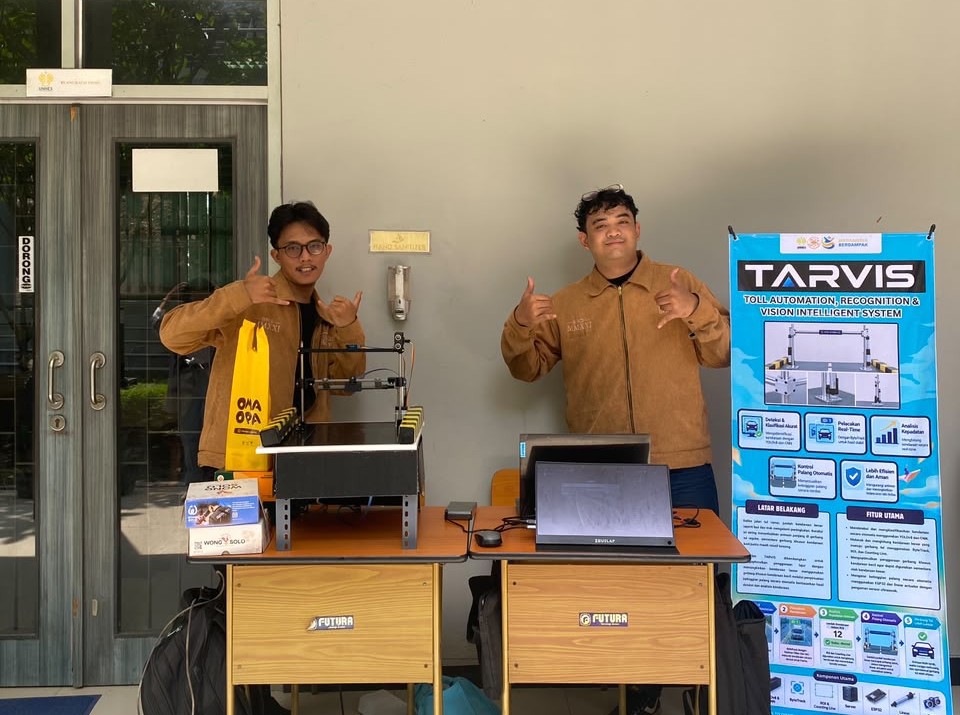
Untuk menjamin aspek keselamatan operasional, sistem turut dilengkapi sensor ultrasonik yang mendeteksi keberadaan kendaraan tepat di bawah area palang. Sensor ini berfungsi sebagai pengaman berlapis agar palang tidak turun selama kendaraan masih berada di jalur lintasan. Setelah kendaraan melintas sepenuhnya dan batas waktu pembukaan terpenuhi, ESP32 akan kembali menggerakkan aktuator untuk menurunkan palang ke posisi semula. Selain itu, prototipe ini juga dibekali layar LED (LED screen) sebagai papan informasi digital untuk menampilkan status operasional gerbang kepada pengguna jalan.
Dari sisi efisiensi rekayasa, Rizal dan Rama berhasil merampungkan perancangan hingga perakitan TARVIS pada 1 Oktober 2026 dalam kurun waktu pengerjaan yang terbilang singkat, yakni 30 hari, dengan total biaya pembuatan sebesar Rp1.500.000. Capaian ini membuktikan bahwa integrasi antara analitik kecerdasan buatan berbasis CCTV dan kendali perangkat keras IoT dapat diwujudkan secara ekonomis dan presisi.
Inovasi TARVIS yang dipamerkan di panggung EXPO Capstone FT UNNES ini selaras dengan upaya pencapaian SDG 9 (Industri, Inovasi, dan Infrastruktur). Melalui optimalisasi kapasitas infrastruktur jalan tol berbasis otomatisasi cerdas dan riset terapan yang terjangkau, mahasiswa Teknik Komputer UNNES turut mendorong transformasi sistem transportasi nasional yang lebih tangguh, efisien, dan adaptif terhadap tantangan mobilitas modern.