

Computer Engineering Students at the Faculty of Engineering, UNNES, Develop a Smart Power Monitoring and Electrical Anomaly Detection System for Industrial Needs

Universitas Negeri Semarang > Faculty of Engineering > Fakultas Teknik-eng > Computer Engineering Students at the Faculty of Engineering, UNNES, Develop a Smart Power Monitoring and Electrical Anomaly Detection System for Industrial Needs

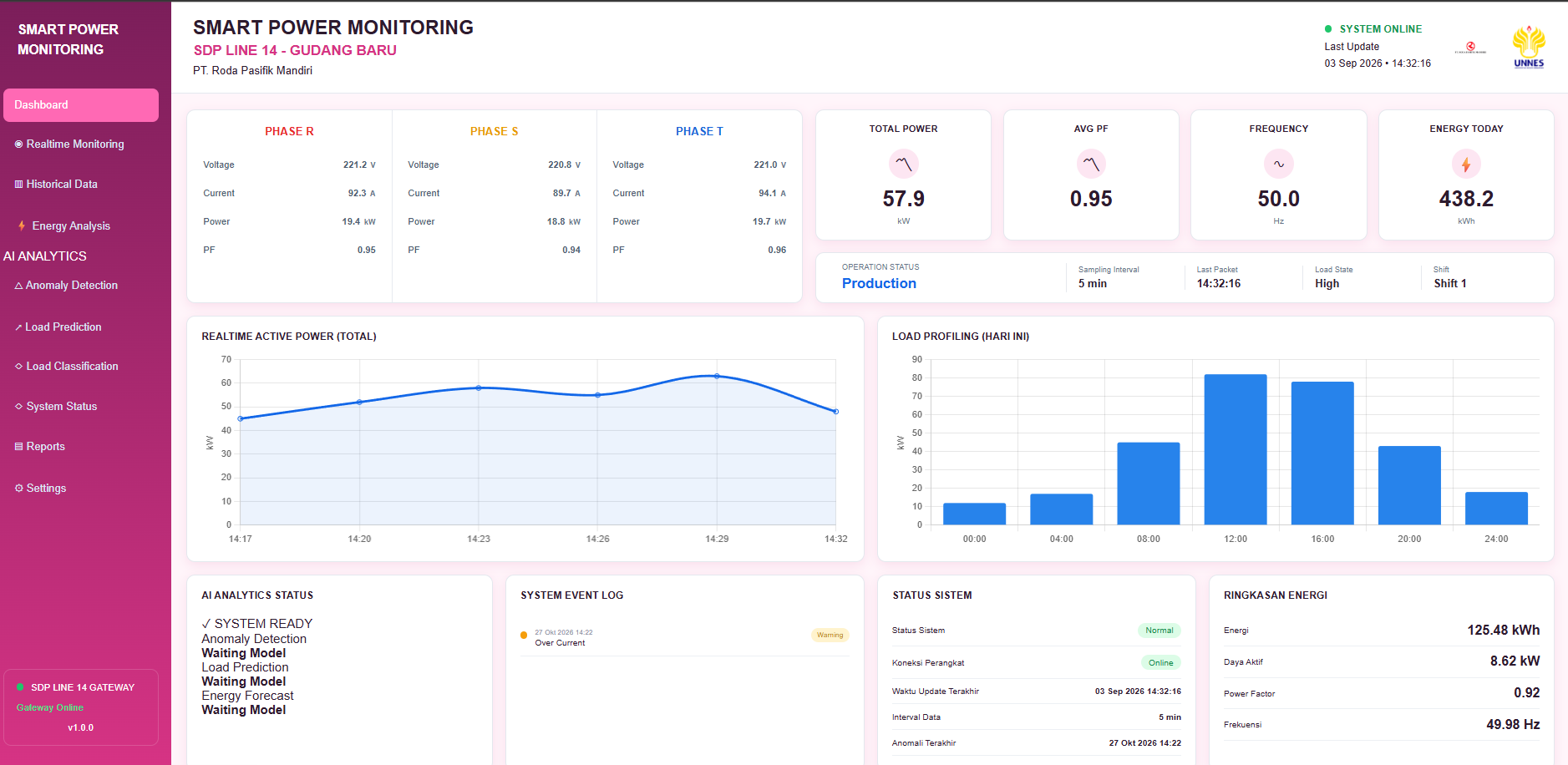
The “Machine Learning-Based Three-Phase Smart Power Monitoring and Electrical Anomaly Detection System for Industry” is an innovation designed to monitor three-phase electrical power distribution in industrial environments. It was developed to overcome the limitations of manual electrical inspections, which fail to provide continuous parameter recording or the automatic identification of deviations in operational patterns.

The system utilizes three PZEM-004T V3.0 sensor modules to measure electrical parameters—such as voltage, current, active power, power factor, frequency, and electrical energy—across the R, S, and T phases. Data processing is handled by two ESP32-S3 microcontrollers with distinct functions: the first ESP32-S3 manages data acquisition and validation, while the second performs feature processing and local anomaly detection. Both devices communicate via the ESP-NOW protocol.

A key feature of this innovation is the implementation of the Isolation Forest machine learning algorithm, which identifies unusual electrical patterns by analyzing the interrelationships between multiple parameters simultaneously. The system employs a feature engineering approach using three configurations: raw measurement features, derived features (based on inter-phase relationships), and temporal features (based on changes over time). This approach allows for the evaluation of the system’s detection capabilities across various electrical characteristics.
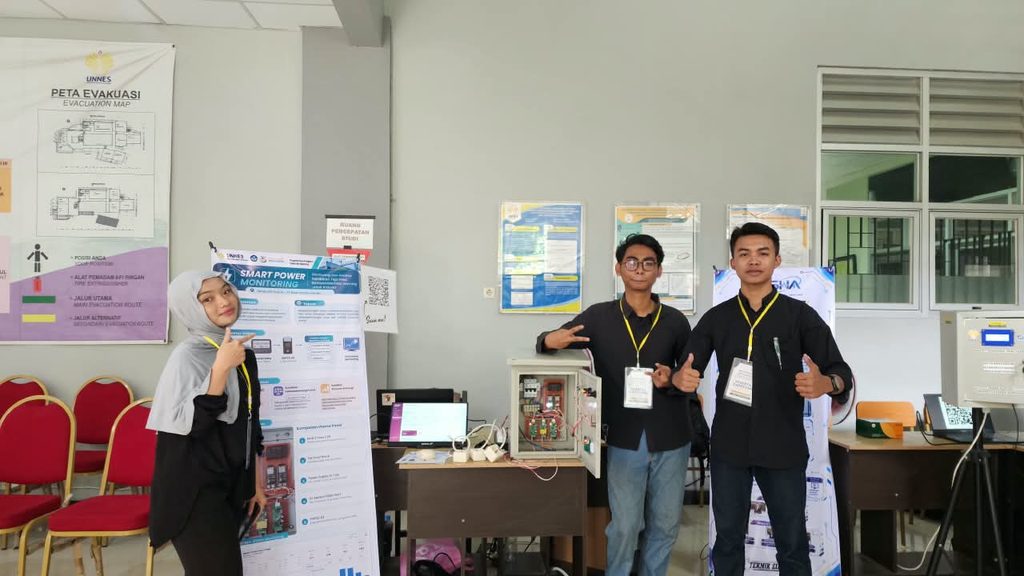
Model training is conducted using Python, while inference is designed to run directly on the ESP32-S3 via an edge machine learning approach. Consequently, the anomaly identification process does not rely on an external server. The system generates an “anomaly score” and classifies conditions as either normal or anomalous; this data can be transmitted via a Wi-Fi network to be stored and visualized on a web-based dashboard. Development was completed on October 3, 2026, taking a total of 10 days with a project cost of IDR 2,000,000. The innovation team was led by Vania Rapita Augesta, with Irfan Ashari and Muhammad Syauqi Azis Fikri Amrulloh serving as team members.

This innovation is intended for implementation at the Sub Distribution Panel (SDP) for Line 14 at PT Roda Pasifik Mandiri, serving as a tool for electrical monitoring and maintenance support. Through this system, operators can access historical measurement data, monitor changes in electrical conditions, and identify signs of irregularities early, allowing for timely follow-up via technical inspections.

The development of this innovation aims to improve the availability of information regarding electrical conditions and support data-driven maintenance. It offers an alternative, intelligent monitoring system that leverages the Internet of Things (IoT), machine learning, and embedded computing devices—all at a relatively affordable cost. The system functions as a monitoring and anomaly-detection tool; it is not intended to replace electrical protection equipment or serve as a direct diagnostic tool for physical hardware faults. This innovation was also showcased at the Capstone EXPO held on November 11, 2026, in the E11 building of the Faculty of Engineering at UNNES.
Related Posts

Leave a Reply

* Kode Akses Komentar:

* Tuliskan kode akses komentar diatas:

GDPR

  • Privacy Policy

Privacy Policy

At unnes.ac.id, the privacy of our visitors is of extreme importance to us. This privacy policy document outlines the types of personal information that is received and collected by unnes.ac.id and how it is used.

Log Files

Like many other Web sites, unnes.ac.id makes use of log files. The information inside the log files includes internet protocol (IP) addresses, type of browser, Internet Service Provider (ISP), date/time stamp, referring/exit pages, and number of clicks to analyze trends, administer the site, track user’s movement around the site, and gather demographic information. IP addresses and other such information are not linked to any information that is personally identifiable.

Cookies

unnes.ac.id uses cookies to store information about visitors’ preferences, to record user-specific information on which pages the site visitor accesses or visits, and to personalize or customize our web page content based upon visitors’ browser type or other information that the visitor sends via their browser.

Third-party ad servers or ad networks use technology in their respective advertisements and links that appear on unnes.ac.id and which are sent directly to your browser. They automatically receive your IP address when this occurs. Other technologies (such as cookies, JavaScript, or Web Beacons) may also be used by our site’s third-party ad networks to measure the effectiveness of their advertising campaigns and/or to personalize the advertising content that you see on the site.

unnes.ac.id has no access to or control over these cookies that are used by third-party advertisers.

You should consult the respective privacy policies of these third-party ad servers for more detailed information on their practices as well as for instructions about how to opt-out of certain practices. unnes.ac.id’s privacy policy does not apply to, and we cannot control the activities of, such other advertisers or web sites.

If you wish to disable cookies, you may do so through your individual browser options. More detailed information about cookie management with specific web browsers can be found at the browsers’ respective websites.

Consent

By using our website, you hereby consent to our privacy policy and agree to its terms.

Update

This Privacy Policy was last updated on: 2023-02-14. Should we update, amend or make any changes to our privacy policy, those changes will be posted here.

Contact Us

If you have any questions, comments, or concerns about our Privacy Policy or our practices with regards to your personal information, please feel free to contact us through the contact form on our website or by emailing us at humas[at]mail.unnes.ac.id.

This Privacy Policy is intended as a general guide to our practices in collecting and using information. If there is any inconsistency between this Privacy Policy and the terms of the Service Agreement or any other terms that may apply to specific services you use, then those specific service terms shall apply.

Terms of Use

By using our website, you agree to abide by this Privacy Policy. If you do not agree with this Privacy Policy, please do not use our website. We reserve the right to update this Privacy Policy from time to time without prior notice. Please review our Privacy Policy periodically to check for changes. Your continued use of our website following the posting of changes to this Privacy Policy means that you accept the changes.

Thank you for reading our Privacy Policy. We are committed to protecting the privacy of our website visitors and will continue to update our Privacy Policy to ensure optimal protection.