



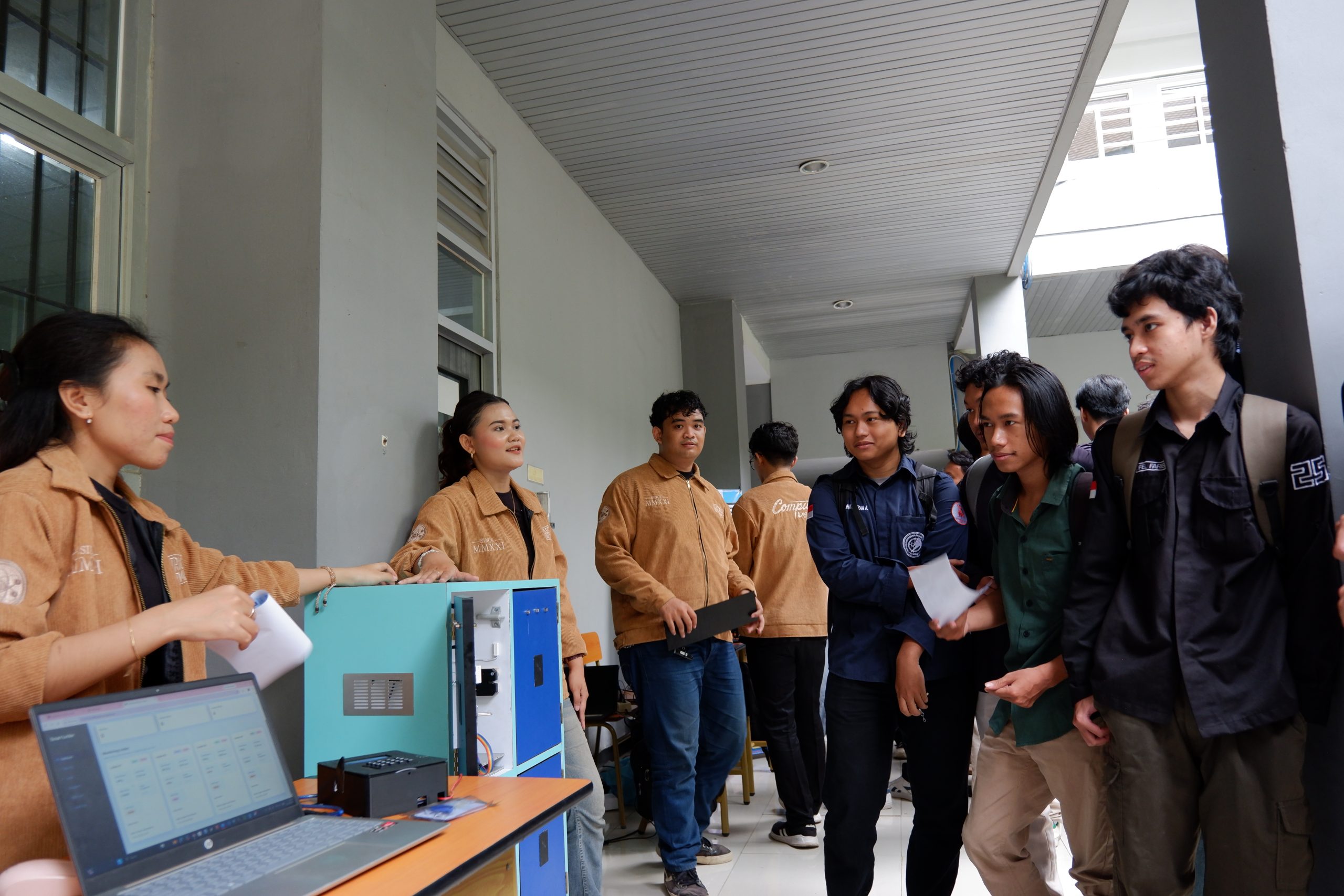
SEMARANG — Two Computer Engineering students from the Faculty of Engineering, Universitas Negeri Semarang (FT UNNES), Desy Natalia and Cahya Renita Pulse, unveiled an intelligent storage prototype titled Smart Locker during the EXPO Capstone exhibition at Building E11, FT UNNES, on Wednesday (November 11, 2026). The system integrates Radio Frequency Identification (RFID) access control with a dual-sensor monitoring array to accurately detect compartment conditions.
The project was conceived to overcome the operational drawbacks of conventional mechanical lockers, which rely on physical keys prone to loss or duplication and offer facility managers no real-time visibility into compartment status. In traditional setups, lockers often remain locked while empty, or users inadvertently leave belongings behind without triggering any alert.
To modernize storage security and management, Natalia and Pulse engineered an automated access and sensing architecture. On the security front, RFID technology replaces traditional mechanical locks with fast, contactless authentication, ensuring that only users holding authorized RFID cards or tags can unlock their designated compartments.
The defining feature of the prototype is its internal condition-monitoring mechanism, which pairs an ultrasonic sensor with a load cell sensor inside the locker compartment. While the ultrasonic sensor detects the physical presence and spatial occupancy of objects within the enclosure, the load cell measures the exact weight placed on the locker floor.
By combining spatial and weight telemetry into a unified multi-sensor framework, the system eliminates false occupancy readings and reliably verifies whether a compartment is empty, actively storing items, or holding forgotten belongings. This dual-verification approach enhances operational transparency and enables automated, real-time availability tracking.
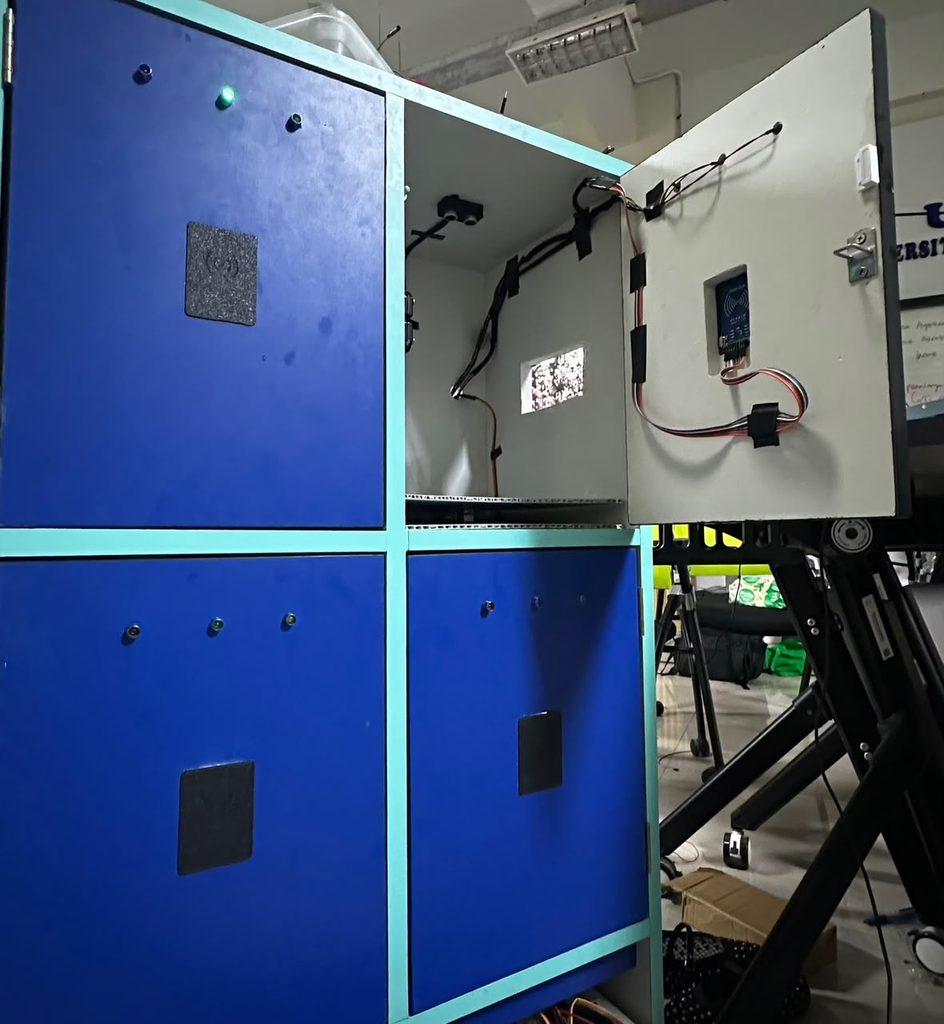
The team completed the Smart Locker prototype on September 1, 2026, following a 75-day engineering cycle encompassing physical enclosure fabrication, embedded hardware integration, sensor calibration, and functional testing. Built with a total budget of IDR 4 million (Rp4,000,000), the prototype reflects durable structural construction paired with reliable electronic security components.
Showcased at FT UNNES’s EXPO Capstone, the Smart Locker directly supports SDG 9 (Industry, Innovation, and Infrastructure) by advancing resilient, automated public infrastructure. Through practical applied engineering, UNNES Computer Engineering students demonstrate how smart security systems can upgrade everyday facilities—from university campuses and libraries to transit hubs and industrial workplaces—into safer, more efficient environments.