

Tim Peneliti FISIP UNNES Kaji Arsitektur Rumah Adaptif Gas dan Serahkan Poster Mitigasi Spasial di Dataran Tinggi Dieng

Universitas Negeri Semarang > Faculty of Social Sciences and Political Science > Berita > Tim Peneliti FISIP UNNES Kaji Arsitektur Rumah Adaptif Gas dan Serahkan Poster Mitigasi Spasial di Dataran Tinggi Dieng

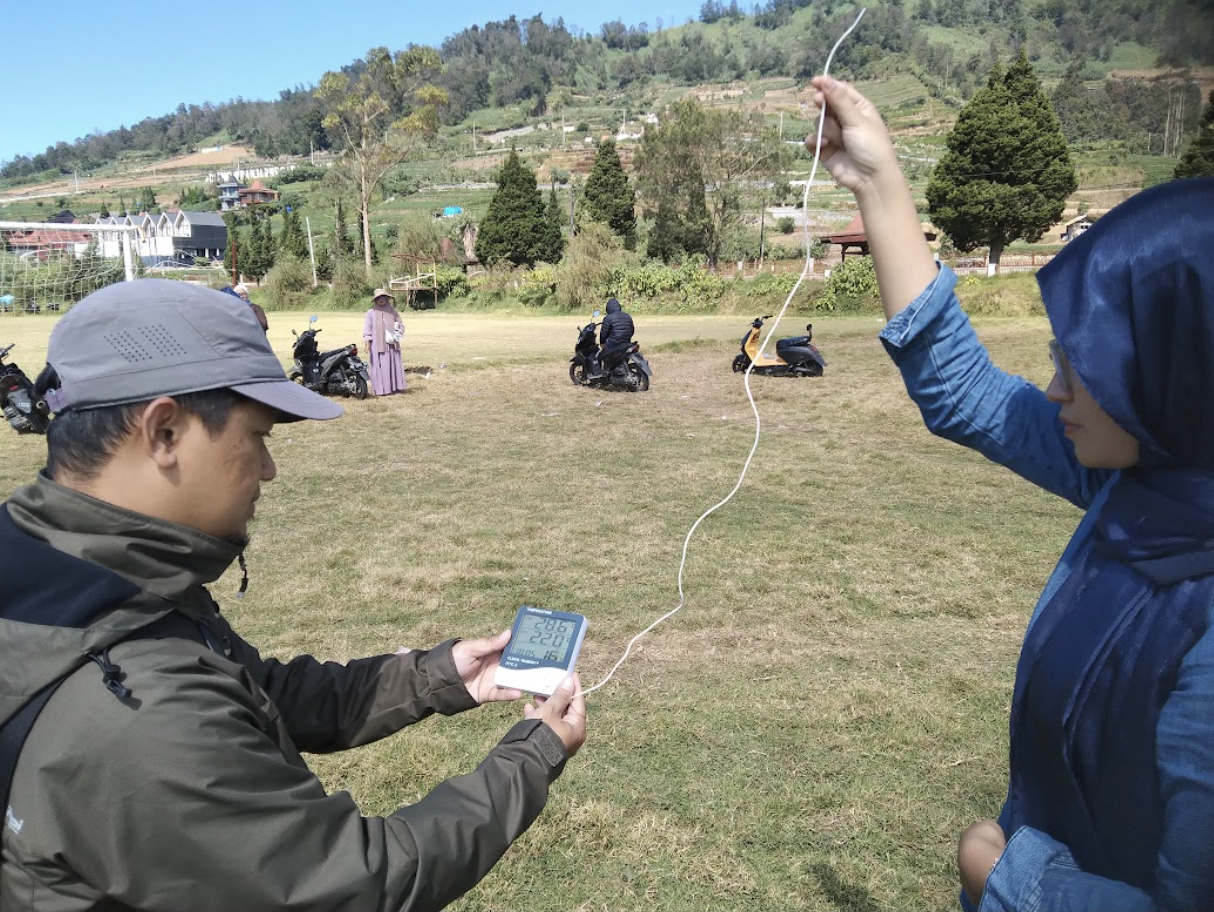
BANJARNEGARA – Tim peneliti dari Fakultas Ilmu Sosial dan Ilmu Politik (FISIP) Universitas Negeri Semarang (UNNES) yang diketuai oleh Purnomo Adi Saputro, S.Pd., M.Sc., melaksanakan kegiatan riset lapangan (fieldwork) sekaligus diseminasi bertajuk “Resiliensi Psikososial dan Adaptasi Spasial Penduduk terhadap Invisible Volcanic Gas Hazards di Dataran Tinggi Dieng”. Kegiatan ini dilaksanakan di wilayah rawan bahaya gas vulkanik yang meliputi Desa Pekasiran, Desa Sumberejo, dan Desa Kepakisan, Kecamatan Batur, Kabupaten Banjarnegara.

Tim riset kolaboratif ini terdiri atas jajaran dosen FISIP UNNES—yakni Purnomo Adi Saputro, S.Pd., M.Sc., Lina Adi Wijayanti, dan Yadi Suryadi—serta melibatkan tiga mahasiswa, yaitu Amira Inas Karima, Intan Kharisma Putri, dan Sonja Ashka Naura. Penelitian ini bertujuan untuk mengukur tingkat resiliensi psikososial masyarakat, mengidentifikasi karakteristik arsitektur rumah adaptif gas, serta menyerahkan media edukasi berupa Poster Mitigasi Spasial kepada warga dan perangkat desa setempat.

Pelaksanaan kegiatan diawali dengan pengumpulan data lapangan melalui observasi fisik bangunan rumah warga—meliputi pemeriksaan elevasi lantai serta sistem ventilasi mikro—yang dipadukan dengan wawancara dan pengisian kuesioner terstruktur bersama responden. Seluruh data empiris yang diperoleh kemudian dianalisis menggunakan metode statistik inferensial korelasi Rank Spearman untuk melihat keterkaitan antara adaptasi fisik hunian dan kesiapsiagaan masyarakat.

Sebagai bentuk penguatan mitigasi bencana non-struktural, rangkaian riset diakhiri dengan penyusunan dan penyerahan media sosialisasi berupa Poster Adaptasi Spasial Komunitas kepada perwakilan perangkat desa dan mitra lokal di kawasan Kecamatan Batur.

Ketua tim peneliti, Purnomo Adi Saputro, S.Pd., M.Sc., menekankan pentingnya peran perguruan tinggi dalam mengangkat dan memvalidasi pengetahuan lokal masyarakat yang telah lama hidup berdampingan dengan potensi ancaman gas vulkanik tak kasatmata (invisible volcanic gas hazards).

“Penelitian ini membuktikan bahwa masyarakat Dieng telah mengembangkan kearifan spasial mandiri melalui rekayasa rumah adaptif gas. Tugas akademisi adalah memvalidasi kearifan lokal ini secara ilmiah dan mendorongnya masuk ke dalam kebijakan keselamatan tata ruang yang lebih luas,” ujar Purnomo Adi Saputro, S.Pd., M.Sc.

Sementara itu, perwakilan perangkat desa dan mitra lokal di wilayah Kecamatan Batur menyambut baik hasil temuan serta media edukasi yang diberikan oleh tim FISIP UNNES.

“Kami sangat mengapresiasi hasil riset dan poster edukasi yang diberikan. Ini memberikan sudut pandang baru bagi warga kami bahwa bentuk bangunan rumah yang selama ini kami buat ternyata punya fungsi penting untuk menyelamatkan diri dari ancaman gas beracun,” ungkap perwakilan perangkat desa setempat.

Melalui sinergi antara akademisi dan masyarakat lokal ini, diharapkan kesadaran mitigasi berbasis adaptasi ruang semakin menguat serta dapat menjadi landasan perumusan kebijakan tata ruang yang aman dan berkelanjutan di kawasan Dataran Tinggi Dieng.
Related Posts

Leave a Reply

* Kode Akses Komentar:

* Tuliskan kode akses komentar diatas:

GDPR

  • Privacy Policy

Privacy Policy

At unnes.ac.id, the privacy of our visitors is of extreme importance to us. This privacy policy document outlines the types of personal information that is received and collected by unnes.ac.id and how it is used.

Log Files

Like many other Web sites, unnes.ac.id makes use of log files. The information inside the log files includes internet protocol (IP) addresses, type of browser, Internet Service Provider (ISP), date/time stamp, referring/exit pages, and number of clicks to analyze trends, administer the site, track user’s movement around the site, and gather demographic information. IP addresses and other such information are not linked to any information that is personally identifiable.

Cookies

unnes.ac.id uses cookies to store information about visitors’ preferences, to record user-specific information on which pages the site visitor accesses or visits, and to personalize or customize our web page content based upon visitors’ browser type or other information that the visitor sends via their browser.

Third-party ad servers or ad networks use technology in their respective advertisements and links that appear on unnes.ac.id and which are sent directly to your browser. They automatically receive your IP address when this occurs. Other technologies (such as cookies, JavaScript, or Web Beacons) may also be used by our site’s third-party ad networks to measure the effectiveness of their advertising campaigns and/or to personalize the advertising content that you see on the site.

unnes.ac.id has no access to or control over these cookies that are used by third-party advertisers.

You should consult the respective privacy policies of these third-party ad servers for more detailed information on their practices as well as for instructions about how to opt-out of certain practices. unnes.ac.id’s privacy policy does not apply to, and we cannot control the activities of, such other advertisers or web sites.

If you wish to disable cookies, you may do so through your individual browser options. More detailed information about cookie management with specific web browsers can be found at the browsers’ respective websites.

Consent

By using our website, you hereby consent to our privacy policy and agree to its terms.

Update

This Privacy Policy was last updated on: 2023-02-14. Should we update, amend or make any changes to our privacy policy, those changes will be posted here.

Contact Us

If you have any questions, comments, or concerns about our Privacy Policy or our practices with regards to your personal information, please feel free to contact us through the contact form on our website or by emailing us at humas[at]mail.unnes.ac.id.

This Privacy Policy is intended as a general guide to our practices in collecting and using information. If there is any inconsistency between this Privacy Policy and the terms of the Service Agreement or any other terms that may apply to specific services you use, then those specific service terms shall apply.

Terms of Use

By using our website, you agree to abide by this Privacy Policy. If you do not agree with this Privacy Policy, please do not use our website. We reserve the right to update this Privacy Policy from time to time without prior notice. Please review our Privacy Policy periodically to check for changes. Your continued use of our website following the posting of changes to this Privacy Policy means that you accept the changes.

Thank you for reading our Privacy Policy. We are committed to protecting the privacy of our website visitors and will continue to update our Privacy Policy to ensure optimal protection.