

Dosen FISIP UNNES Petakan Perubahan Tutupan Lahan Hutan Lindung Gunung Slamet untuk Mendukung Konservasi

Universitas Negeri Semarang > Faculty of Social Sciences and Political Science > Berita > Dosen FISIP UNNES Petakan Perubahan Tutupan Lahan Hutan Lindung Gunung Slamet untuk Mendukung Konservasi

Dosen Geografi Fakultas Ilmu Sosial dan Ilmu Politik Universitas Negeri Semarang (FISIP UNNES), Dr. Ir. Ananto Aji, M.S., bersama Sujiwo Husodo dan Fahrudin Hanafi melakukan penelitian mengenai perubahan penutupan lahan dan upaya konservasi di kawasan Hutan Lindung Gunung Slamet, Kabupaten Pemalang.

Hasil penelitian yang dipublikasikan pada 16 Desember 2025 tersebut mengkaji perubahan kondisi kawasan selama dua dekade, yakni pada tahun 2004, 2014, dan 2024. Analisis dilakukan menggunakan citra satelit multitemporal yang diolah dengan Sistem Informasi Geografis (SIG) untuk mengetahui perubahan tutupan lahan, area yang mengalami tekanan, serta kondisi konservasi kawasan.

Kawasan yang dianalisis memiliki luas sekitar 9.161,57 hektare. Pemantauan terhadap wilayah tersebut penting karena kawasan Hutan Lindung Gunung Slamet berperan sebagai penyangga tata air, pelindung lereng, sekaligus habitat vegetasi hutan pegunungan. Perubahan tutupan lahan di kawasan tersebut berpotensi memengaruhi keseimbangan ekologis wilayah di sekitarnya.

Hasil analisis menunjukkan adanya tekanan terhadap tutupan hutan selama periode penelitian. Pada 2004–2014, luas hutan lahan kering sekunder berkurang 267,16 hektare, sedangkan hutan lahan kering primer berkurang sekitar 85,94 hektare. Pada periode yang sama, semak belukar bertambah sekitar 292,22 hektare dan lahan terbuka meningkat 60,89 hektare.

Perubahan yang lebih besar terlihat pada periode 2014–2024. Luas pertanian lahan kering meningkat dari sekitar 0,27 hektare menjadi 4.505,81 hektare, atau bertambah sekitar 4.505,54 hektare. Perubahan tersebut menunjukkan semakin kuatnya tekanan pemanfaatan lahan terhadap kawasan yang sebelumnya memiliki tutupan vegetasi lebih rapat.

Penelitian juga mencatat bahwa ekspansi lahan pertanian, peningkatan aktivitas masyarakat, serta perubahan pemanfaatan ruang menjadi faktor penting yang perlu diperhatikan dalam pengelolaan kawasan. Degradasi hutan dapat berdampak pada peningkatan erosi, penurunan kualitas tanah, fragmentasi habitat, serta peningkatan risiko bencana hidrometeorologis seperti longsor dan banjir.

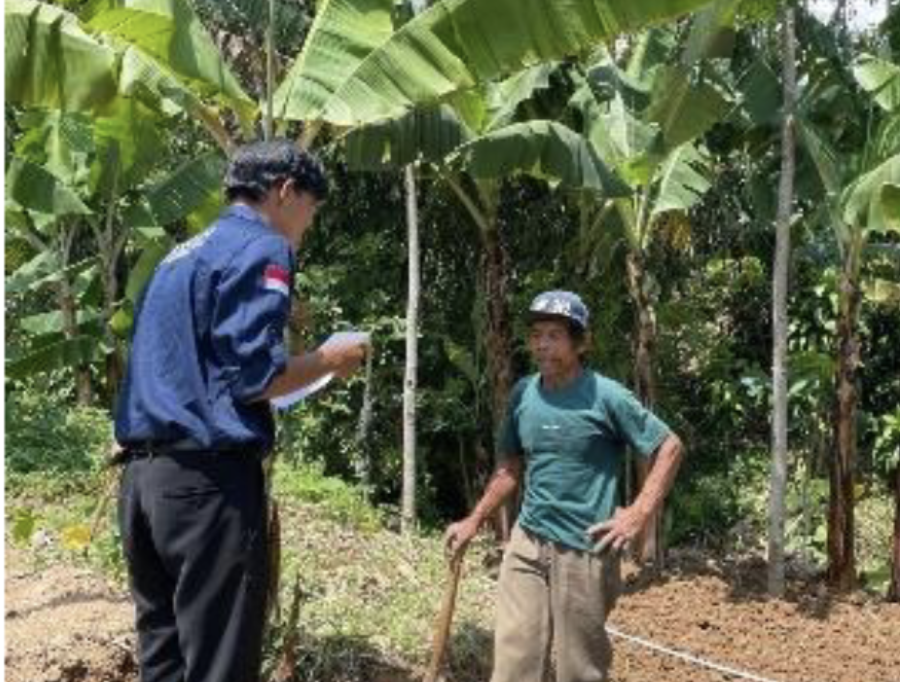
Untuk mengidentifikasi perubahan tersebut secara lebih akurat, tim menggunakan analisis spasial melalui teknik overlaypeta tutupan lahan tahun 2004, 2014, dan 2024. Validasi hasil pemetaan dilakukan melalui 45 titik sampel pengecekan lapangan, sehingga perubahan kondisi kawasan dapat dianalisis secara spasial maupun berdasarkan kondisi aktual di lapangan.

Kajian tersebut juga menyoroti berbagai upaya konservasi yang dilakukan oleh pengelola kawasan, termasuk Perhutani BKPH Moga. Secara kelembagaan, BKPH Moga mengelola kawasan seluas 7.302,27 hektare yang terbagi dalam RPH Diwung, Karangsari, Moga, dan Tigasari.

Melalui pemetaan perubahan tutupan lahan, penelitian ini menyediakan informasi spasial yang dapat digunakan untuk menentukan wilayah yang mengalami tekanan paling besar sekaligus mendukung perencanaan rehabilitasi, reforestasi, dan pengelolaan kawasan hutan secara lebih terarah.
Related Posts

Leave a Reply

* Kode Akses Komentar:

* Tuliskan kode akses komentar diatas:

GDPR

  • Privacy Policy

Privacy Policy

At unnes.ac.id, the privacy of our visitors is of extreme importance to us. This privacy policy document outlines the types of personal information that is received and collected by unnes.ac.id and how it is used.

Log Files

Like many other Web sites, unnes.ac.id makes use of log files. The information inside the log files includes internet protocol (IP) addresses, type of browser, Internet Service Provider (ISP), date/time stamp, referring/exit pages, and number of clicks to analyze trends, administer the site, track user’s movement around the site, and gather demographic information. IP addresses and other such information are not linked to any information that is personally identifiable.

Cookies

unnes.ac.id uses cookies to store information about visitors’ preferences, to record user-specific information on which pages the site visitor accesses or visits, and to personalize or customize our web page content based upon visitors’ browser type or other information that the visitor sends via their browser.

Third-party ad servers or ad networks use technology in their respective advertisements and links that appear on unnes.ac.id and which are sent directly to your browser. They automatically receive your IP address when this occurs. Other technologies (such as cookies, JavaScript, or Web Beacons) may also be used by our site’s third-party ad networks to measure the effectiveness of their advertising campaigns and/or to personalize the advertising content that you see on the site.

unnes.ac.id has no access to or control over these cookies that are used by third-party advertisers.

You should consult the respective privacy policies of these third-party ad servers for more detailed information on their practices as well as for instructions about how to opt-out of certain practices. unnes.ac.id’s privacy policy does not apply to, and we cannot control the activities of, such other advertisers or web sites.

If you wish to disable cookies, you may do so through your individual browser options. More detailed information about cookie management with specific web browsers can be found at the browsers’ respective websites.

Consent

By using our website, you hereby consent to our privacy policy and agree to its terms.

Update

This Privacy Policy was last updated on: 2023-02-14. Should we update, amend or make any changes to our privacy policy, those changes will be posted here.

Contact Us

If you have any questions, comments, or concerns about our Privacy Policy or our practices with regards to your personal information, please feel free to contact us through the contact form on our website or by emailing us at humas[at]mail.unnes.ac.id.

This Privacy Policy is intended as a general guide to our practices in collecting and using information. If there is any inconsistency between this Privacy Policy and the terms of the Service Agreement or any other terms that may apply to specific services you use, then those specific service terms shall apply.

Terms of Use

By using our website, you agree to abide by this Privacy Policy. If you do not agree with this Privacy Policy, please do not use our website. We reserve the right to update this Privacy Policy from time to time without prior notice. Please review our Privacy Policy periodically to check for changes. Your continued use of our website following the posting of changes to this Privacy Policy means that you accept the changes.

Thank you for reading our Privacy Policy. We are committed to protecting the privacy of our website visitors and will continue to update our Privacy Policy to ensure optimal protection.