PGSD FIPP UNNES and PT Marimas Putra Kencana Strengthen Collaboration on Environmentally Aware Character Education Research

Universitas Negeri Semarang/Faculty of Education and Psychology/Berita/PGSD/PGSD FIPP UNNES and PT Marimas Putra Kencana Strengthen Collaboration on Environmentally Aware Character Education Research

SEMARANG, September 14, 2026 — The Elementary School Teacher Education Study Program (PGSD), Faculty of Education and Psychology (FIPP), Semarang State University (UNNES) together with PT Marimas Putra Kencana conducted a Focus Group Discussion (FGD) on Research Collaboration entitled “Innovation of Prototype-Based Educational Models in Building Environmentally Caring Values ​​and Characters in Elementary School Students” , Monday (14/9/2026).
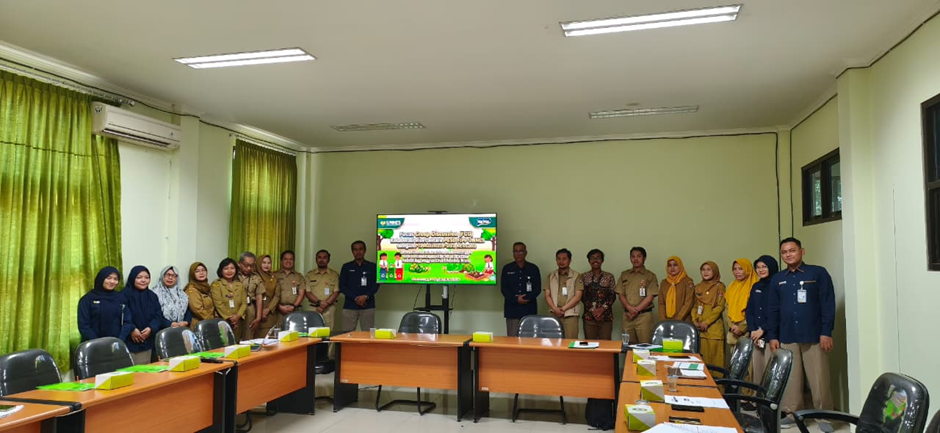
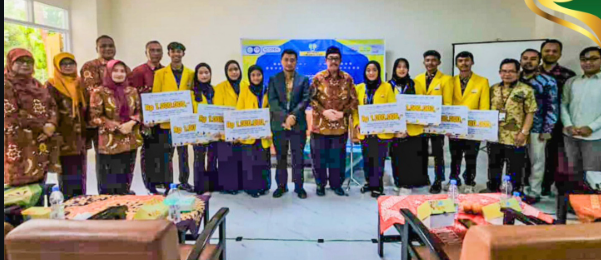
PGSD FIPP UNNES together with PT Marimas Putra Kencana, school principals, and teachers in the Research Collaboration FGD activity.

The activity, which took place at the PGSD FIPP UNNES Campus, was part of strengthening collaboration between universities, the business world, and schools in developing learning innovations that support environmentally conscious character education for elementary school students.

The activity was opened by the Coordinator of the PGSD Study Program FIPP UNNES Sigit Yulianto, M.Pd., and attended by the Head of the Research Team Susilo Tri Widodo, S.Pd., MH, representatives of Corporate Social Responsibility (CSR) PT Marimas Putra Kencana Sebastian Gary Prakoso , as well as a number of school principals and teachers from the Ngaliyan area, Semarang City.

The series of activities began with the signing of an Implementation Agreement (IA) between PGSD FIPP UNNES and PT Marimas Putra Kencana as a form of commitment to supporting the implementation of collaborative research and development of educational innovations that are in accordance with the needs of elementary schools.

Strengthening Environmental Care Habits

In the focus group discussion (FGD) session, school principals and teachers shared their experiences regarding the conditions and challenges in developing environmentally conscious habits in students. One issue that received widespread attention was waste management.

Bayu, one of the focus group discussion participants, stated that the school already has regulations and various activities, such as waste sorting and ecobricks. However, challenges remain in maintaining consistent student habits and ensuring that sorted waste is managed sustainably.

Lia echoed this sentiment. The school has been sorting waste by type and experimenting with various uses, including processing plastic waste into products. This experience demonstrates that waste management innovations need to consider their impact on the environment holistically.

Meanwhile, Musrian emphasized that the waste problem cannot be solved through a single program. He believes a more realistic approach is to reduce waste generation, minimize its impact, and build ongoing habits in schools, families, and communities.
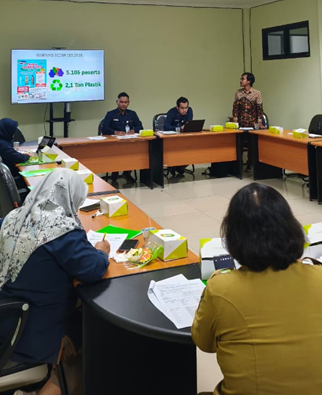
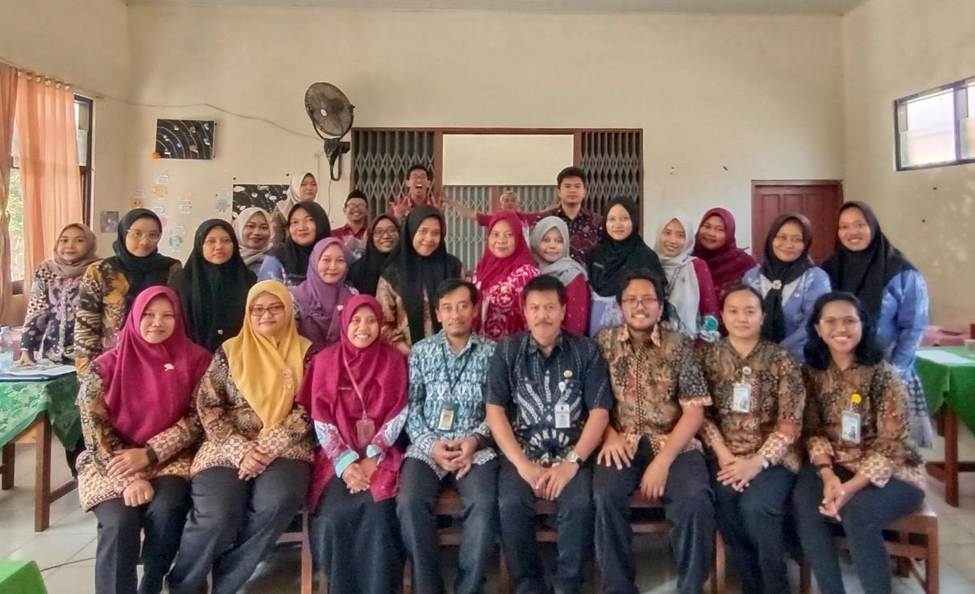
The principal and teachers discussed strengthening environmental character education in elementary schools.

Input from Practitioners and Learning Experts

Various input from school principals and teachers served as crucial input for the research team in designing a contextual and applicable educational model in schools. Education practitioners also provided support for the development of this collaborative research program.

The FGD also received support from Dr. Panca Dewi Purwati, M.Pd., a learning expert. She appreciated the idea of ​​developing a prototype-based education model because it connects learning innovations with real-world needs.

The collaboration between PGSD FIPP UNNES, PT Marimas Putra Kencana, and schools in the Ngaliyan area is expected to produce an educational model that is not only a prototype, but can also be applied in learning and support the formation of environmental care habits in elementary school students.

Through this collaboration, innovation development is expected to be more contextual, applicable, and relevant to the issues facing schools. It is also hoped that strengthening environmental character can be carried out sustainably through synergy between schools, families, communities, universities, and the business world.
Related Posts

Leave a Reply

* Kode Akses Komentar:

* Tuliskan kode akses komentar diatas:

GDPR

  • Privacy Policy

Privacy Policy

At unnes.ac.id, the privacy of our visitors is of extreme importance to us. This privacy policy document outlines the types of personal information that is received and collected by unnes.ac.id and how it is used.

Log Files

Like many other Web sites, unnes.ac.id makes use of log files. The information inside the log files includes internet protocol (IP) addresses, type of browser, Internet Service Provider (ISP), date/time stamp, referring/exit pages, and number of clicks to analyze trends, administer the site, track user’s movement around the site, and gather demographic information. IP addresses and other such information are not linked to any information that is personally identifiable.

Cookies

unnes.ac.id uses cookies to store information about visitors’ preferences, to record user-specific information on which pages the site visitor accesses or visits, and to personalize or customize our web page content based upon visitors’ browser type or other information that the visitor sends via their browser.

Third-party ad servers or ad networks use technology in their respective advertisements and links that appear on unnes.ac.id and which are sent directly to your browser. They automatically receive your IP address when this occurs. Other technologies (such as cookies, JavaScript, or Web Beacons) may also be used by our site’s third-party ad networks to measure the effectiveness of their advertising campaigns and/or to personalize the advertising content that you see on the site.

unnes.ac.id has no access to or control over these cookies that are used by third-party advertisers.

You should consult the respective privacy policies of these third-party ad servers for more detailed information on their practices as well as for instructions about how to opt-out of certain practices. unnes.ac.id’s privacy policy does not apply to, and we cannot control the activities of, such other advertisers or web sites.

If you wish to disable cookies, you may do so through your individual browser options. More detailed information about cookie management with specific web browsers can be found at the browsers’ respective websites.

Consent

By using our website, you hereby consent to our privacy policy and agree to its terms.

Update

This Privacy Policy was last updated on: 2023-02-14. Should we update, amend or make any changes to our privacy policy, those changes will be posted here.

Contact Us

If you have any questions, comments, or concerns about our Privacy Policy or our practices with regards to your personal information, please feel free to contact us through the contact form on our website or by emailing us at humas[at]mail.unnes.ac.id.

This Privacy Policy is intended as a general guide to our practices in collecting and using information. If there is any inconsistency between this Privacy Policy and the terms of the Service Agreement or any other terms that may apply to specific services you use, then those specific service terms shall apply.

Terms of Use

By using our website, you agree to abide by this Privacy Policy. If you do not agree with this Privacy Policy, please do not use our website. We reserve the right to update this Privacy Policy from time to time without prior notice. Please review our Privacy Policy periodically to check for changes. Your continued use of our website following the posting of changes to this Privacy Policy means that you accept the changes.

Thank you for reading our Privacy Policy. We are committed to protecting the privacy of our website visitors and will continue to update our Privacy Policy to ensure optimal protection.