

Klaten, August 2026 — The Faculty of Education and Psychology (FIPP) at Universitas Negeri Semarang (UNNES) has once again demonstrated its commitment to community empowerment through the “SmartGreen TPS” initiative: empowering the local youth organization (Karang Taruna) via a behavioral monitoring system and the innovative “Gibrig” machine for sustainable waste management in Kranggan Village, Klaten. Held on August 9, 2026, at the Kranggan Village Hall, the program integrates a behavioral change approach with the use of appropriate technology to support community-based waste management.
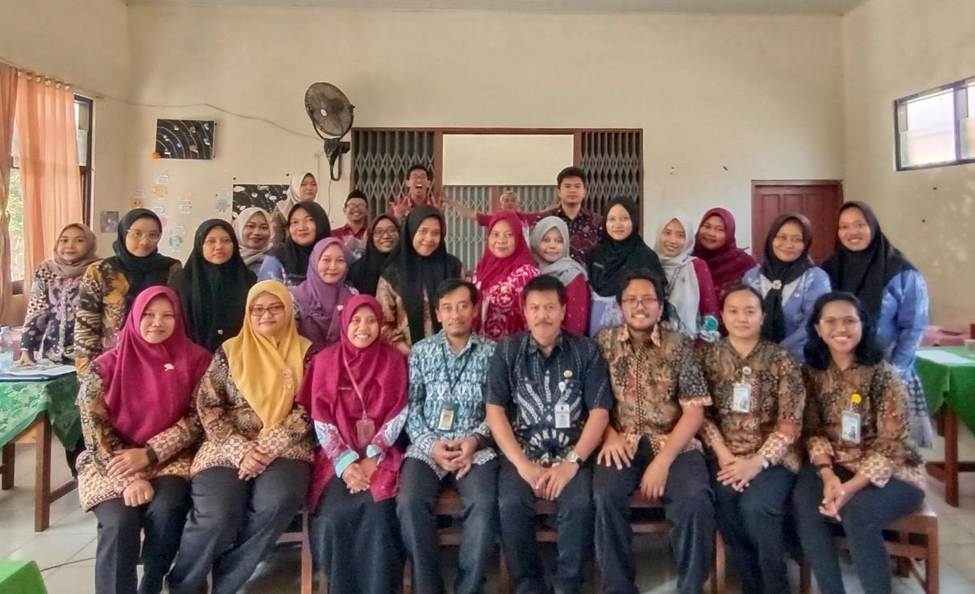
The activity involved Talitha Lintang Pertiwi, S.Psi., M.Psi., a lecturer at Universitas Negeri Semarang, and her team in reinforcing the importance of active community participation in waste management. Abdullah Malik Islam Filardli, S.T., M.T., a lecturer at the Vocational School of Universitas Diponegoro, also participated as a speaker, addressing innovations related to the “Gibrig” machine. The Kranggan Village Youth Organization (Karang Taruna) was among the groups engaged to strengthen the role of the younger generation in fostering more structured and sustainable waste management habits.
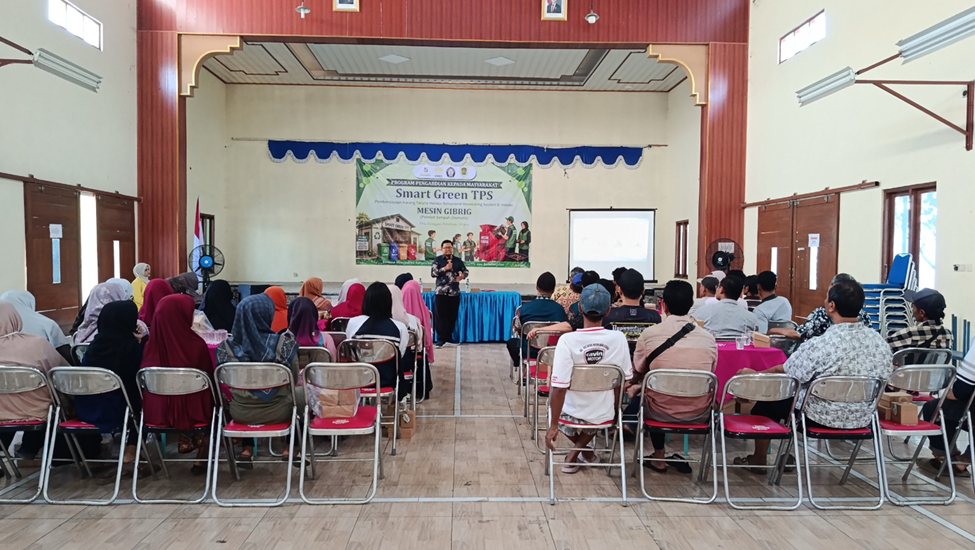
Combining Behavioral Change and Appropriate Technology
SmartGreen TPS was developed by integrating two complementary approaches: a behavioral monitoring system and the innovative “Gibrig” machine. The behavioral monitoring approach aims to foster more consistent community habits regarding waste management, while the Gibrig machine serves as a supporting technology for the waste sorting process.
This integration of behavioral and technological aspects is a key strength of the program. Effective waste management requires not only the availability of facilities but also community engagement to ensure the provided technology is utilized sustainably. Consequently, local youth organizations (Karang Taruna) are encouraged to play an active role in driving waste management efforts at the village level.
The “Gibrig” Machine to Support Village Waste Management
A key component of the activity was the introduction and utilization of the “Gibrig” machine—an appropriate technology designed to facilitate the waste sorting process. The machine is expected to help the community improve the effectiveness of waste management while strengthening the sustainability of the waste collection and processing site (TPS) operations in Kranggan Village.
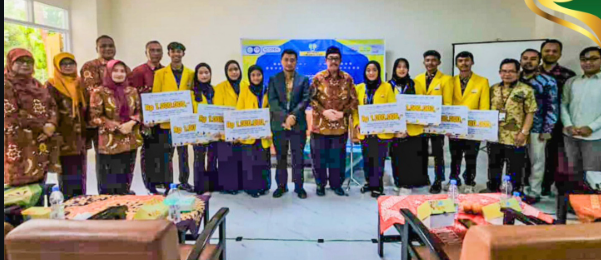
To ensure the program’s sustainability, the Gibrig machine was formally handed over to the Kranggan Village Government. The handover was conducted by Talitha Lintang Pertiwi, S.Psi., M.Psi., and received by Gunawan Budi Utomo, S.AP., the Head of Kranggan Village. This handover marks a crucial step in ensuring that the innovation introduced during the community service initiative does not end with mere outreach, but continues to benefit the community long after the program concludes.
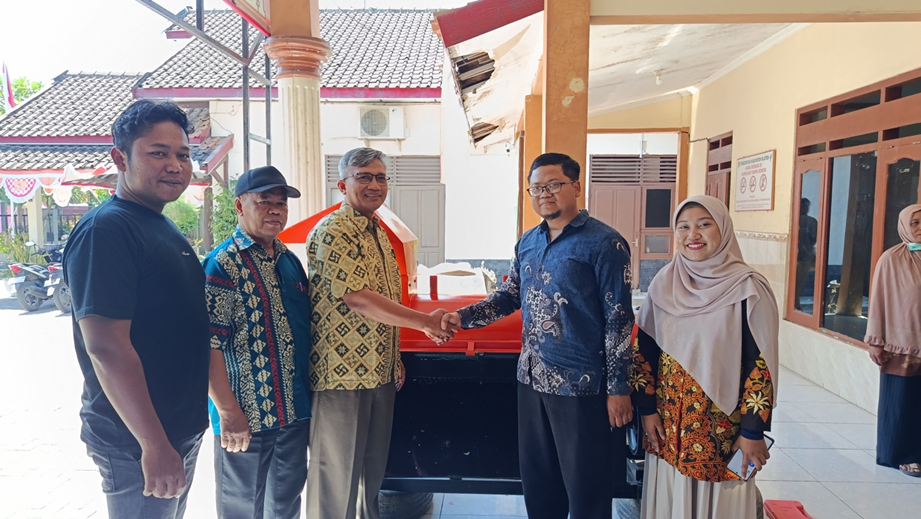
Karang Taruna as a Driving Force for SmartGreen TPS
Involving Karang Taruna (the local youth organization) is a crucial element of the empowerment approach being implemented. The village’s youth hold a strategic position as drivers of behavioral change and as bridges between introduced innovations and the community’s daily practices. Through the SmartGreen TPS program, participants are not only introduced to waste management technologies but are also guided to understand that successful environmental management relies heavily on consistent behavior and collective participation.
This approach aims to foster a sense of program ownership, ensuring that waste management does not depend entirely on external interventions. With support from the village government and community involvement, SmartGreen TPS is expected to evolve into a more participatory and sustainable waste management model.
Supporting Sustainable Villages and Responsible Consumption
The SmartGreen TPS program aligns with the Sustainable Development Goals (SDGs) agenda, particularly SDG 11 (Sustainable Cities and Communities) and SDG 12 (Responsible Consumption and Production). Efforts to strengthen waste management at the village level play a crucial role in creating more sustainable residential environments while fostering responsible consumption and waste management practices.
Through this initiative, FIPP UNNES reinforces its commitment to community service that goes beyond mere knowledge transfer, integrating behavioral science, community empowerment, and appropriate technology. The collaboration with the Kranggan Village Government and the involvement of the local youth organization (Karang Taruna) are expected to lay the foundation for the program’s long-term sustainability and cultivate a culture of self-reliant waste management within the community.