



The implementation team for the Student Organization Capacity Strengthening Program (PPK Ormawa) from the SGL PGSD department at Semarang State University (UNNES) held the “Tunas Ngrembaka” Literacy Corner event, focusing on character literacy and self-protection, in Palir, Podorejo Village, Semarang City, on Sunday (August 9, 2026). The session, which covered the topics of “My Private Areas” and “Toilet Training,” was attended by 33 children (tunas ngrembaka), 13 implementation team members, 3 Student Organization team members, and 7 task force members.
This activity is part of the “NGREMBAKA AKSARA” Program, which targets four groups: the “Tunas Ngrembaka” Literacy Corner for children, the “Karya Ngrembaka” Literacy Corner for adolescents, the “Cakra Ngrembaka” Literacy Corner for the working-age population, and the “Kersa Ngrembaka” Literacy Corner for the elderly. In this specific session, the “Tunas Ngrembaka” Literacy Corner focused on character strengthening and early-age self-protection education.
Farid Fikri Khoirul Rasyid, the leader of the UNNES PGSD SGL PPK Ormawa team, stated that early self-protection education serves as a crucial foundation for the “Tunas Ngrembaka” Literacy Corner, aiming to equip children with independence and vigilance against potential violence.
“The ‘Tunas Ngrembaka’ Literacy Corner is designed to strengthen children’s basic literacy, creativity, and character from an early age. Through the ‘My Private Areas’ and ‘Toilet Training’ modules, we want children to understand independence regarding personal hygiene while also recognizing their body boundaries as a form of self-protection against violence and abuse. It is important to provide this education as early as possible so that it becomes an ingrained habit and a part of the child’s awareness,” he explained.
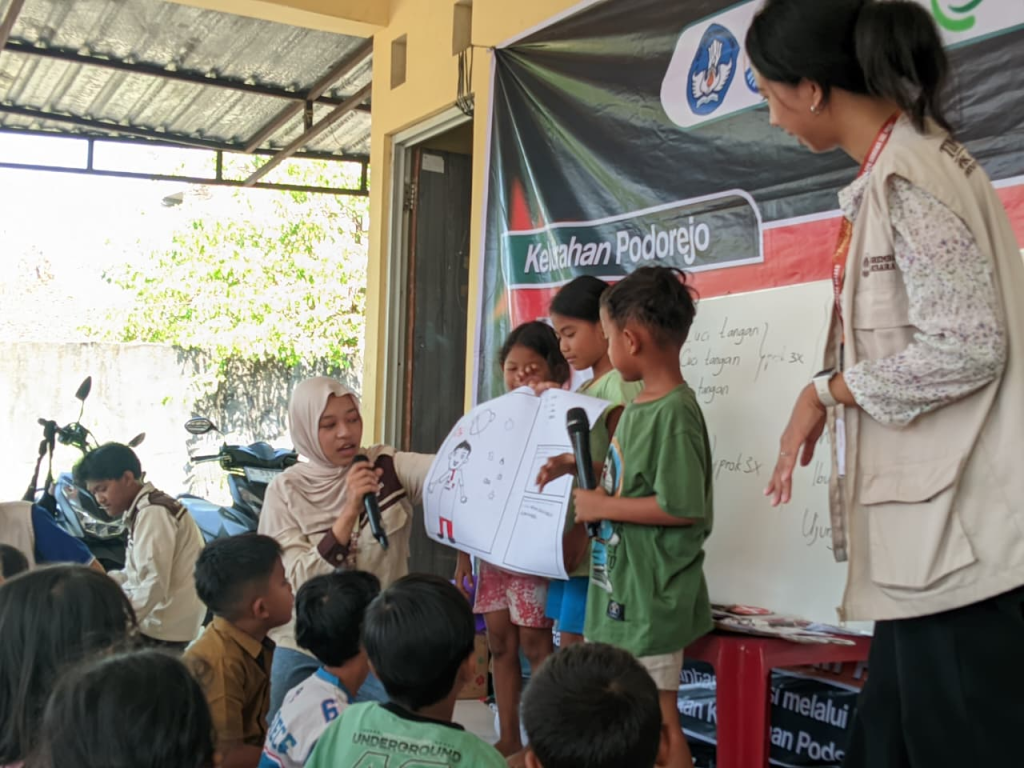
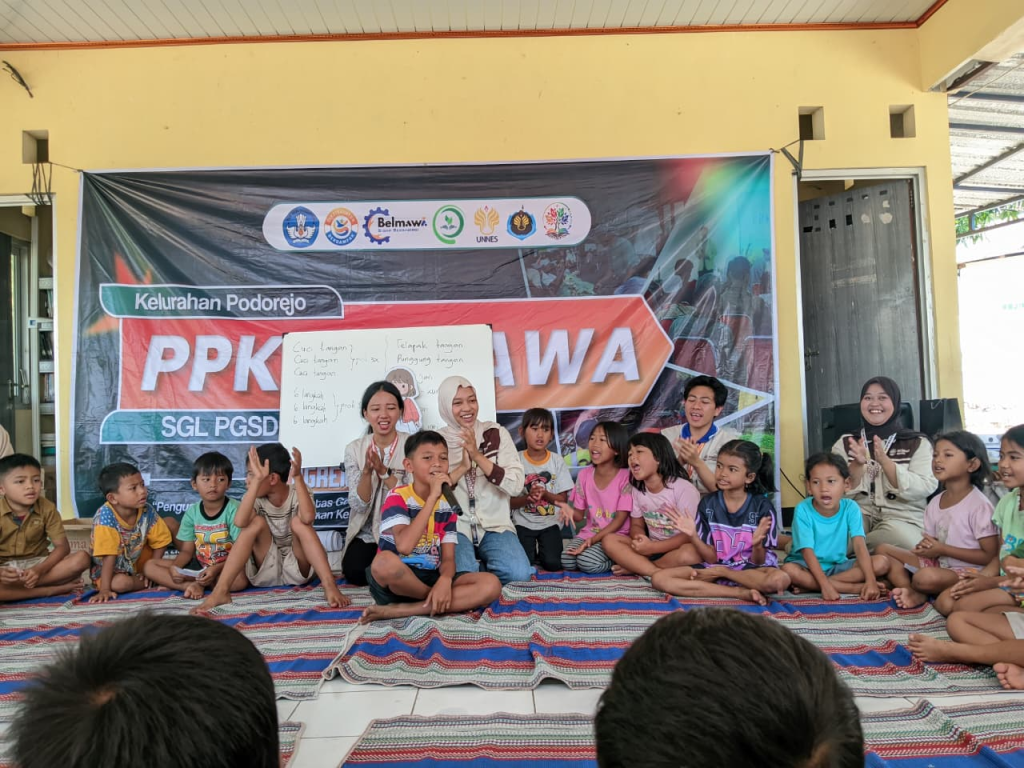
During the event, the facilitators introduced the importance of toilet training and the correct six-step handwashing method: cleaning the palms, the backs of the hands, the spaces between fingers, interlocking fingers, the thumbs, and the fingertips. Additionally, the children were introduced to the concept of “private body areas”—specifically the mouth, chest, buttocks, and genitals and the importance of keeping these areas safe from unwanted touch by others.
One of the facilitators, Velicia Theresia Irene, explained that introducing the concept of private areas aims to equip children with the ability to recognize and protect themselves from an early age. “Children need to know which body parts are private and should not be touched by just anyone; they also need to know when to be brave enough to say ‘no’ and immediately tell a trusted adult if something makes them uncomfortable. Furthermore, establishing habits like proper toilet training and handwashing is crucial for fostering cleanliness and independence early on,” she stated.
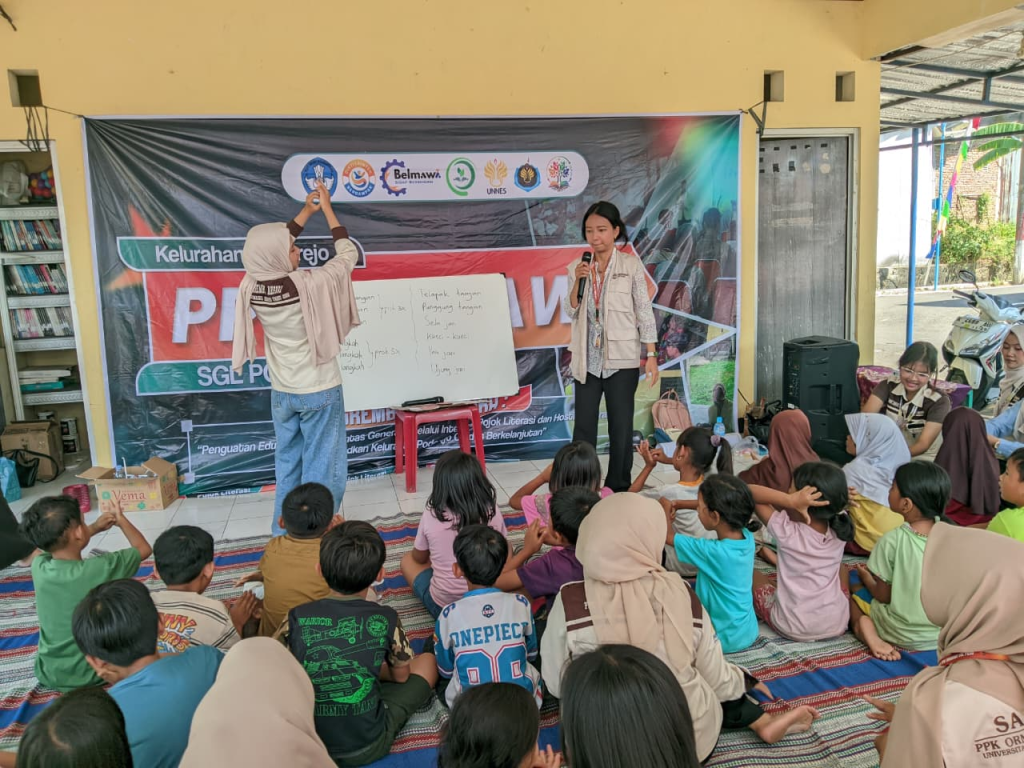
The activities were tailored to the participants’ age groups. For the younger groups comprising Kindergarten A, Kindergarten B, and first grade children engaged in hands-on toilet training practice guided by facilitators. Meanwhile, the older groups participated in drawing activities, discussions, and presentations regarding private areas and personal safety, allowing for a deeper understanding suited to their developmental level.
Irul, one of the participating children, expressed his happiness and said he gained new knowledge from the event.
“Now I know the right way to wash my hands—it turns out there are six steps. I also understand which body parts shouldn’t be touched by other people. It was fun because we got to practice and do some drawing, too,” he said.
The Head of RW 11 (Community Unit 11), Mrs. Anas, also commended the event and expressed hope that this type of personal safety education would continue to be provided to the children in the neighborhood.
“We strongly support the ‘Tunas Ngrembaka Literacy Corner’ initiative because the material is crucial for children particularly regarding personal safety, a topic rarely taught in such a direct and engaging manner. We hope programs like this continue so that children in our community gain a better understanding of how to protect themselves from an early age,” the speaker stated.
Through the ‘Tunas Ngrembaka Literacy Corner’ initiative, the SGL PGSD UNNES PPK Ormawa team is committed to consistently delivering practical character education and personal safety programs for children, aiming to foster a generation that is independent, vigilant, and capable of self-protection from an early age.