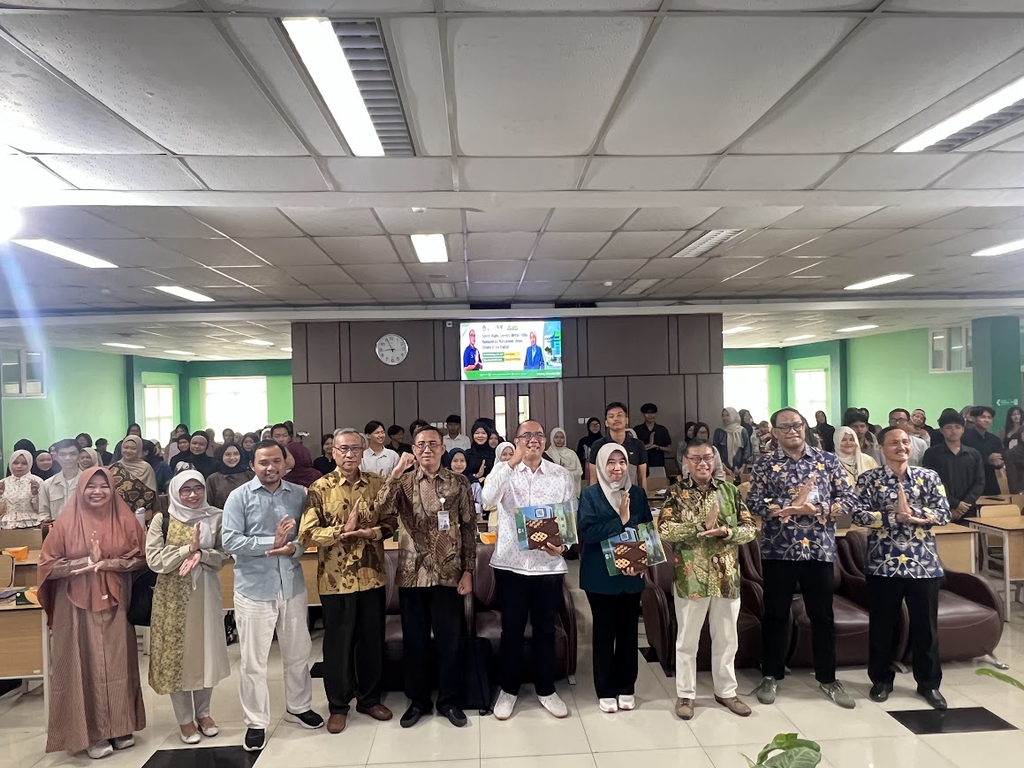




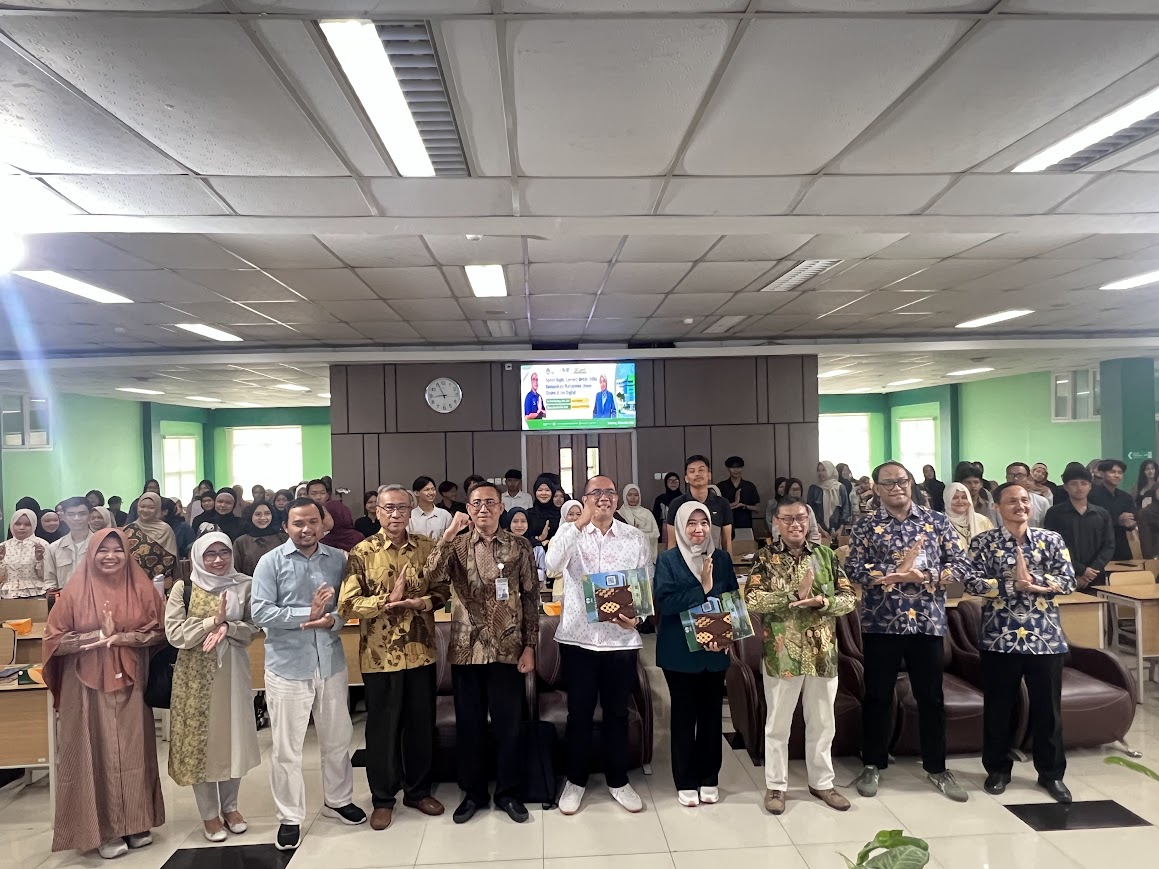
SEMARANG, November 10, 2026 – The Faculty of Education and Psychology (FIPP) of Semarang State University (UNNES) took proactive steps to protect students from the degradation of communication ethics in cyberspace through the 2026 FIPP UNNES Student Soft Skills Training. Carrying the theme “Speak Right, Connect Better: Communication Ethics for UNNES Students – Lecturers in the Digital Era”, the event which took place in the 3rd Floor Dean’s Hall of FIPP UNNES on Tuesday (11/10/2026) was designed to instill manners, professionalism, and politeness in academic interactions amidst the rapid flow of instant communication.
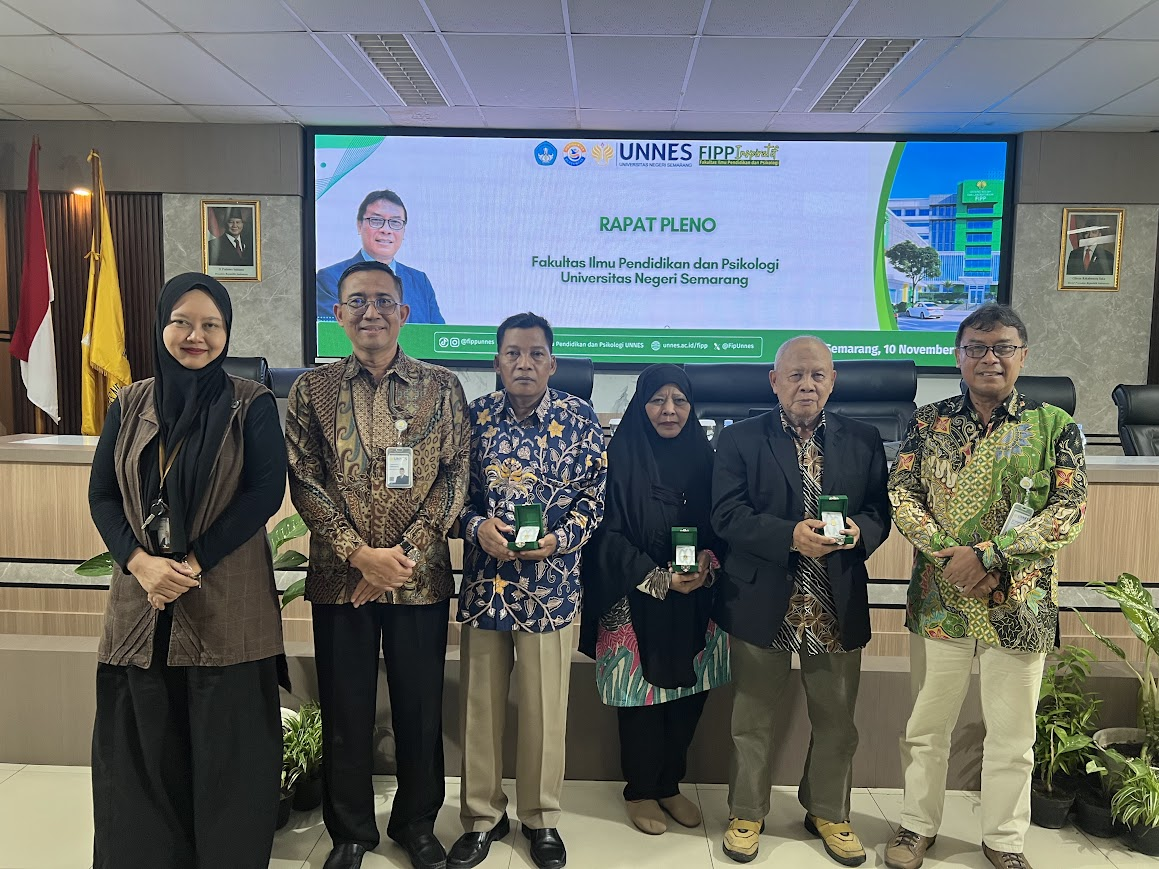
Dean of FIPP UNNES, Prof. Dr. Edy Purwanto, M.Sc., officially opened the event by emphasizing that the acceleration of information technology must be balanced with moral maturity. Addressing faculty leaders, department heads, and hundreds of students, Prof. Edy reminded them that technological advancements often lead to the neglect of etiquette, even though ethics is the primary driver of individual behavior.
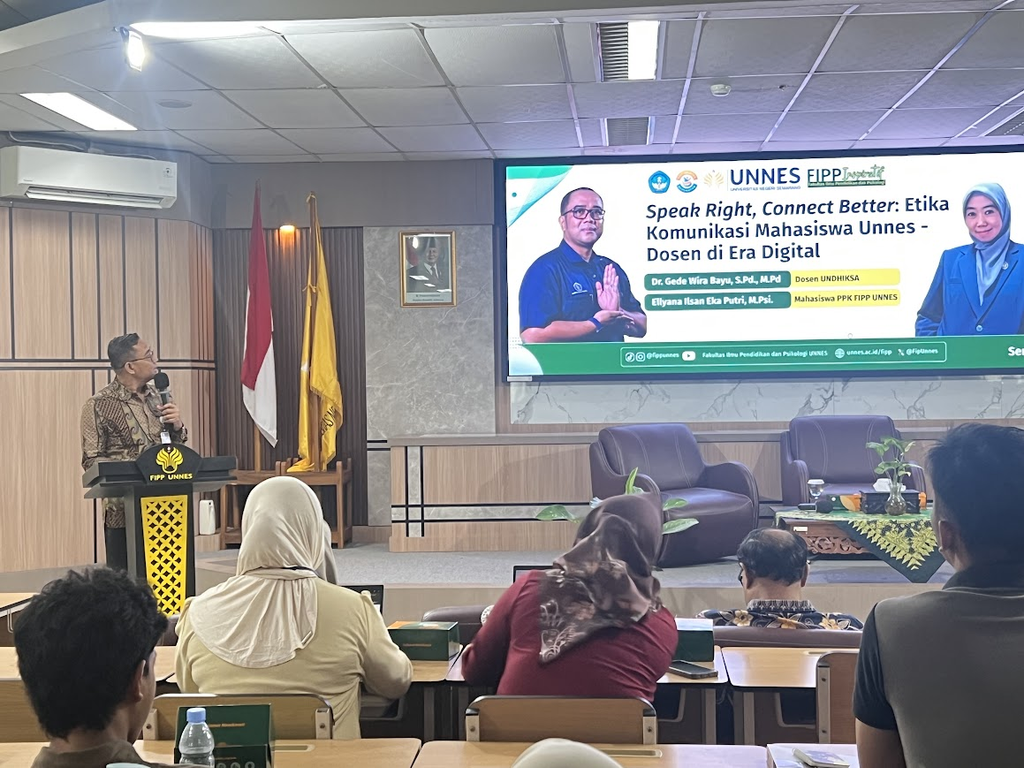
“They say IT progress is very rapid, and the technological progress is extraordinary, but ethics is something that’s not getting enough attention. Therefore, during the lectures that students take, we want to provide nurturing, nurturing, especially regarding communication skills,”* emphasized Prof. Edy Purwanto.
Previously, the Head of the Organizing Committee, Sugihartono, reported that this program aims to establish communication patterns that are not only effective but also polite and responsible, in order to build harmonious academic relationships between students and lecturers. Furthermore, this training aims to provide a comprehensive understanding of communication ethics on campus so that students are better prepared to adapt and open to new insights.
Dissecting Generational Polarization and Digital Messaging Formulas
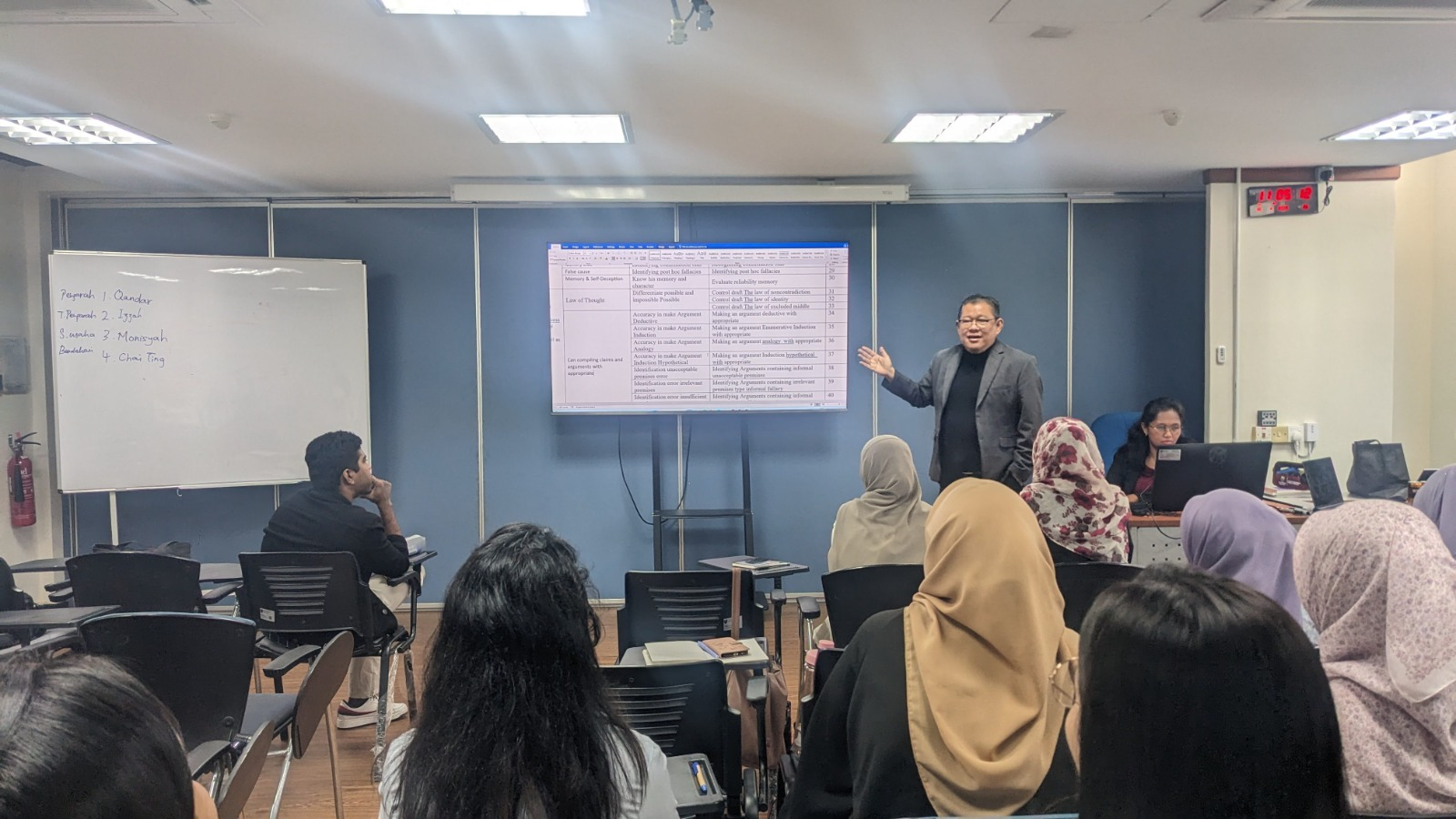
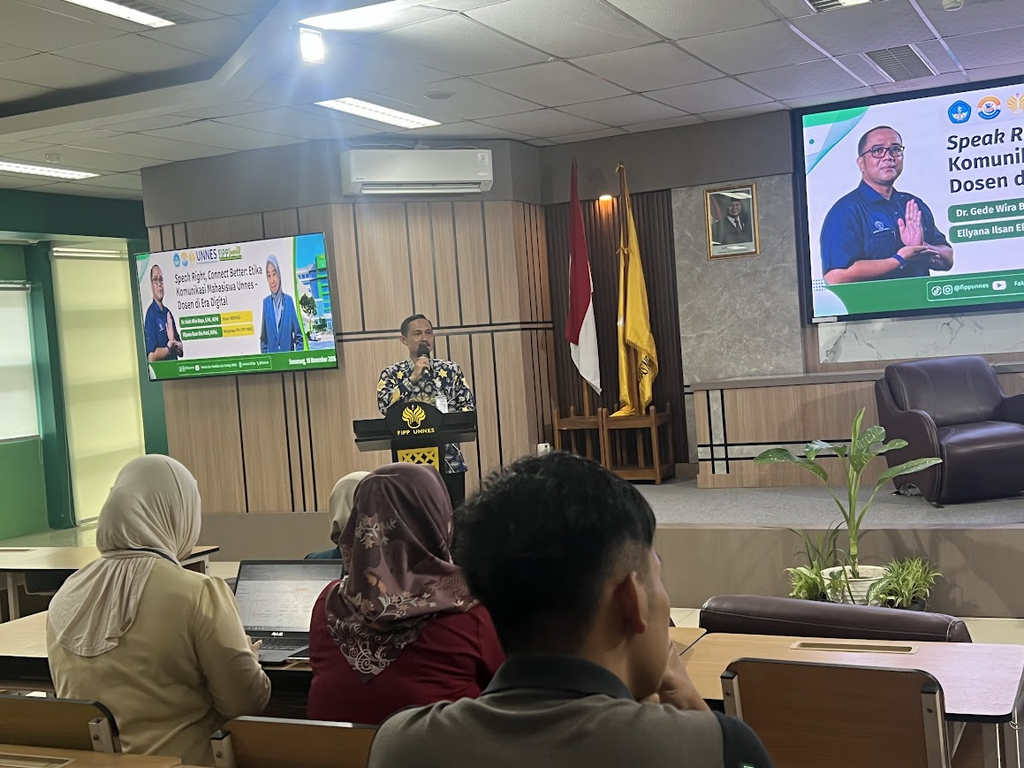
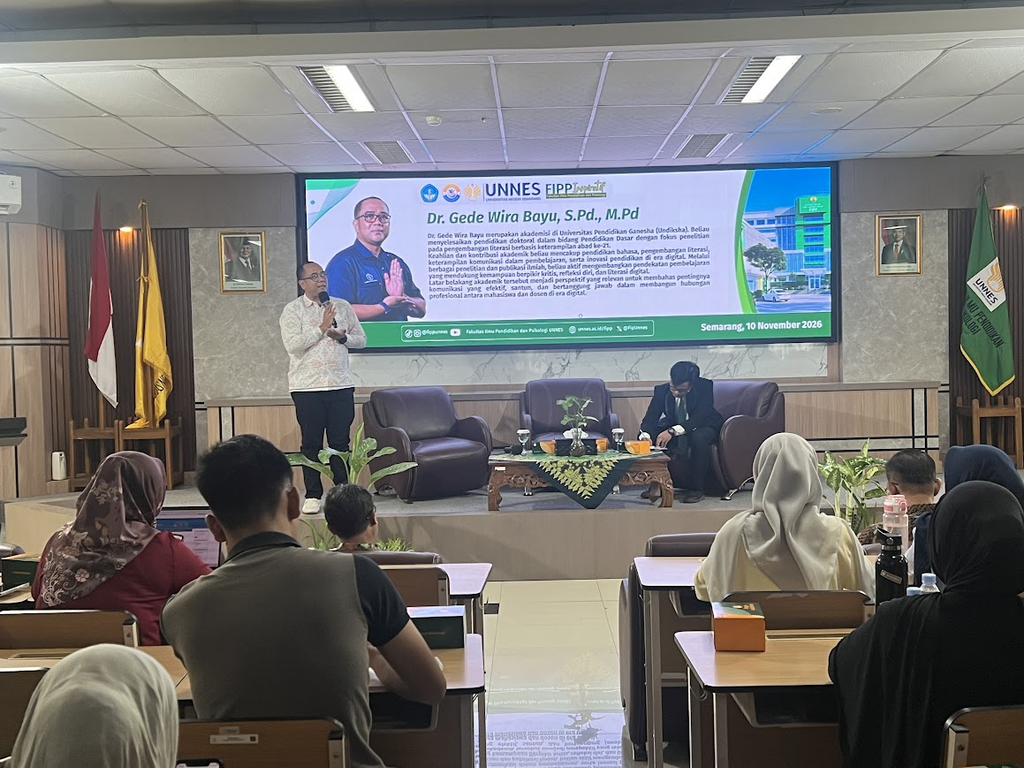
The first speaker presentation session presented an academic from Ganesha University of Education (Undiksha), Dr. Gede Wira Bayu, S.Pd., M.Pd., who thoroughly explored the clash of expectations between Generation X among lecturers and Generation Z among students. Dr. Bayu highlighted the rise of unethical instant communication phenomena, such as sending messages without identity (name, student ID, and study program), sending text messages late at night outside of work hours, and students’ demands for immediate replies. He gave examples of the reality of students contacting lecturers on weekends when the lecturers are resting, haphazardly shortening greetings, or demanding confirmation of the lecturer’s presence even though the student in question is still at home.
As a practical guide, Dr. Bayu formulated a standard formula for the anatomy of digital communication for students: starting with a formal greeting, an apology for the interruption, a clear self-identity, a concise, solution-oriented message, delivery during operational working hours (except in emergency situations), and ending with an expression of gratitude.
“The world is in your hands on your phone. Be smart people with attitude. Good communication isn’t just about conveying messages, but also about building positive and valuable relationships,” Dr. Bayu said bluntly.
Navigating Dilemmatic Situations and Student Assertiveness
Complementing the ethical foundation, the second speaker, a PPK FIPP UNNES student and psychology practitioner, Ellyana Ilsan Eka Putri, M.Psi., invited the audience to dissect the “potholes” in the dynamics of lectures[10]. Ellyana guided an interactive simulation to provide a sense of psychological safety so that students can remain assertive when facing difficult situations without violating ethics.
Various concrete case studies are practiced directly, starting from strategies for following up on assignment drafts on the verge of a deadline (H-1 deadline) without appearing to terrorize the lecturer, how to refuse sudden offers of tutoring schedules that clash with other academic agendas by offering objective facts and alternative times, to emergency mitigation (SOS messages) outside of working hours when students are struck by disaster before exams.
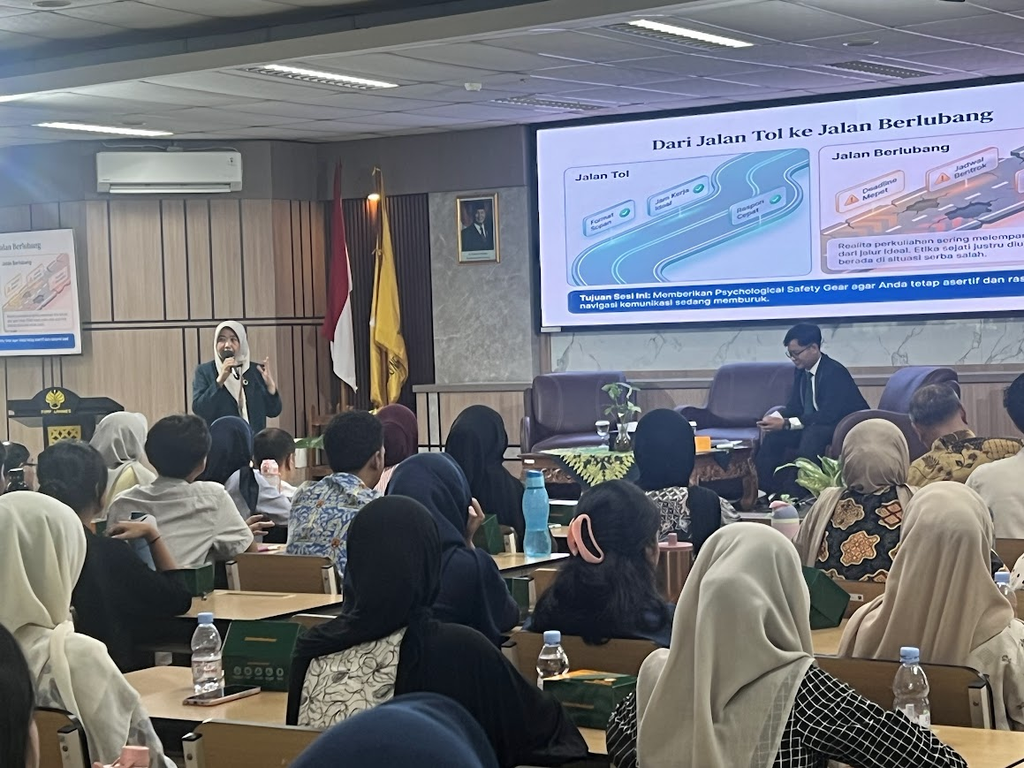
“Ethics are truly tested when we find ourselves in difficult situations. Assertiveness isn’t just about face-to-face communication; we also need assertiveness skills when communicating via text,” said Ellyana.
This training further emphasizes FIPP UNNES’s commitment to producing well-rounded academics—excellent in scientific competence and noble character. By mastering polite and professional digital communication skills, FIPP UNNES students are prepared to become future educators and professionals capable of building constructive interpersonal relationships in the modern era.