FIPP UNNES and Universiti Malaya Collaborate to Advance Sustainable Human Resource Management

The Faculty of Education and Psychology (FIPP), Universitas Negeri Semarang (UNNES), welcomed dozens of students from Universiti Malaya as part of a student exchange program on Thursday, 19 February 2026.

This initiative forms part of the FIPP International Forum 2026, a collaborative endeavor between FIPP UNNES, Universiti Malaya, and UIN Salatiga.

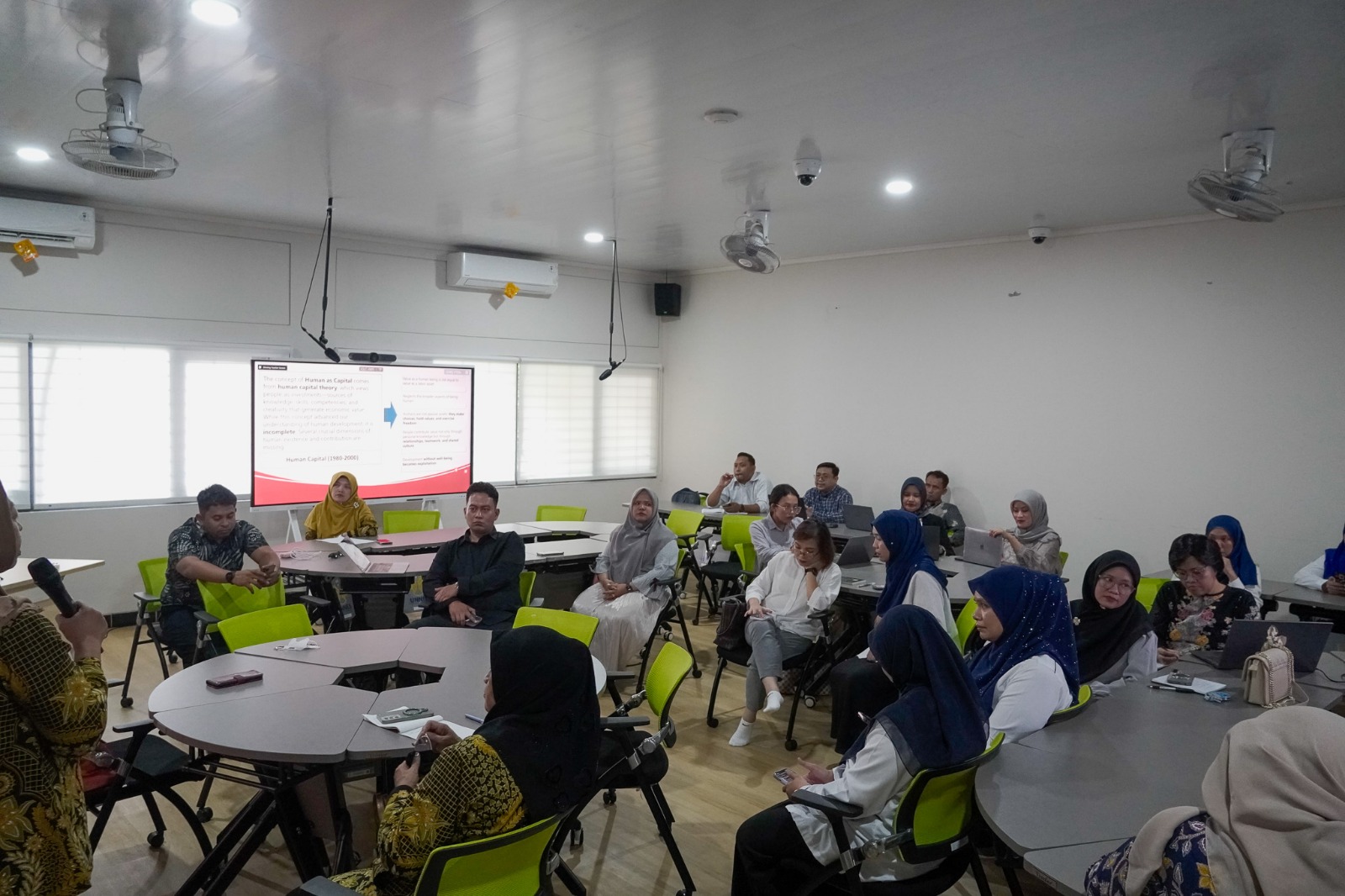
The program provides Universiti Malaya students with the opportunity to participate directly in academic lectures at FIPP UNNES. During their visit, they engaged in in-depth study of Human Resource Management (HRM) and supervision within the context of guidance and counseling.

In addition to the visiting students, postgraduate students from the Faculty of Human Resources at FIPP also participated in the program. The face-to-face sessions were conducted in the smart classroom of Building A3, FIPP UNNES.

The Vice Dean for Academic Affairs and Student Affairs of FIPP UNNES, Farid Ahmadi, S.Kom., M.Kom., Ph.D., stated that the program represents a strategic step toward enhancing FIPP UNNES’s international visibility. He emphasized that participating students benefit not only from direct academic engagement but also from formal academic recognition through a credit transfer scheme.

“Today, students from Universiti Malaya are attending in-person lectures, which will be followed by online sessions. The courses they undertake here are recognized by their home institution through a credit transfer scheme, and we are able to conduct direct academic assessment,” Farid noted.

The lectures were delivered by Prof. Dr. Awalya, M.Pd., Kons., Dr. Ernest Ceti Septyanti, M.Sc., Dr. Binti Isrofin, M.Pd., and Dr. Ipah Saripah, M.Pd. The faculty underscored a paradigm shift in management theory, moving beyond viewing individuals merely as instruments of production.

Contemporary Human Resource Management places human dignity and sustainability principles at the center of organizational policy. Students were encouraged to adopt a more humanistic approach to institutional governance and management.

The discussions gained further depth during sessions on the strengths-based approach. Universiti Malaya students examined the importance of identifying individual potential as a foundation for building healthy and resilient organizations.

This approach is particularly relevant for doctoral candidates in guidance and counseling, especially in fostering inclusive work environments. The emphasis shifts from identifying deficits to cultivating the unique capacities of each individual.

The sessions also highlighted that investment in human capital extends beyond administrative considerations. It constitutes a strategic alignment between organizational objectives and mental well-being. Innovation within educational institutions depends significantly on the capacity to position human resources as dignified and strategic partners.

Through this collaboration, FIPP UNNES reaffirms its commitment to strengthening international networks while advancing modern, human-centered management perspectives.

The initiative also contributes to the achievement of the Sustainable Development Goals (SDGs), particularly Goal 8 (Decent Work and Economic Growth) and Goal 4 (Quality Education), by promoting higher education standards that are adaptive to global benchmarks.

Looking ahead, this partnership is expected to further strengthen bilateral relations between the two universities and to foster the advancement of educational scholarship in the Southeast Asian region.
Related Posts

Leave a Reply

* Kode Akses Komentar:

* Tuliskan kode akses komentar diatas:

GDPR

  • Privacy Policy

Privacy Policy

Who we are

Our website address is: https://unnes.ac.id.

Comments

When visitors leave comments on the site we collect the data shown in the comments form, and also the visitor’s IP address and browser user agent string to help spam detection.

An anonymized string created from your email address (also called a hash) may be provided to the Gravatar service to see if you are using it. The Gravatar service privacy policy is available here: https://automattic.com/privacy/. After approval of your comment, your profile picture is visible to the public in the context of your comment.

Media

If you upload images to the website, you should avoid uploading images with embedded location data (EXIF GPS) included. Visitors to the website can download and extract any location data from images on the website.

Cookies

If you leave a comment on our site you may opt-in to saving your name, email address and website in cookies. These are for your convenience so that you do not have to fill in your details again when you leave another comment. These cookies will last for one year.

If you visit our login page, we will set a temporary cookie to determine if your browser accepts cookies. This cookie contains no personal data and is discarded when you close your browser.

When you log in, we will also set up several cookies to save your login information and your screen display choices. Login cookies last for two days, and screen options cookies last for a year. If you select “Remember Me”, your login will persist for two weeks. If you log out of your account, the login cookies will be removed.

If you edit or publish an article, an additional cookie will be saved in your browser. This cookie includes no personal data and simply indicates the post ID of the article you just edited. It expires after 1 day.

Embedded content from other websites

Articles on this site may include embedded content (e.g. videos, images, articles, etc.). Embedded content from other websites behaves in the exact same way as if the visitor has visited the other website.

These websites may collect data about you, use cookies, embed additional third-party tracking, and monitor your interaction with that embedded content, including tracking your interaction with the embedded content if you have an account and are logged in to that website.

Who we share your data with

If you request a password reset, your IP address will be included in the reset email.

How long we retain your data

If you leave a comment, the comment and its metadata are retained indefinitely. This is so we can recognize and approve any follow-up comments automatically instead of holding them in a moderation queue.

For users that register on our website (if any), we also store the personal information they provide in their user profile. All users can see, edit, or delete their personal information at any time (except they cannot change their username). Website administrators can also see and edit that information.

What rights you have over your data

If you have an account on this site, or have left comments, you can request to receive an exported file of the personal data we hold about you, including any data you have provided to us. You can also request that we erase any personal data we hold about you. This does not include any data we are obliged to keep for administrative, legal, or security purposes.

Where your data is sent

Visitor comments may be checked through an automated spam detection service.