
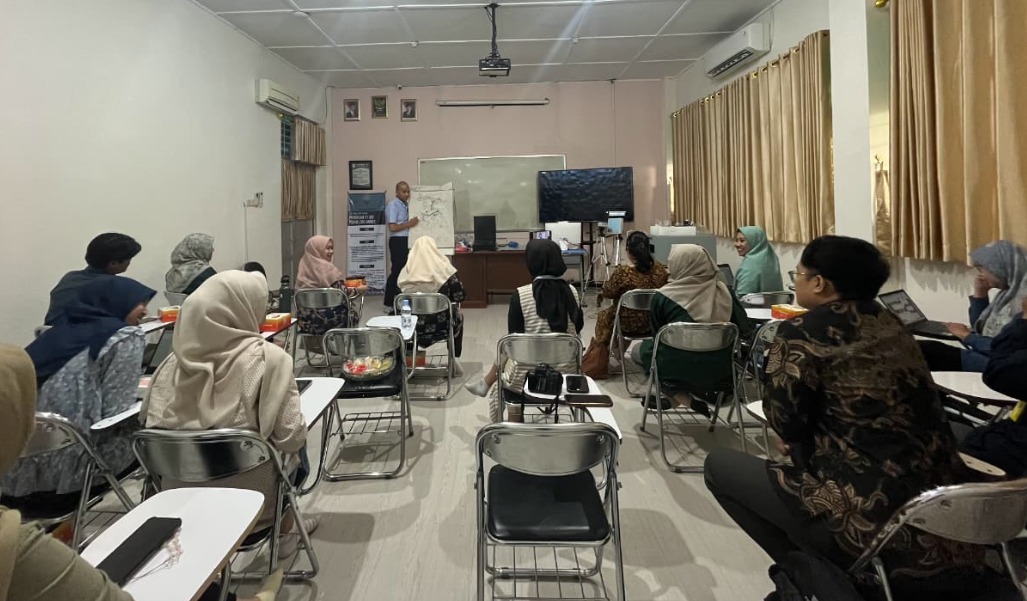
EEG Workshop for Cognitive and Behavioral Research at UNNES

The Psychology Study Program of Universitas Negeri Semarang (UNNES) organized a workshop on the application of electroencephalography (EEG), a neurophysiological instrument that records real-time brain activity. This event provided hands-on training for participants on how to utilize EEG to examine cognitive processes and human behavior.

The workshop featured Assoc. Prof. Dr. Edmi Edison, Ph.D. from Universiti Brunei Darussalam as the keynote expert. He delivered both conceptual foundations and technical demonstrations of EEG usage. Lecturers, laboratory assistants, and student representatives from UNNES attended and actively contributed throughout the session. The workshop was held on Wednesday, 16 July 2025, from 14:00 to 16:30 WIB in Building A1, Room A1-304.

Prof. Edmi employed a Socratic Dialogue approach, fostering continuous, structured questioning and discussion that enhanced engagement and deepened understanding. The session began with a theoretical overview of the brain structures and functions relevant to EEG signal acquisition. This was followed by a practical demonstration, involving one participant as the subject for identifying key electrode placement points.

Prof. Edmi emphasized the importance of having a dedicated technician who understands the full operational system of the EEG apparatus. Given the technical complexity of EEG, each session should not require relearning from the beginning. He recommended follow-up actions, including the development of instructional modules, establishment of trained technicians, and other supporting procedures to ensure consistent and accurate use of the system.

Miftahun Najah, S.Psi., MA, one of the participants who also served as the demonstration subject, expressed positive impressions of the workshop.

“This was an excellent session and highly recommended to be conducted again. We learned many previously unknown aspects, and our concerns regarding the use of the equipment were addressed. I hope there will be further follow-up activities.”

He also shared his expectations for future development.

“More training sessions are needed, because a single session is not sufficient, especially regarding electrode placement, analysis, and interpretation of EEG results. We also need follow-up work on module development and technician assignment.”

This workshop is expected to serve as an initial step for UNNES academics to strengthen their competence in EEG application, while opening broader opportunities for future research in cognitive psychology and neuropsychology.

Leave a Reply

* Kode Akses Komentar:

* Tuliskan kode akses komentar diatas:

GDPR

  • Privacy Policy

Privacy Policy

Who we are

Our website address is: https://unnes.ac.id.

Comments

When visitors leave comments on the site we collect the data shown in the comments form, and also the visitor’s IP address and browser user agent string to help spam detection.

An anonymized string created from your email address (also called a hash) may be provided to the Gravatar service to see if you are using it. The Gravatar service privacy policy is available here: https://automattic.com/privacy/. After approval of your comment, your profile picture is visible to the public in the context of your comment.

Media

If you upload images to the website, you should avoid uploading images with embedded location data (EXIF GPS) included. Visitors to the website can download and extract any location data from images on the website.

Cookies

If you leave a comment on our site you may opt-in to saving your name, email address and website in cookies. These are for your convenience so that you do not have to fill in your details again when you leave another comment. These cookies will last for one year.

If you visit our login page, we will set a temporary cookie to determine if your browser accepts cookies. This cookie contains no personal data and is discarded when you close your browser.

When you log in, we will also set up several cookies to save your login information and your screen display choices. Login cookies last for two days, and screen options cookies last for a year. If you select “Remember Me”, your login will persist for two weeks. If you log out of your account, the login cookies will be removed.

If you edit or publish an article, an additional cookie will be saved in your browser. This cookie includes no personal data and simply indicates the post ID of the article you just edited. It expires after 1 day.

Embedded content from other websites

Articles on this site may include embedded content (e.g. videos, images, articles, etc.). Embedded content from other websites behaves in the exact same way as if the visitor has visited the other website.

These websites may collect data about you, use cookies, embed additional third-party tracking, and monitor your interaction with that embedded content, including tracking your interaction with the embedded content if you have an account and are logged in to that website.

Who we share your data with

If you request a password reset, your IP address will be included in the reset email.

How long we retain your data

If you leave a comment, the comment and its metadata are retained indefinitely. This is so we can recognize and approve any follow-up comments automatically instead of holding them in a moderation queue.

For users that register on our website (if any), we also store the personal information they provide in their user profile. All users can see, edit, or delete their personal information at any time (except they cannot change their username). Website administrators can also see and edit that information.

What rights you have over your data

If you have an account on this site, or have left comments, you can request to receive an exported file of the personal data we hold about you, including any data you have provided to us. You can also request that we erase any personal data we hold about you. This does not include any data we are obliged to keep for administrative, legal, or security purposes.

Where your data is sent

Visitor comments may be checked through an automated spam detection service.