Semarang, Indonesia — Universitas Negeri Semarang (UNNES) participates in cooperative planning for climate-related disaster risks through partnerships with regional planning agencies, disaster management authorities, and village governments. Its contributions include scientific input into regional climate adaptation plans, participatory disaster risk assessments, early warning planning, evacuation arrangements, and contingency planning. These activities connect university expertise with government responsibilities for protecting communities exposed to climate-related hazards.
Supporting Surakarta City’s Climate Change Adaptation Action Plan
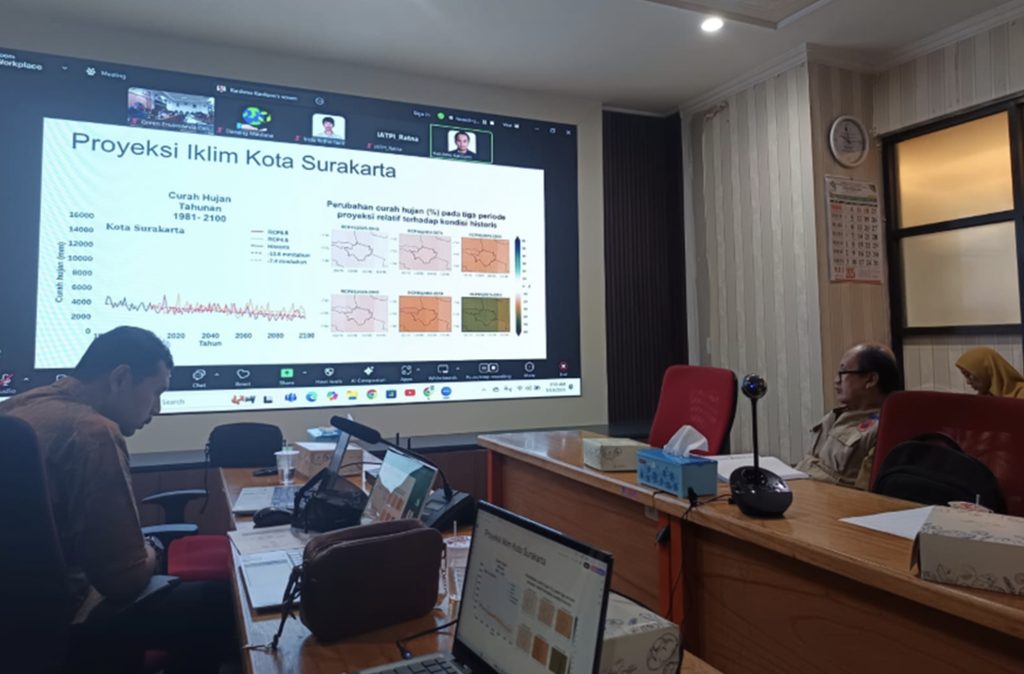
UNNES contributes directly to government climate planning through the involvement of Environmental Science lecturers from the Faculty of Mathematics and Natural Sciences (FMIPA). In 2025, Trida Ridho Fariz, M.Sc., joined the consulting team supporting Surakarta City’s Regional Development Planning Agency (BAPPEDA) in preparing its Regional Climate Change Adaptation Action Plan.
His contribution focused on assessing climate risks, vulnerabilities, and adaptation needs. The planning process translates national adaptation commitments into locally relevant actions reflecting Surakarta’s environmental conditions and community needs. It provides a scientific foundation for government decisions intended to strengthen regional resilience.
The same faculty also contributed to environmental policy development in neighboring Karanganyar Regency, where Abdul Jabbar, M.Ling., supported the Environmental Agency’s preparation of a waste management regulation. Together, these engagements demonstrate the university’s participation in government policy formulation, with the Surakarta initiative providing direct evidence of cooperative climate adaptation planning.
Participatory Disaster Planning with Sumberahayu Village Government
In Sumberahayu Village, Limbangan District, Kendal Regency, UNNES KKN GIAT 12 students facilitated a Disaster-Resilient Village (DESTANA) activity on July 28, 2025. The program addressed preparedness for potential floods and landslides through coordination with village officials, BPBD, the local disaster risk reduction forum (FPRB), and residents.
Students presented material on disaster risk assessment, early warning systems, evacuation plans, disaster management plans, and contingency plans. They then facilitated joint completion of planning worksheets with village officials and FPRB volunteers.
Participants contributed local data and experiences to inform disaster planning. This participatory process helped organize community knowledge into planning inputs that village authorities could use to strengthen prevention and emergency preparedness. Evacuation planning was an explicit component, making the activity relevant to preparing for the temporary movement of residents away from hazardous areas.
Joint Risk Mapping and Evacuation Planning with BPBD Kendal in Tirtomulyo
UNNES also supported cooperative disaster planning in Tirtomulyo Village, Plantungan District, Kendal Regency. On August 1, 2025, its KKN GIAT 12 team facilitated a DESTANA session with BPBD Kendal and 20 village officials.
BPBD provided technical guidance, while UNNES students supported discussions and planning exercises. The work covered six components: disaster risk assessment and hazard mapping, early warning systems, evacuation plans and route maps, disaster management plans, disaster risk reduction forums and volunteer teams, and contingency plans.
Village officials and facilitators jointly identified vulnerable areas through participatory mapping. Participants also prepared evacuation plans, designed an early warning system, and established a disaster risk reduction forum. The activity concluded with the reaffirmation of the village’s DESTANA volunteer team.
These activities demonstrate joint planning with government for warning, evacuation, and coordinated emergency response, including arrangements relevant to moving residents to safety during disasters.
Institutional Support through the UNNES GIAT 12 Program
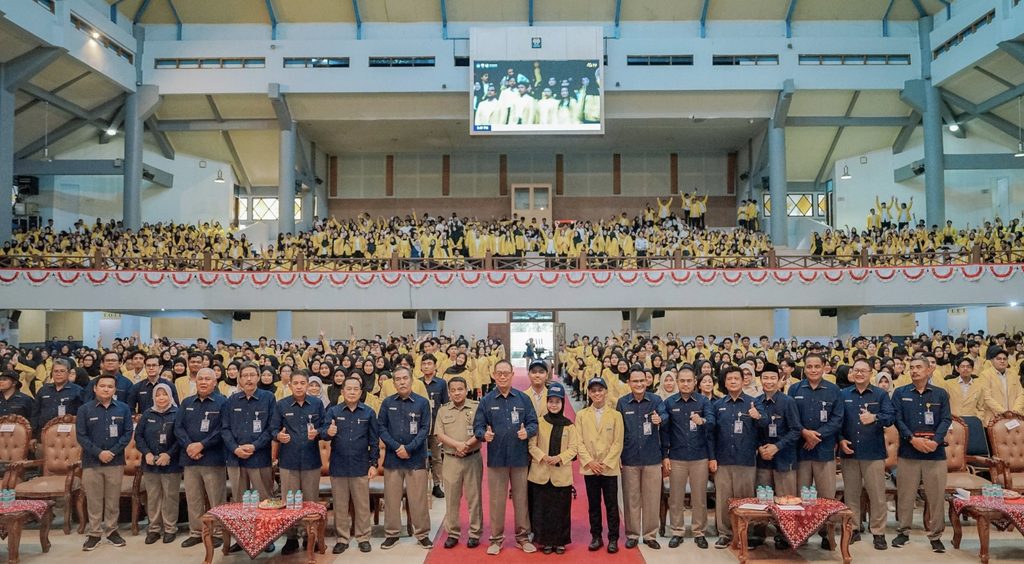
The village initiatives operate within UNNES’s institutional community service framework. Launched on June 30, 2025, UNNES GIAT 12 mobilized 4,353 students, supported by 188 field supervisors, for placements across 355 villages in 14 regencies and cities in Central Java.
Government partners included BPBD Central Java, provincial agencies, and participating regency and city governments. Activities were scheduled from July 2 to August 29, 2025, with the development of 214 introductory-level disaster-resilient villages identified as a program priority.
UNNES organized deployment provides a structure for cooperation between academic teams and government partners. Within that framework, the Sumberahayu and Tirtomulyo activities show how students support local authorities in identifying risks and preparing practical disaster plans.