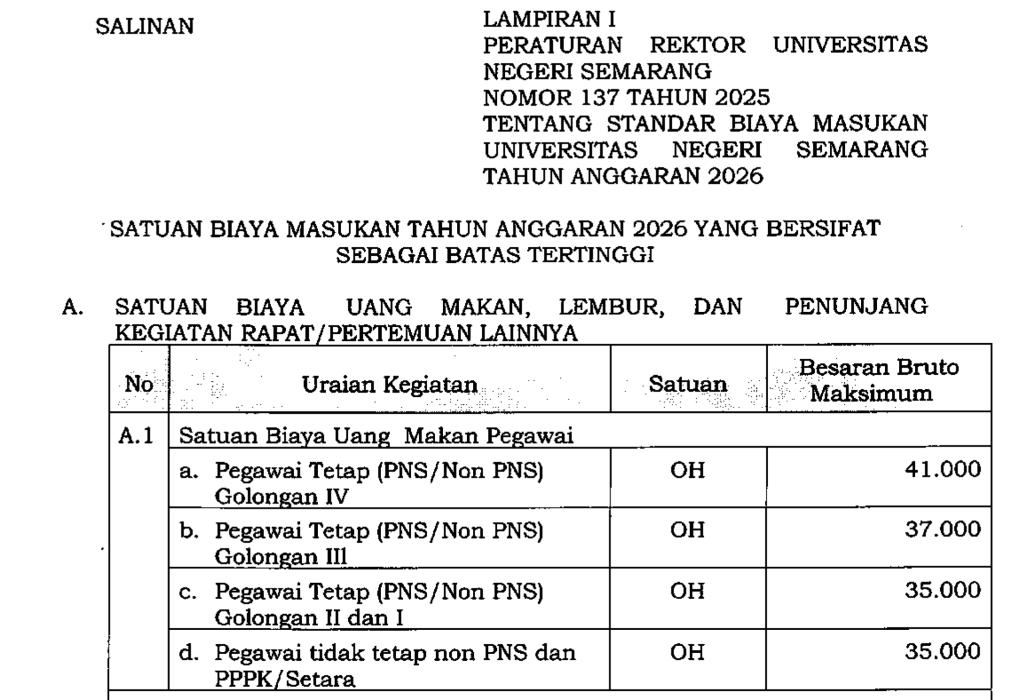
Universitas Negeri Semarang (UNNES) is committed to supporting staff welfare and nutritional needs through a daily meal allowance of approximately IDR 37,000, calculated based on daily attendance. This policy provides financial assistance to staff in meeting their everyday food needs and forms part of the university’s broader efforts to foster a healthy, inclusive working environment that promotes the well-being of all employees, including academic and non-academic staff.
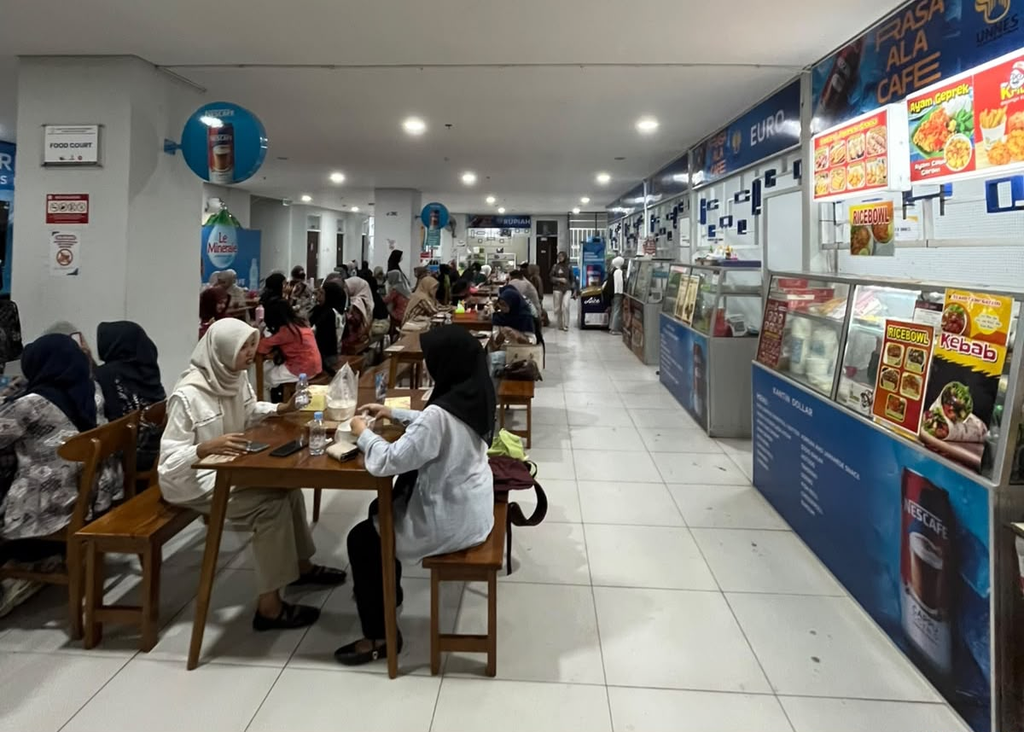
In addition to the meal allowance policy, UNNES facilitates access to nutritious and affordable food through campus canteens. These canteens offer a variety of meals, including nasi pecel (rice served with vegetables and peanut sauce), gado-gado (vegetable salad with peanut sauce), spinach soup, stir-fried water spinach, mixed vegetable stir-fry, and tofu- and tempeh-based dishes as sources of plant-based protein. With prices ranging from IDR 9,000 to IDR 15,000 per serving, these options help staff obtain nutritious meals at relatively affordable prices.
Jumat Bergizi UNNES: Supporting Staff Well-Being through Free Friday Breakfasts
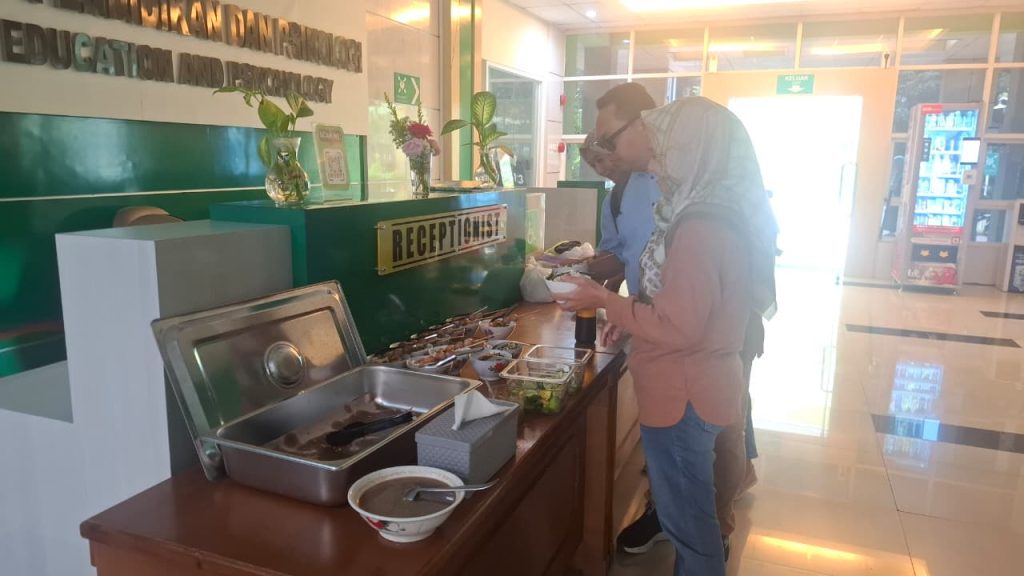

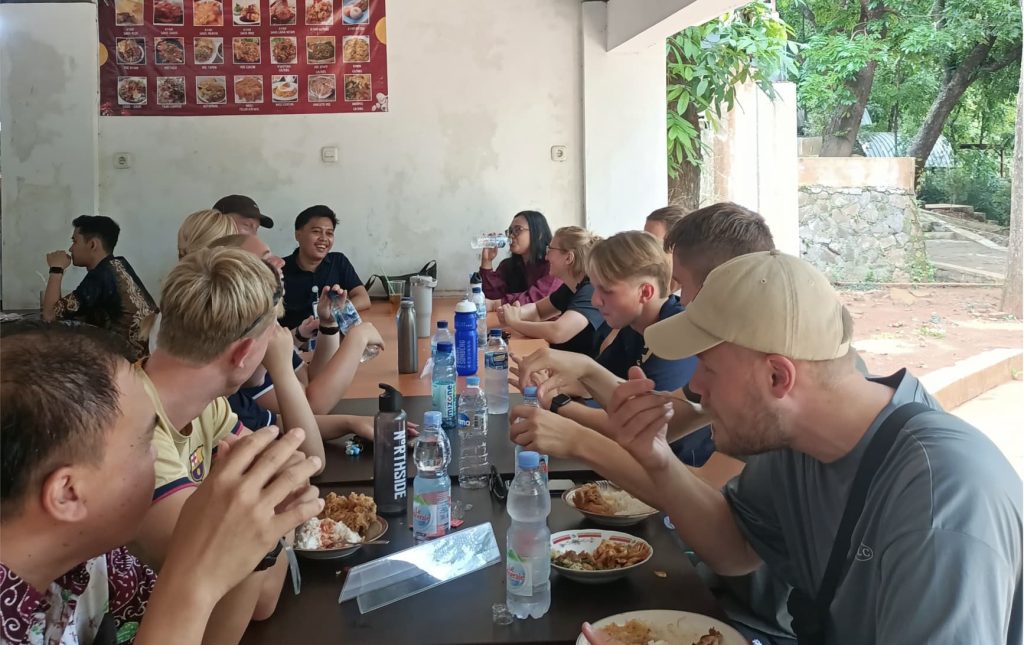
UNNES also promotes staff health and nutritional well-being through Jumat Bergizi UNNES, a programme providing free breakfast for university employees every Friday following morning exercise sessions. Combining physical activity with access to nutritious food, the initiative brings healthy habits and shared meals into campus life.
Breakfast options include mung bean porridge, chicken porridge, gado-gado—an Indonesian vegetable salad served with peanut sauce—and fruit and vegetable juices. These meals offer employees an opportunity to replenish their energy after exercise while enjoying time together before beginning their working day.
Beyond providing food, Jumat Bergizi UNNES creates a welcoming space for employees across university units to connect. Regular exercise and communal breakfasts encourage healthier routines, strengthen relationships among colleagues, and demonstrate the university’s care for its staff.
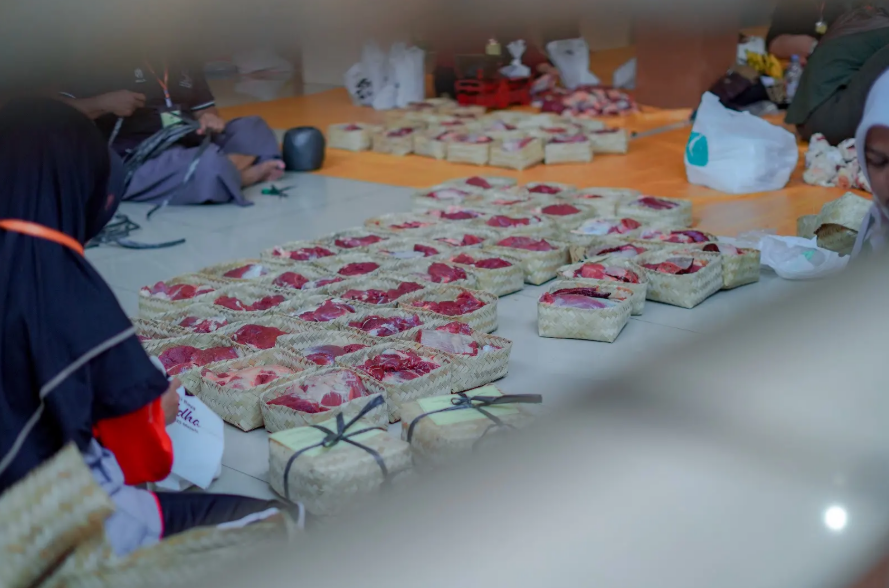
The university’s commitment to food security and social solidarity is further demonstrated through the distribution of sacrificial meat during Eid al-Adha. Of the 2,000 sacrificial meat packages distributed, 660 were allocated to UNNES employees. This initiative broadens access to protein-rich food while reinforcing a culture of sharing and social responsibility within the university community.
Collectively, these initiatives reflect UNNES’s contribution to Sustainable Development Goal (SDG) 2: Zero Hunger, particularly in promoting access to adequate, safe, and nutritious food. Through its daily meal allowance policy, affordable campus food options, healthy breakfast programme, and sacrificial meat distribution, UNNES continues to foster a campus environment that prioritises food security, nutritional well-being, and the long-term welfare of its staff.