Universitas Negeri Semarang (UNNES) continues to strengthen its commitment to sustainable mobility through the development of an integrated campus transportation system. As a Conservation University, UNNES promotes environmentally friendly commuting by providing campus shuttle services, supporting non-motorized transportation, and improving infrastructure for electric vehicles and shared mobility.
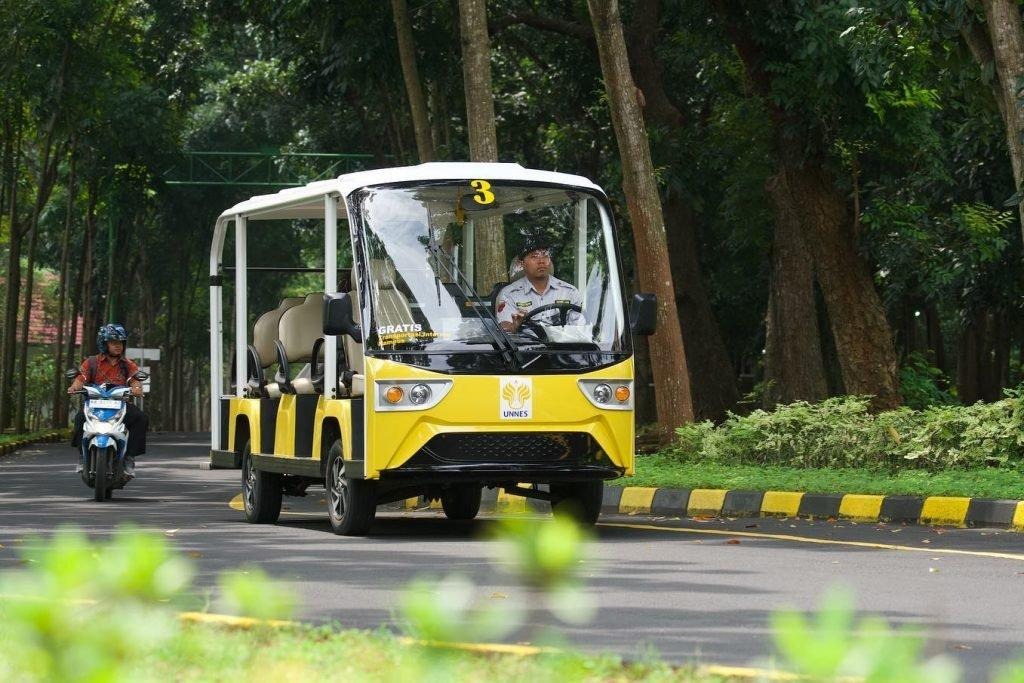
One of the university’s key initiatives is the operation of 20 campus shuttle units, which provide free transportation services for students, lecturers, administrative staff, and campus visitors. The shuttle service is available to anyone using the campus transportation system, helping facilitate mobility between university facilities while reducing dependence on private motor vehicles.
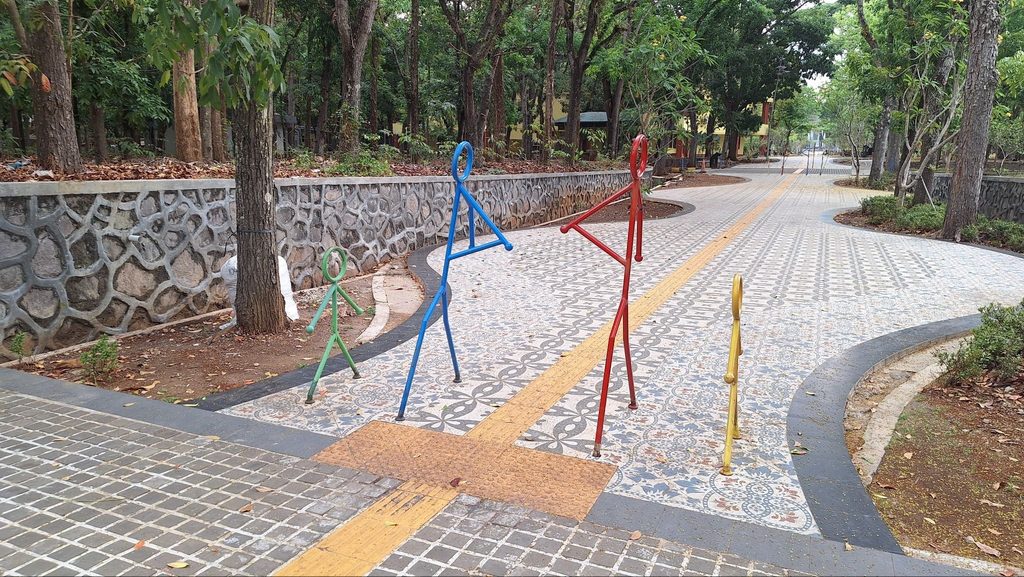
To encourage walking and cycling, UNNES provides pedestrian pathways and bicycle lanes across the campus. Bicycle parking facilities are also available at faculty buildings, institutional offices, and Rectorate units, supporting students and employees who choose bicycles as an alternative mode of transportation. These facilities form part of the university’s efforts to create a more accessible and environmentally friendly campus environment.
UNNES also implements traffic management measures to improve the efficiency of campus transportation. Paid parking is applied in selected areas, including the KWU Building area, while designated pick-up and drop-off zones for online transportation services such as Grab and Gojek help organize vehicle movements and reduce traffic congestion around campus facilities.
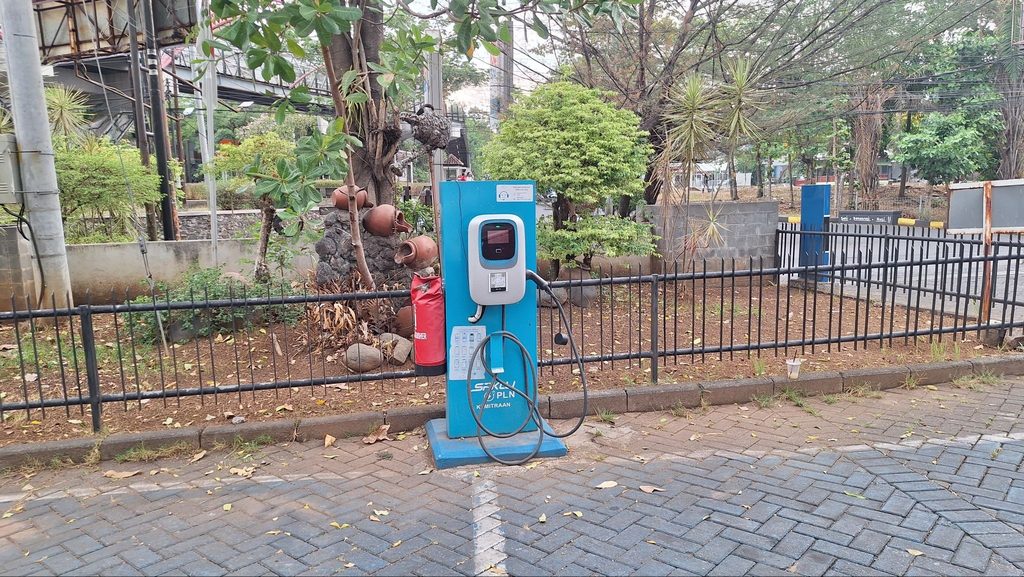
In addition, UNNES supports the transition toward electric mobility by providing electric vehicle charging facilities in the parking areas of the Multipurpose Building (Gedung Serba Guna/GSG) and the Information Technology (IT) Building. These facilities contribute to the development of supporting infrastructure for electric vehicles within the university environment.
Beyond infrastructure development, UNNES promotes environmentally responsible transportation through Green Transportation campaigns and awareness activities. These initiatives encourage the university community to adopt more sustainable commuting practices, including using shared transportation, walking, cycling, and reducing unnecessary private vehicle trips.
Through its integrated transportation services, supporting facilities, and campus mobility policies, UNNES continues to develop a transportation environment that prioritizes accessibility, efficiency, and environmental sustainability. These efforts reinforce the university’s identity as a Conservation University and its commitment to creating a greener, healthier, and more sustainable campus for the entire academic community and the wider public.