Semarang — Universitas Negeri Semarang (UNNES) continues to enhance its research ecosystem by establishing and developing strategic study centers that focus on environmental sustainability and sustainable development. This initiative reflects the university’s commitment to integrating sustainability into its research agenda and institutional framework.
Through the strengthening of research centers, UNNES provides interdisciplinary platforms that enable lecturers, researchers, and students to conduct collaborative research addressing environmental challenges. These study centers function as hubs for scientific development, bringing together expertise from various disciplines to produce impactful sustainability research.
A key component of this ecosystem is the UNNES SDGs Center, a dedicated research-oriented unit established under Rector’s Decree No. T/4356/UN37/HK.02/2024. The center plays a strategic role in coordinating research, education, training, and community service activities related to sustainability and environmental issues.
The SDGs Center also facilitates collaboration with government institutions, international partners, and civil society organizations, ensuring that research outputs contribute to real-world environmental solutions and policy development.
In addition, UNNES hosts multiple research and study centers focusing on sustainability-related fields, including natural resources and environment, renewable energy, disaster management, and sustainable materials, which serve as platforms for innovation and applied research.
These centers not only generate academic outputs but also support evidence-based policymaking, community empowerment, and environmental conservation programs. By strengthening its research ecosystem through dedicated centers, UNNES ensures a comprehensive and institutionalized approach to advancing environmental sustainability.
Strengthening Through Specialized Study Centers
The establishment of PUI is supported by existing academic research hubs within the Faculty of Mathematics and Natural Sciences (FMIPA), which play a crucial role in advancing interdisciplinary studies.
One of them is the Center for Natural and Environmental Resources Studies (Pusat Kajian Sumber Daya Alam dan Lingkungan). This center develops research and policy in biodiversity conservation, natural resource management, and environmental sustainability, while actively collaborating with industry, government institutions, and NGOs at national and international levels.
In parallel, the Center for Geoscience and Disaster Studies (Pusat Kajian Geosains dan Kebencanaan) contributes to research on earth systems and disaster mitigation, supporting Indonesia’s need for scientific solutions to natural hazards and environmental risks.
Meanwhile, the Renewable Hybrid Energy Study Center (Pusat Kajian Energi Hibrida Terbarukan) serves as a key research unit in developing sustainable energy technologies. Its work includes exploration of local energy resources and innovation in renewable systems such as solar, biomass, wind, and hydro energy, integrated with advanced storage and distribution technologies.
Driving Innovation for Sustainable Development
The synergy between newly launched PUI initiatives and established study centers reflects UNNES’s broader mission to become a globally reputable university grounded in conservation values.
Through these institutions, UNNES aims not only to produce academic research but also to translate scientific findings into practical solutions for society—ranging from sustainable energy systems and environmental conservation to inclusive education and functional food innovation.
The development of hybrid renewable energy, in particular, aligns with global efforts to reduce dependence on fossil fuels and address climate change. By integrating multiple energy sources and optimizing local potential, UNNES researchers are working toward sustainable, efficient, and environmentally friendly energy solutions.
Toward a Collaborative and Impactful Research Future
With the launch of the three PUI and the strengthening of its study centers, UNNES is positioning itself as a hub for innovation and collaboration. These initiatives are expected to foster partnerships among academia, government, industry, and communities, while also enhancing the university’s contribution to national development.
Ultimately, the integration of research excellence, technological innovation, and societal relevance underscores UNNES’s commitment to building a sustainable future through science and education.
Integration with Teaching and Academic Programmes
Beyond their role in advancing research and innovation, these study centers at UNNES also play a significant role in supporting undergraduate and postgraduate education. The research centers contribute directly to the academic ecosystem through curriculum enrichment, teaching activities, and student supervision.
Lecturers and researchers affiliated with these centers integrate their research findings into classroom teaching, ensuring that students are exposed to up-to-date knowledge, real-world case studies, and sustainability-focused perspectives. This strengthens the relevance of academic programmes, particularly in fields such as environmental science, renewable energy, disaster management, and sustainable development.
In addition, the centers provide opportunities for students to engage in research-based learning, including thesis supervision, internships, and collaborative research projects. Undergraduate and postgraduate students are actively involved in ongoing research initiatives, allowing them to develop critical thinking, problem-solving skills, and practical experience in addressing environmental challenges.
Through supervision by experts within these centers, students are guided in producing high-quality research outputs, including final projects, theses, and scientific publications aligned with sustainability goals.
By integrating research activities with teaching and supervision, UNNES ensures that its study centers not only generate knowledge but also actively contribute to the development of competent graduates who are equipped to support sustainable development.
Strengthening Sustainability through Outcome-Based Education (OBE)
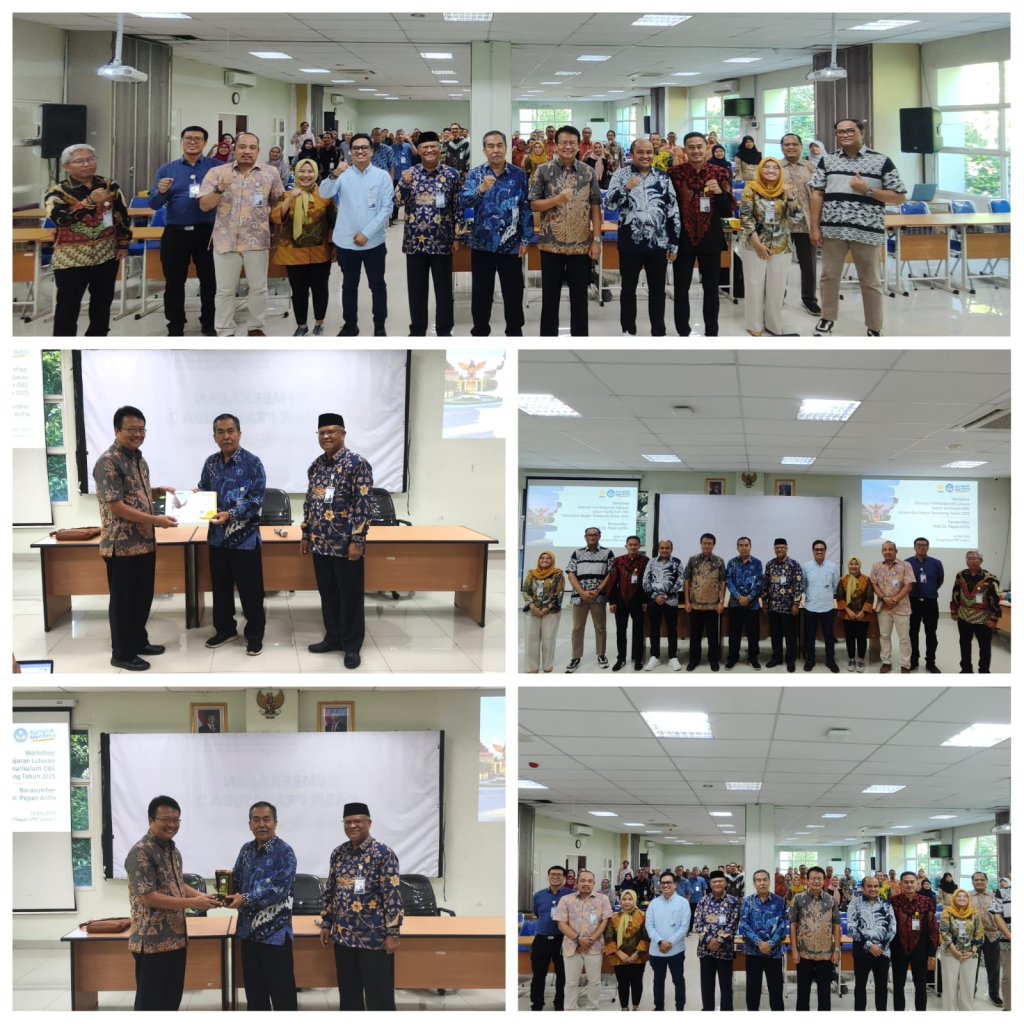
Further reinforcing its commitment to sustainability in education, UNNES, through its Quality Assurance Unit, integrates sustainability principles into undergraduate and postgraduate teaching by strengthening Outcome-Based Education (OBE) curriculum design.
A university-wide Graduate Learning Outcomes Workshop, conducted in collaboration with the Bandung Institute of Technology and the Directorate of Learning and Student Affairs, actively engaged programme coordinators and curriculum development teams. The workshop focused on aligning graduate competencies with sustainability-oriented learning outcomes, ensuring that academic programmes are responsive to global challenges.
This initiative ensures that sustainability principles are systematically embedded in course design, teaching practices, and student supervision. By aligning curriculum structures with sustainability goals, UNNES strengthens its role in delivering future-ready education.
Through this integrated approach, UNNES not only advances research and innovation but also prepares graduates with the knowledge, skills, and values necessary to contribute to sustainable development at local, national, and global levels.