

Semarang — Universitas Negeri Semarang (UNNES) works directly to maintain and restore threatened coastal ecosystems through research, mangrove planting, and engagement with industry and community partners. Its activities combine institutional conservation programs, student participation, and academic research addressing coastal vegetation and animal habitats. In 2025, three documented initiatives recorded the planting of 18,600 mangrove seedlings across Tambakrejo Beach, Mangunharjo Beach, Tapak Mangrove Forest, and Tirang Island.
These initiatives focus on coastal environments facing degradation, erosion, and tidal flooding. Mangrove planting connects the rehabilitation of coastal vegetation with efforts to maintain habitats for aquatic organisms, while UNNES research on sea turtle conservation examines the relationship between wildlife protection, community participation, and responsible tourism.
Restoring Degraded Coastal Vegetation at Tambakrejo Beach
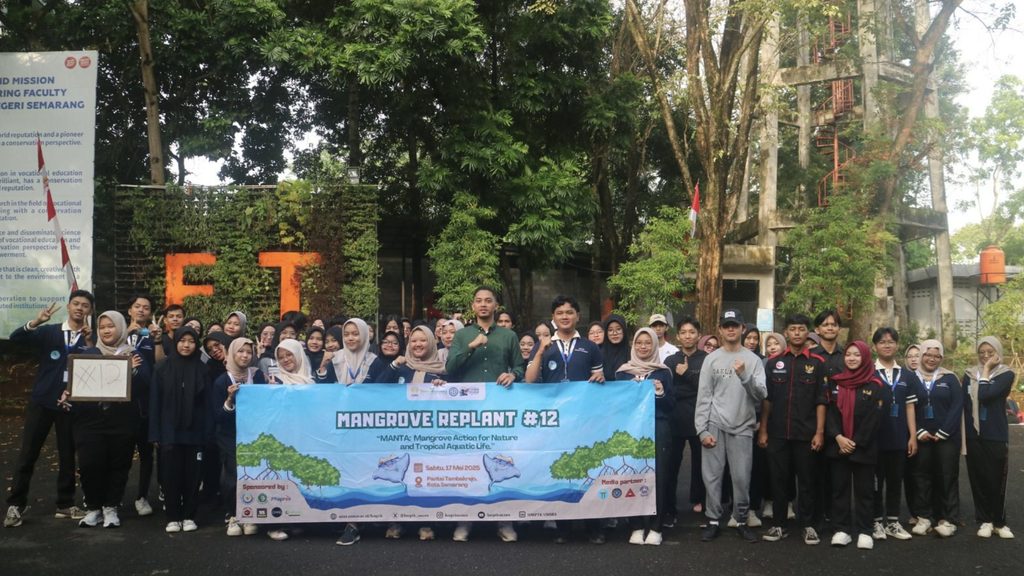
On 17 May 2025, the Chemical Engineering Professional Student Association (HMPTK) of the UNNES Faculty of Engineering organized Mangrove Replant #12 at Tambakrejo Beach, Semarang. Under the theme “MANTA: Mangrove Action for Nature and Tropical Aquatic Life,” 50 students from UNNES and other Indonesian universities planted 1,600 mangrove seedlings.
The activity involved direct planting in an area experiencing environmental degradation. As part of HMPTK’s continuing conservation program, it introduced participants to the role of mangroves in protecting coastal environments from erosion and tidal flooding. Through practical involvement, students contributed to vegetation rehabilitation while learning about the ecological importance of coastal habitats.
Engaging Industry and Local Partners in Mangunharjo Mangrove Rehabilitation
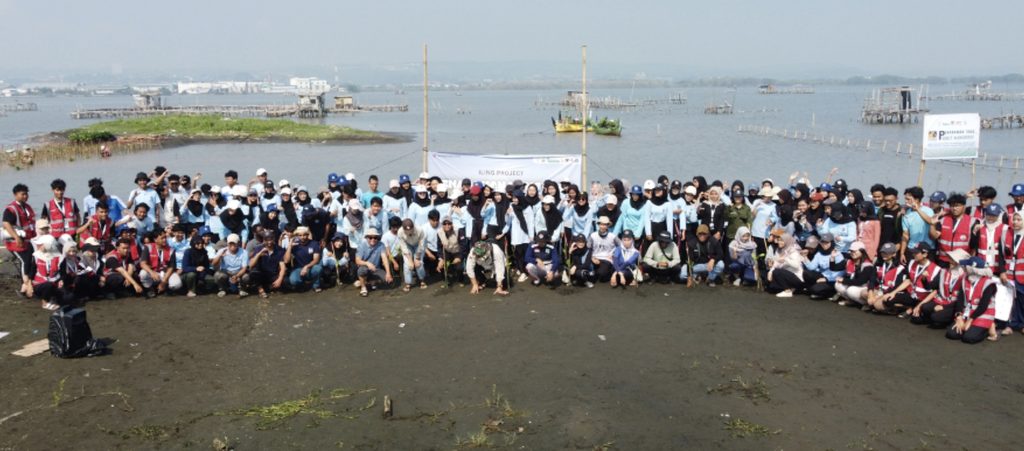
Extending this conservation engagement, Environmental Science students from FMIPA UNNES organized ILING Project 2025 at Mangunharjo Beach on 21 June 2025. The initiative recorded the planting of 7,000 mangrove seedlings, involving Environmental Science and Science Education students, international students from Ghana, Timor-Leste, and Pakistan, Abrasea Indonesia, and participants from Universitas Ivet Semarang.
PT PAMA and Kawasan Industri Wijayakusuma supported the initiative as sponsors, while the Mangrove Lestari Farmers Group provided field support. UNNES lecturers also participated, linking academic involvement with industry resources and local conservation knowledge.
Continuing an initiative established in 2021, ILING Project demonstrates direct university engagement in coastal rehabilitation. Its focus on mangrove vegetation connects plant conservation with the protection of habitats used by aquatic species.
Institutional Partnership with PLN to Support Threatened Coastal Ecosystems
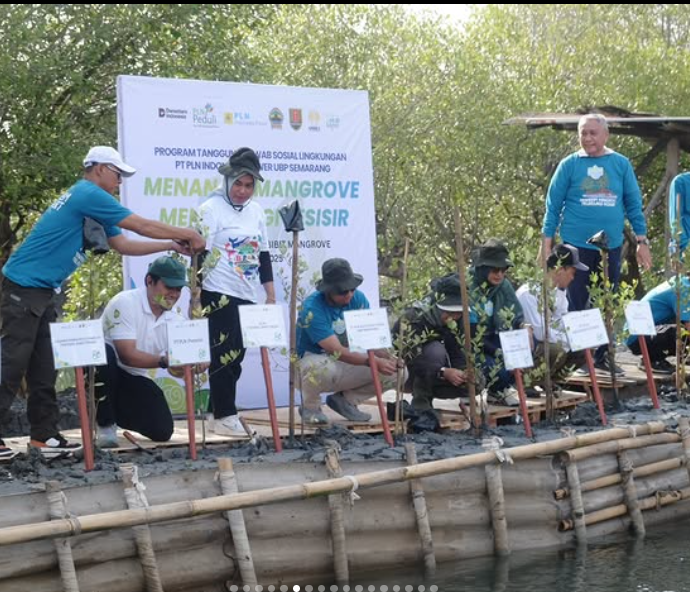
At the institutional level, UNNES’s Conservation Sub-Directorate collaborated directly with PT PLN (Persero) and PT PLN Indonesia Power UBP Semarang to plant 10,000 mangrove seedlings at Tapak Mangrove Forest, Tugurejo, and Tirang Island. The activities commemorated Indonesia Tree Planting Day 2025.
The partnership focused on coastal areas facing erosion, seawater intrusion, and environmental degradation. Planting across two locations demonstrates institutional participation in efforts to rehabilitate coastal vegetation and support the habitats associated with mangrove ecosystems.
Research and Community Engagement in Sea Turtle Conservation
Complementing mangrove rehabilitation, UNNES researchers have examined approaches to protecting coastal wildlife. A 2024 study published in Geo-Image Journal investigated the implementation of ecotourism principles at the Nagaraja sea turtle conservation site in Cilacap.
Using observation, interviews, and documentation, the research examined environmental protection, community involvement, visitor experiences, and conservation education. Its findings describe how turtle conservation and coastal environmental protection are incorporated into tourism activities, providing research-based insight into managing an ecosystem that supports vulnerable wildlife.
UNNES students have also participated directly in wildlife conservation activities. BAPER #5, organized by IMAKE UNNES at Pantai Kembar Terpadu on 29 January 2023, combined beach cleaning, coastal vegetation planting, and the release of 27 sea turtle hatchlings. This earlier engagement complements the research evidence and remains separate from the university’s documented 2025 planting activities.
Together, these activities demonstrate UNNES’s direct involvement through research and industry engagement in efforts to maintain and rehabilitate coastal ecosystems and protect their plant and animal life. The 2025 records establish planting outputs and partnerships; they do not quantify subsequent seedling survival, habitat expansion, or changes in wildlife populations.