AGROSIAGA and Rumat Anggrek bring conservation education, practical training and mentoring to local communities in Peron and Ngesrepbalong villages, Central Java.
Kendal, Indonesia — Universitas Negeri Semarang (UNNES), through its Faculty of Mathematics and Natural Sciences (FMIPA), delivered community education programmes in 2025 to strengthen local understanding of wild flora, fauna and ecosystem conservation. In Peron and Ngesrepbalong villages, Limbangan District, Kendal Regency, the university connected conservation knowledge with practical learning on wildlife coexistence, watershed protection, forest orchid cultivation and community-based ecotourism.
The programmes involved university academics, student organisations, village governments, the Central Java Natural Resources Conservation Agency (BKSDA Jawa Tengah) and local community groups. Through educational sessions, training, mentoring and technology transfer, UNNES supported residents in developing knowledge and skills relevant to the ecosystems surrounding their villages.
Both villages lie on the slopes of Mount Ungaran and form part of the Padang Sumampir community-based ecotourism area, which connects biodiversity conservation, local cultural heritage and community economic development.
AGROSIAGA: Learning about Local Wildlife and Habitat Protection
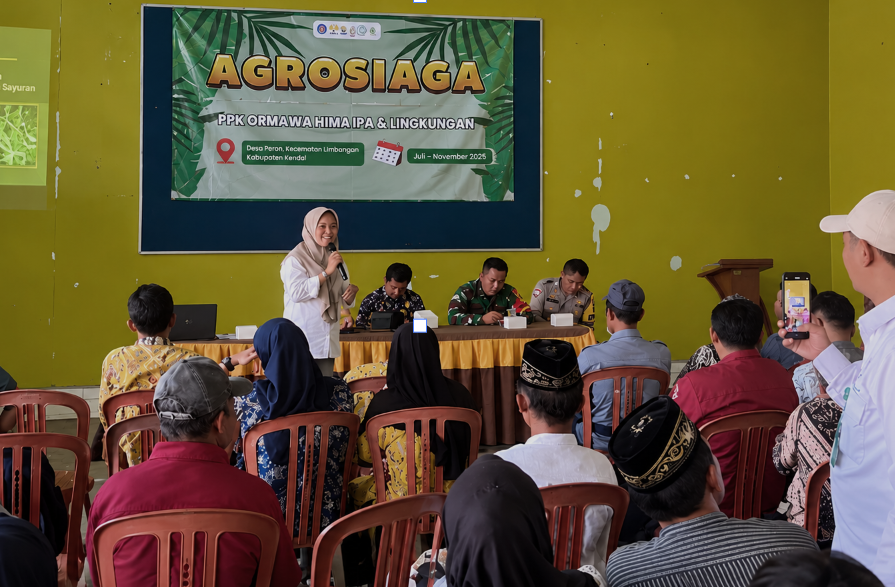
On 23 September 2025, the Student Organisation Capacity Strengthening Programme (PPK Ormawa) team of the UNNES Natural Sciences and Environment Student Association (HIMA IPA dan Lingkungan) organised a community education session at Peron Village Hall. Held through AGROSIAGA, the session introduced residents to locally rare flora and fauna, factors contributing to population decline and conservation measures that communities can undertake.
The programme addressed the relationship between village life and surrounding wildlife habitats. Residents learned why protecting wild species requires attention to their habitats and how responsible interactions with animals can help reduce human–wildlife conflict.
Sisca Febrianti Listyaningrum, S.P., representing BKSDA Jawa Tengah, provided instruction on conserving local flora and fauna and protecting their habitats. Her session also covered safe and responsible responses to encounters with potentially dangerous and venomous animals.
By bringing conservation agency expertise into a village learning setting, the programme gave residents access to guidance relevant to their daily interactions with the surrounding environment. UNNES students organised the outreach, while BKSDA contributed specialist knowledge on wildlife conservation and coexistence.
Connecting Biodiversity Education with Watershed Protection
The Peron programme also explored how biodiversity conservation supports water resources and community resilience.
Rheza Rizky Al Fath’Qi, S.Ling., an alumnus of the UNNES Environmental Science Study Programme and an intermediate-level National Conservation Cadre, explained Peron’s position within the upper Bodri River watershed. His presentation connected the protection of vegetation and wildlife habitats with the maintenance of watershed functions.
Residents were introduced to the importance of conserving upstream ecosystems, planting trees that support the landscape and strengthening community capacity in conservation and disaster mitigation. The session explained how environmental conditions upstream influence water availability, ecological stability and communities living downstream.
The learning content placed local flora and fauna within a wider ecosystem context, helping residents understand the connections between biodiversity, vegetation, water and the risks affecting their villages.
Rumat Anggrek: Community Learning on Forest Orchid Conservation
In Ngesrepbalong Village, a UNNES community service team led by Prof. Dr. Enni Suwarsi Rahayu developed Rumat Anggrek, an educational programme combining forest orchid conservation, tissue culture and community-based ecotourism.
Supported through LPPM UNNES funding in 2025, the programme developed an educational orchid cultivation and conservation unit incorporating a tissue culture laboratory and a conservation greenhouse known as Omah Anggrek. The facilities support learning about forest orchid diversity, propagation and species conservation.
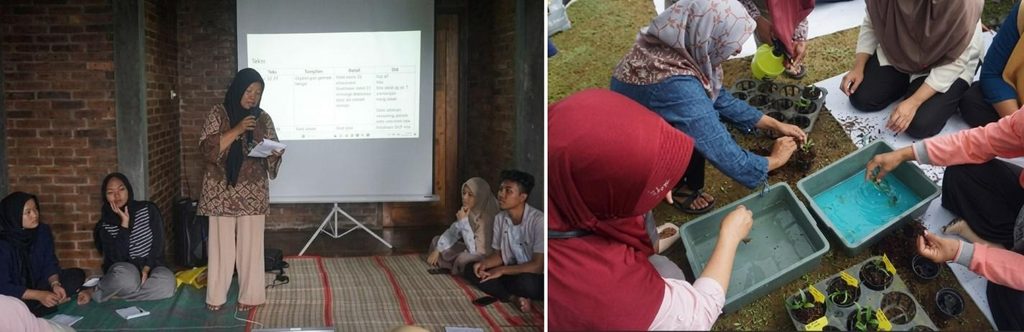
Local community members were introduced to forest orchids characteristic of Mount Ungaran and received training in cultivation and tissue culture techniques. The programme linked knowledge of native plants with practical skills for propagating and caring for orchids in a managed setting.
UNNES contributed academic expertise, training and mentoring, while community participation connected the learning activities with the village’s conservation priorities and tourism development.
Practical Training and Mentoring for Conservation-Based Tourism
Rumat Anggrek extended its educational activities to tourism management, guiding, marketing and the financial planning of educational tourism packages. Community members received training and assistance in developing visitor experiences centred on orchid cultivation and conservation.
Training for local guides supported the communication of conservation knowledge to visitors. Mentoring on tourism packages connected that educational content with the practical requirements of managing community-based tourism.
The programme therefore offered residents several complementary areas of learning: recognising forest orchid diversity, understanding propagation and conservation techniques, interpreting biodiversity for visitors and planning tourism activities around local natural resources.
These learning opportunities were intended to help residents develop livelihoods that maintain a connection to biodiversity protection. The programme’s documented outputs include educational facilities, training and mentoring; longer-term changes in income or conservation outcomes require further assessment.
University and Community Partners Share Educational Roles
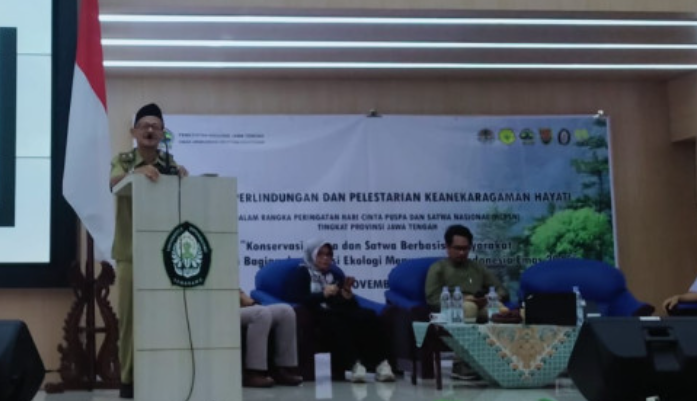
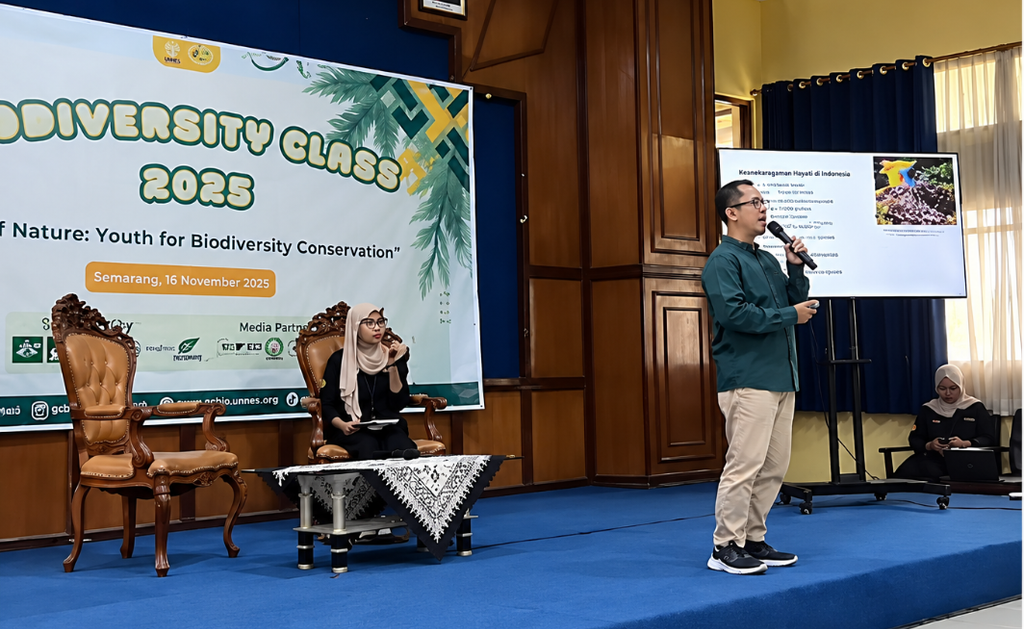
The two village programmes demonstrate UNNES’s direct role in providing ecosystem education beyond campus. In Peron, the university’s student organisation coordinated community outreach and brought together conservation agency expertise and an Environmental Science alumnus. In Ngesrepbalong, a faculty-led community service team provided conservation knowledge, cultivation training and technical assistance with institutional funding.
Village governments and community groups helped connect the programmes with local needs. BKSDA Jawa Tengah contributed expertise on wild species and habitat protection, while residents participated as learners and partners in applying conservation knowledge within their communities.
The educational methods reflected the subjects being taught. Presentations and community learning sessions introduced wildlife conservation and watershed relationships, while practical training, mentoring and technology transfer supported orchid cultivation and ecotourism skills.
Through AGROSIAGA and Rumat Anggrek, UNNES provides local communities with education on wild flora, fauna and ecosystem conservation. The programmes connect scientific knowledge with responsible wildlife coexistence, watershed protection, orchid propagation and community-based ecotourism, helping residents develop the knowledge and skills to care for the natural environments surrounding their villages.