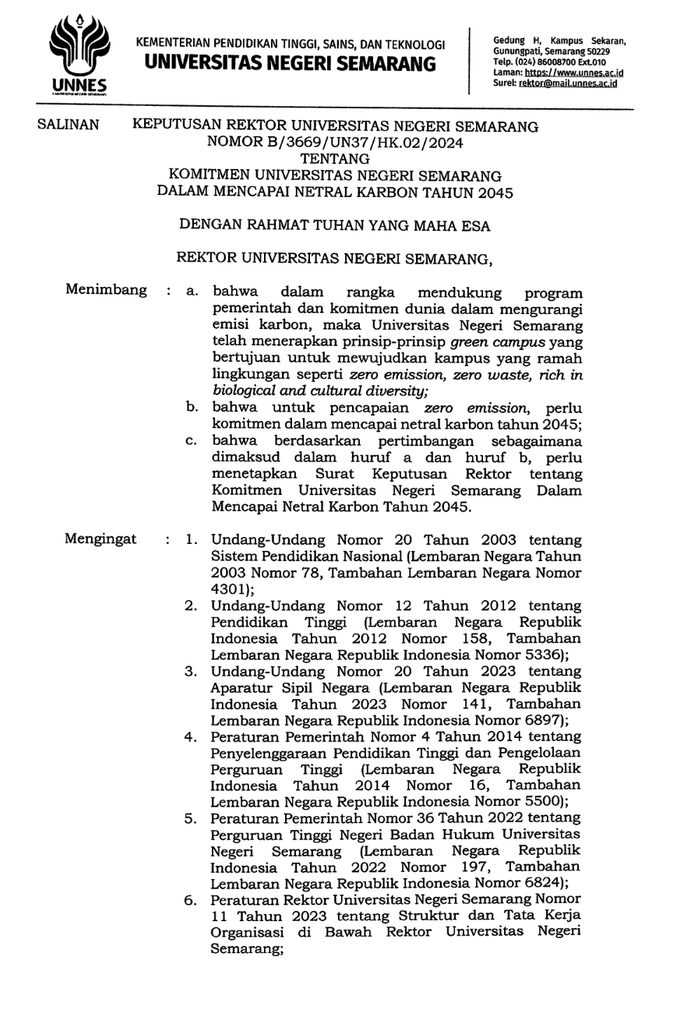
Semarang — Universitas Negeri Semarang (UNNES) has an institutional Climate Action Plan and shares its sustainability framework with local government agencies, schools, and community groups through workshops, environmental education, and collaborative programs. The university’s official sustainability reporting identifies Rector’s Decree Number B/3669/UN37/HK.02/2024, https://jdih.unnes.ac.id/f/13-b-3669-netral-karbon-67fc6a398ab19-1?passcode= concerning its commitment to achieving carbon neutrality by 2045, as the institutional foundation for this coordinated approach.
The plan connects campus operations with education and public engagement. Its priorities include energy efficiency, renewable energy, sustainable transportation, tree planting, water conservation, and carbon monitoring. Together, these measures provide a university-wide framework for reducing emissions and strengthening environmental resilience.
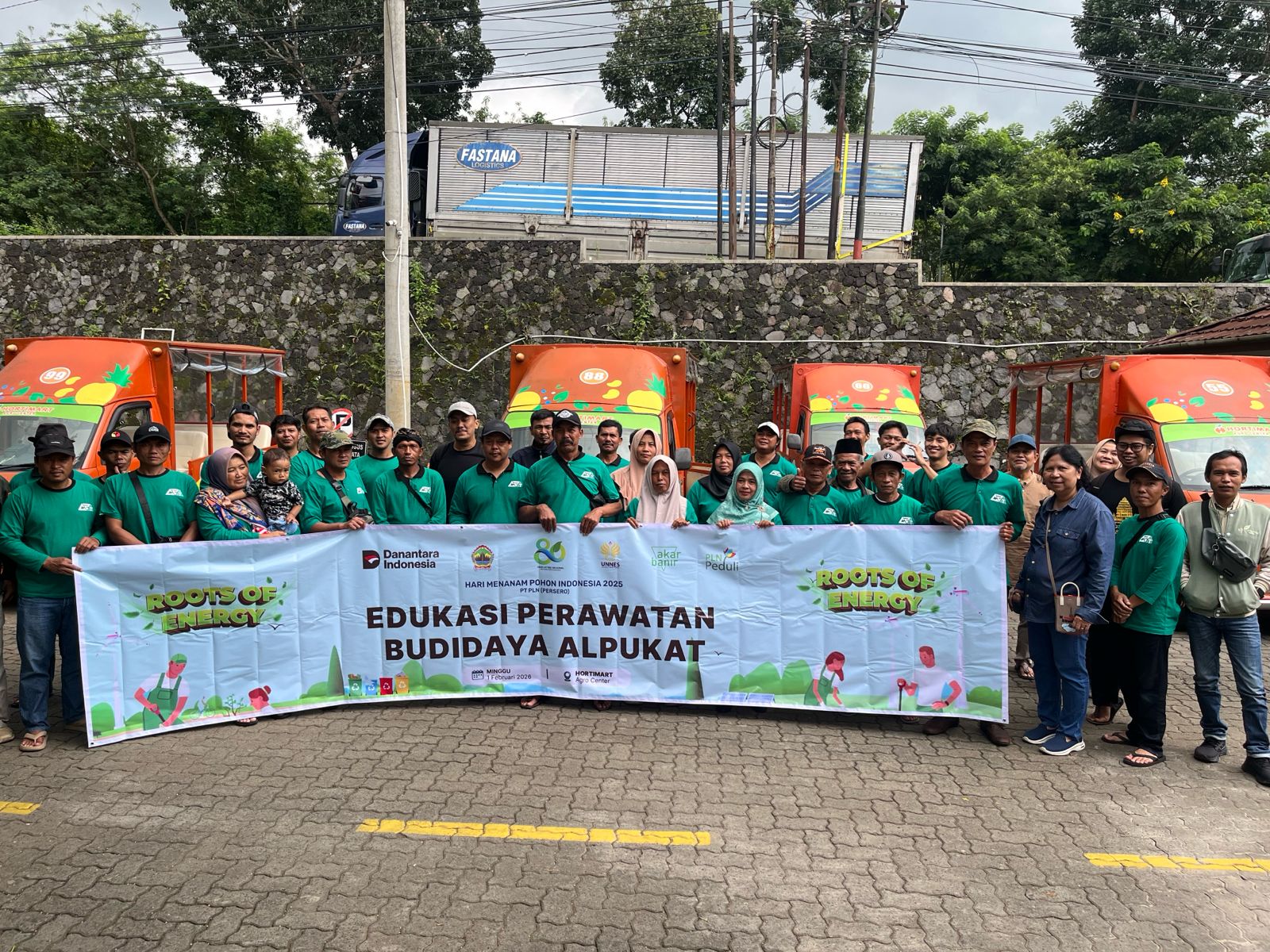
UNNES shares this framework beyond campus through structured engagement with government institutions and educational communities. The UNNES Green School Ranking (UGSR) Workshop II on Energy, Climate Change, and Water, held on June 10, 2024, involved 80 green school developers from several Indonesian provinces. Participants discussed energy efficiency, renewable energy, and water management. Government engagement also included the Central Java Provincial Education Office and Environmental Agency in the UGSR 2024 results announcement, providing a channel for connecting university sustainability priorities with school-level practices.

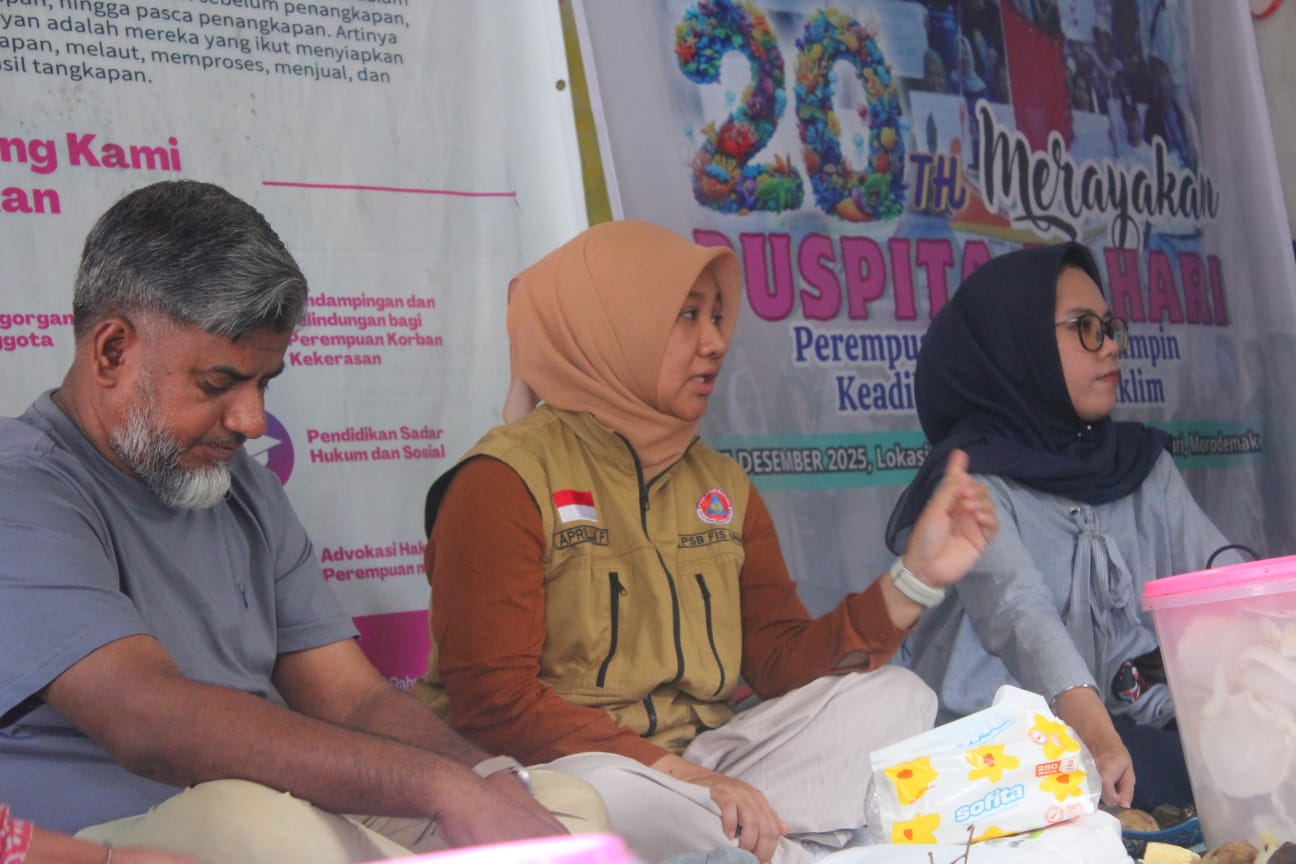
At the community level, UNNES translates climate adaptation priorities into practical disaster preparedness. In Tambakrejo Urban Village, Semarang City, Prof. Nana Kariada Tri Martuti and the FMIPA team conducted participatory risk mapping and strengthened preparedness among residents and the school community. Activities included establishing a Disaster Safe Education Unit (SPAB) at SD Negeri Tambakrejo 3, forming a school disaster preparedness team, conducting emergency simulations, and installing evacuation routes and assembly-point signs.
The Tambakrejo program also introduced a solar-powered Flood Early Warning System, using ultrasonic sensors to detect water levels and allowing monitoring through smartphones. This technology complements community training and evacuation infrastructure, helping residents and schools prepare for flood emergencies and protect essential educational services.
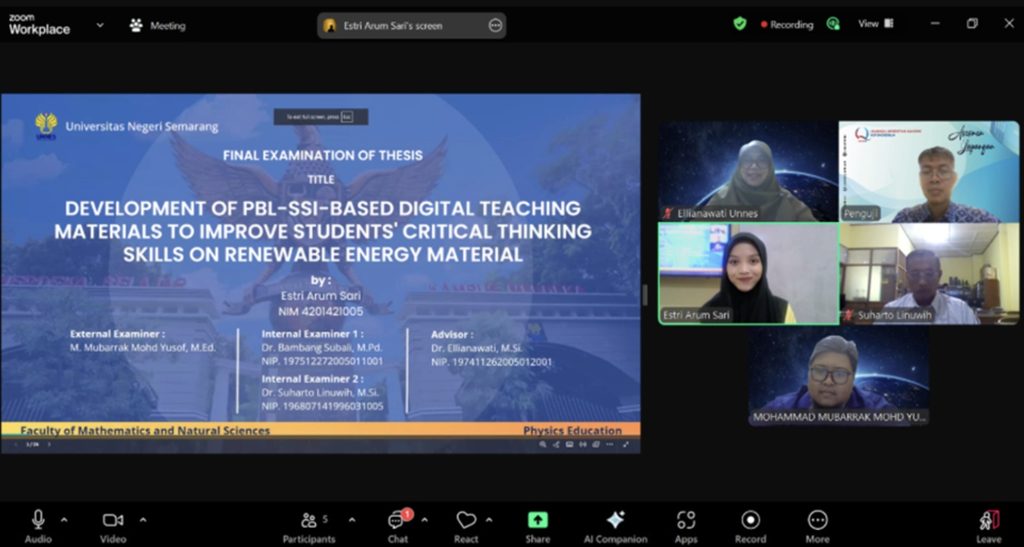
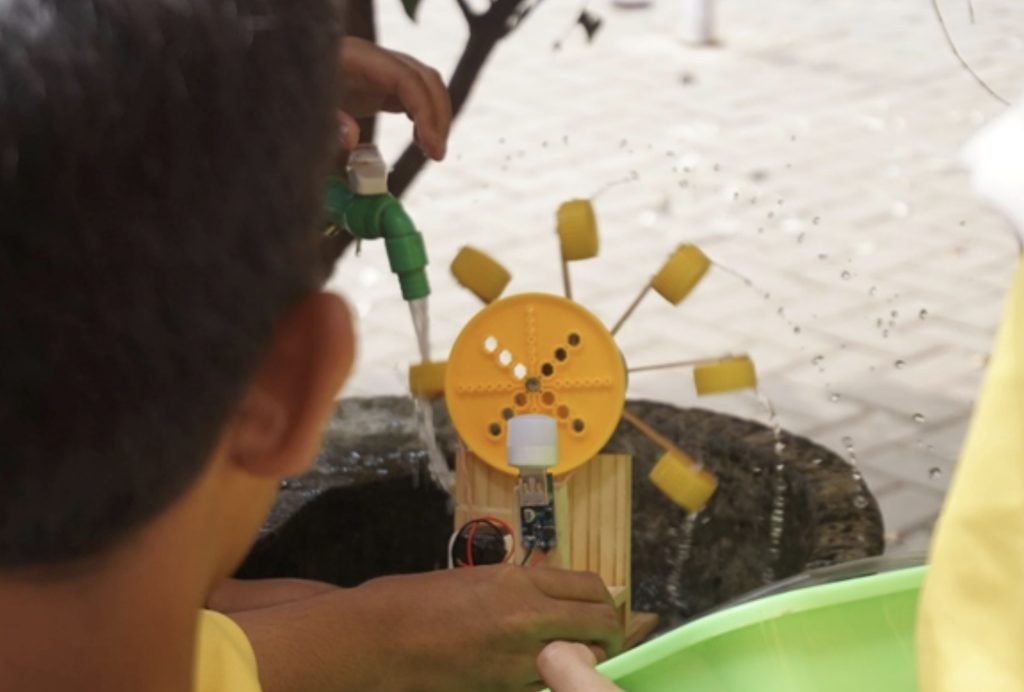
Community engagement also addresses climate mitigation through clean energy education. On November 16, 2025, the Environmental Physics for Sustainable Development (EPISODE) program brought UNNES Physics Education students to SDN 1 Sekaran under the supervision of Dr. Ellianawati. Demonstrations, practical activities, and interactive discussions introduced renewable energy and responsible resource use through mini water turbines, solar-powered cookers, and products made from household waste.

These initiatives demonstrate how UNNES connects its institutional climate commitments with external participation. Government and school engagement provides channels for sharing sustainability priorities, while community programs turn mitigation and adaptation principles into practical learning and preparedness measures. This approach advances clean energy awareness, safer communities, and collective responses to climate-related challenges.