

Rector Regulation No. 27 of 2012 establishes institutional responsibilities for environmental protection, biodiversity conservation, and sustainable use, supported by subsequent forest-management arrangements and campus conservation activities.
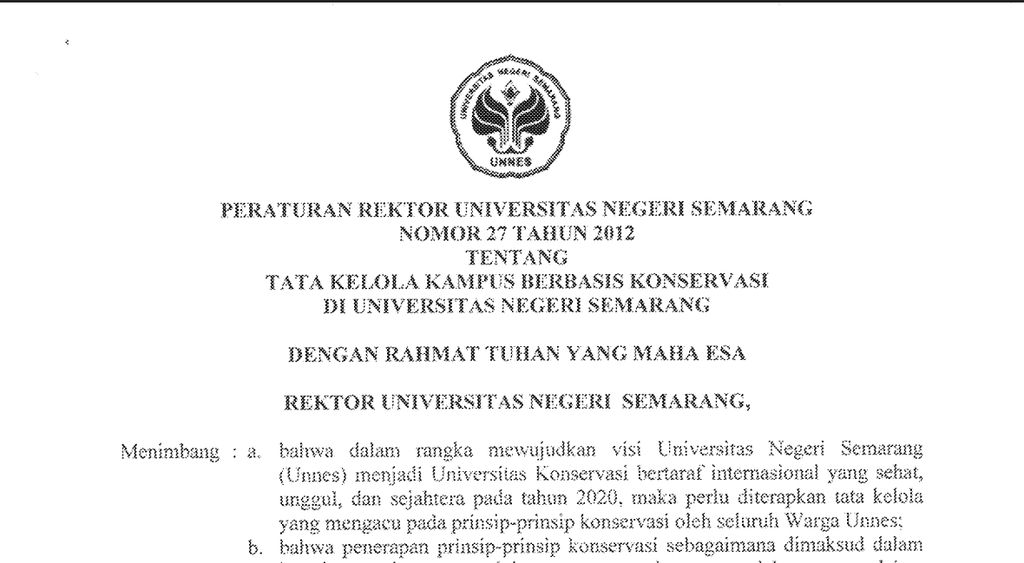
Semarang, Indonesia — Universitas Negeri Semarang (UNNES) has an institutional policy framework for conserving terrestrial ecosystems associated with the university. Rector Regulation No. 27 of 2012 on Conservation-Based Campus Governance, adopted on 28 September 2012, provides the principal policy foundation for environmental stewardship across the university and its surroundings. The regulation is publicly available through UNNES’s legal documentation system.
Institutional Responsibilities for Conservation, Restoration, and Sustainable Use
The regulation addresses three complementary aspects of ecosystem management. Article 1(8) includes environmental recovery within its definition of environmental management, providing a basis for restoration-oriented work. Article 4 requires the protection, preservation, and sustainable use of flora, fauna, and the environment within UNNES and surrounding areas.
Practical measures specified in Article 4 include plant propagation, planting, maintenance, and biodiversity monitoring. These provisions connect ecosystem protection with activities that can support vegetation recovery and continued ecological management.
The policy also assigns responsibility to university units. Under Articles 2 and 4, units must facilitate participation, implement conservation programmes, monitor and evaluate their delivery, and provide supporting facilities. Conservation is therefore established as an institutional responsibility involving both university management and members of the campus community. Konservasi UNNES
Forest Stewardship on the Slopes of Mount Ungaran
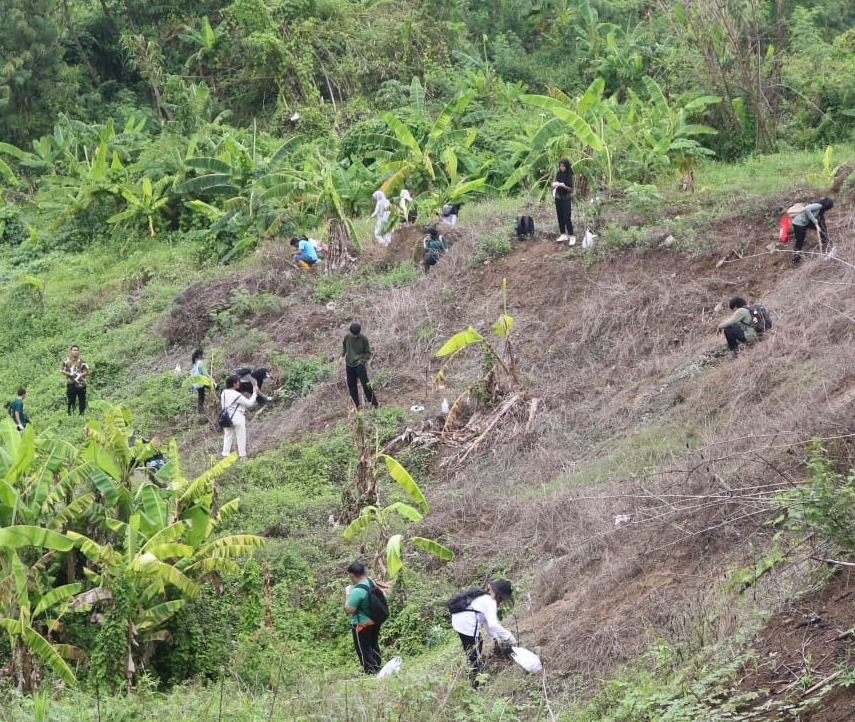
The university’s conservation commitment is complemented by its mandate to manage a Special Purpose Forest Area for Education and Training (KHDTK) on the slopes of Mount Ungaran, Kendal Regency.
According to UNNES’s Institute for Research and Community Service (LPPM), Minister of Environment and Forestry Decree No. 1134/MENLHK/2024 entrusted approximately 68 hectares to the university. Rector’s Decree No. 1427/UN37/HK/2024 assigned LPPM responsibility for operational management.
These arrangements give the university a defined management role in a forested mountain landscape. The planned academic uses include conservation, ecology, social forestry, climate-change research, and sustainable natural-resource management, alongside environmental education for surrounding communities.
In its May 2025 announcement, LPPM described preparations for boundary demarcation with forestry agencies and local communities. The work was intended to establish legally and technically defined boundaries as a foundation for long-term management. The announcement documents management preparations and planned activities, rather than confirming completion of boundary work or ecological restoration.
Campus Planting Supports the Conservation Framework
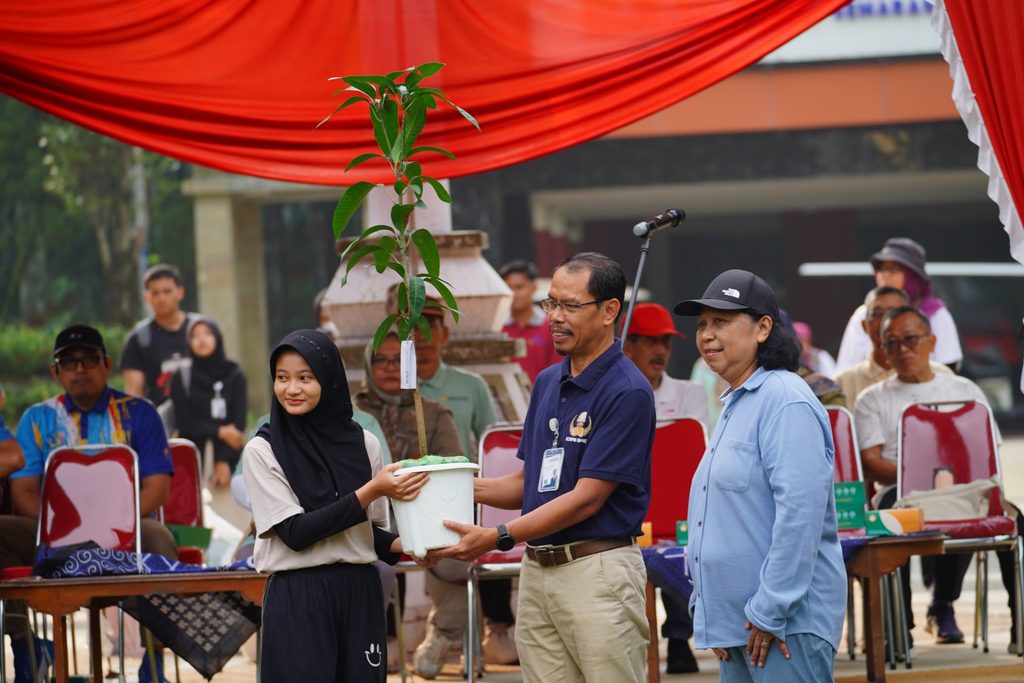
University-led planting provides a practical example of conservation activity within the campus landscape. On 28 February 2025, 900 students from seven faculties participated in planting 300 seedlings across the West Campus, East Campus, and the new women’s dormitory area.
Organised with Djarum Foundation Bakti Lingkungan, the activity involved university conservation leadership and connected student participation with campus greening. It demonstrates the delivery of planting activities consistent with the university’s conservation commitments. Continued maintenance and monitoring remain necessary to establish the seedlings’ survival and longer-term ecological contribution.
A More Recent Policy Strengthens Water Conservation Governance
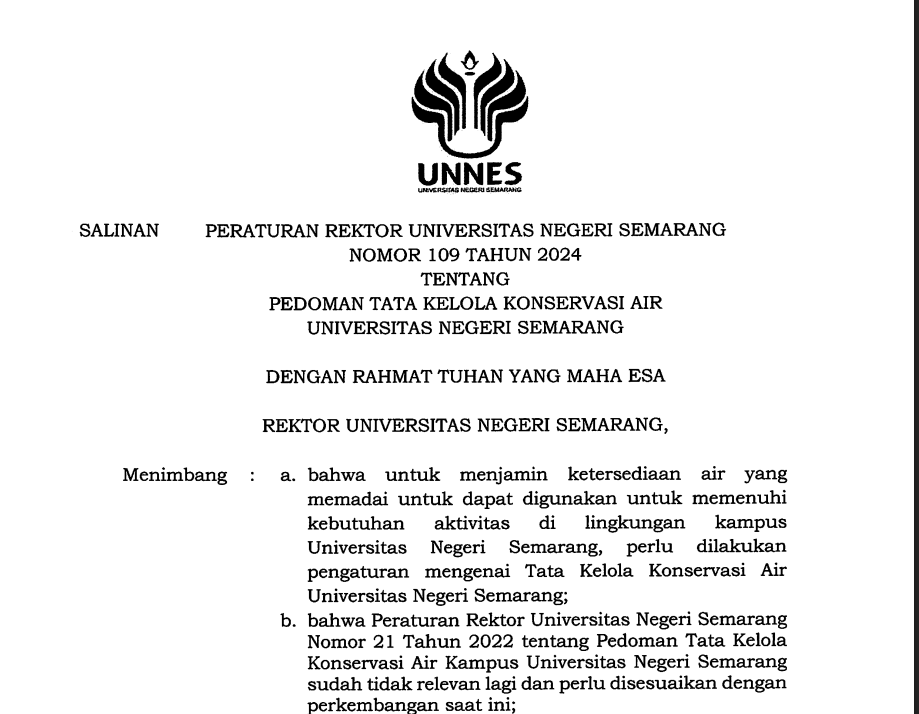
UNNES subsequently adopted Rector Regulation No. 109 of 2024 on Guidelines for Water Conservation Governance, dated 29 October 2024. The official JDIH record identifies this regulation as replacing Rector Regulation No. 21 of 2022 on campus water conservation governance.
This provides a documented example of policy renewal within the university’s broader environmental framework during 2021–2025. Its subject is water conservation; it is a complementary instrument rather than a verified amendment to the 2012 conservation-based campus governance regulation.
UNNES’s policy framework connects biodiversity protection, environmental recovery, and sustainable use with responsibilities for implementation and monitoring. The KHDTK management mandate extends this institutional commitment to a forested mountain setting, while campus planting demonstrates practical participation in vegetation management. The verified evidence concerns campus ecosystems, surrounding environments, and forest stewardship; it does not establish a separate policy specifically designated for dryland ecosystems.