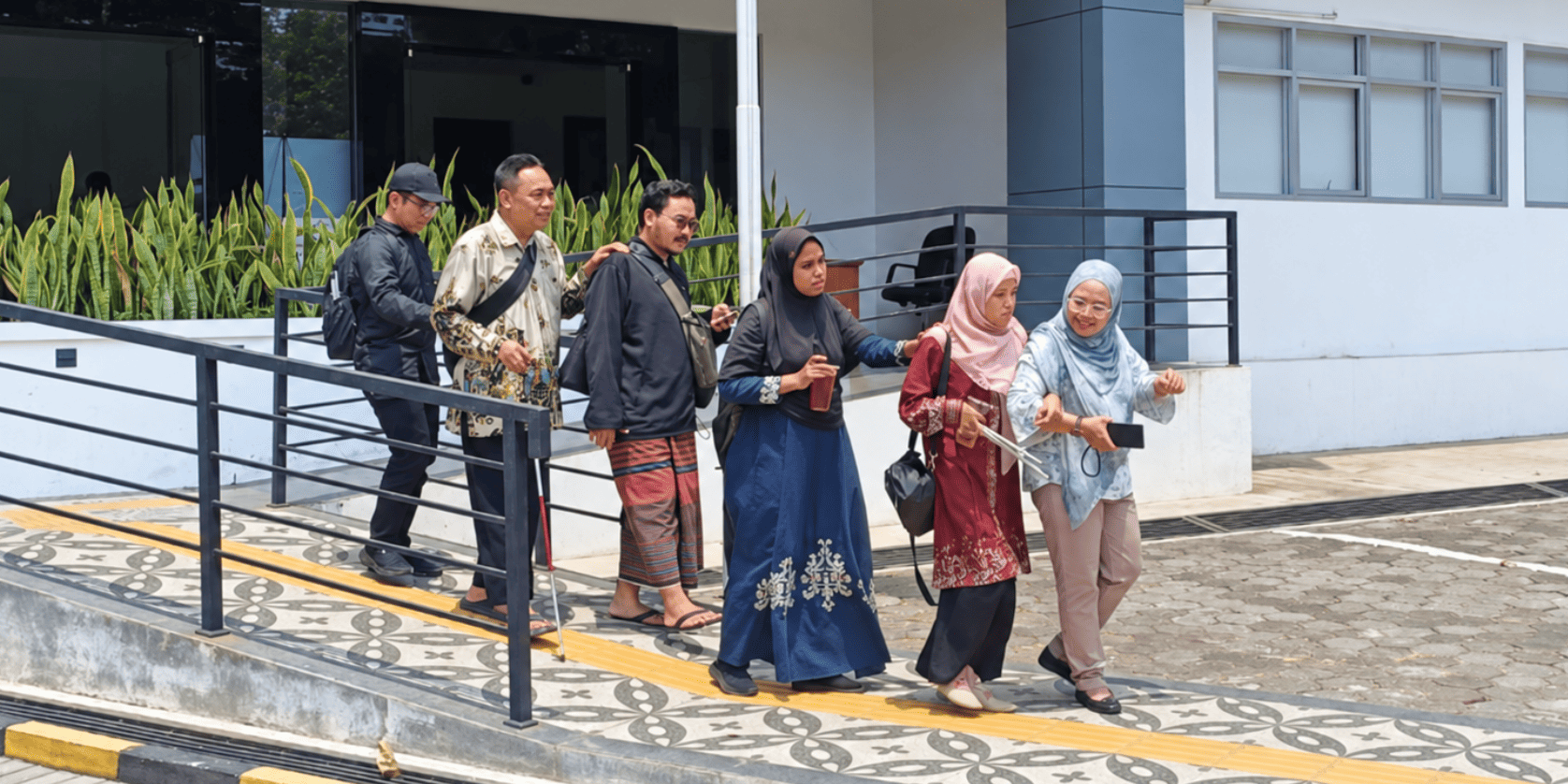
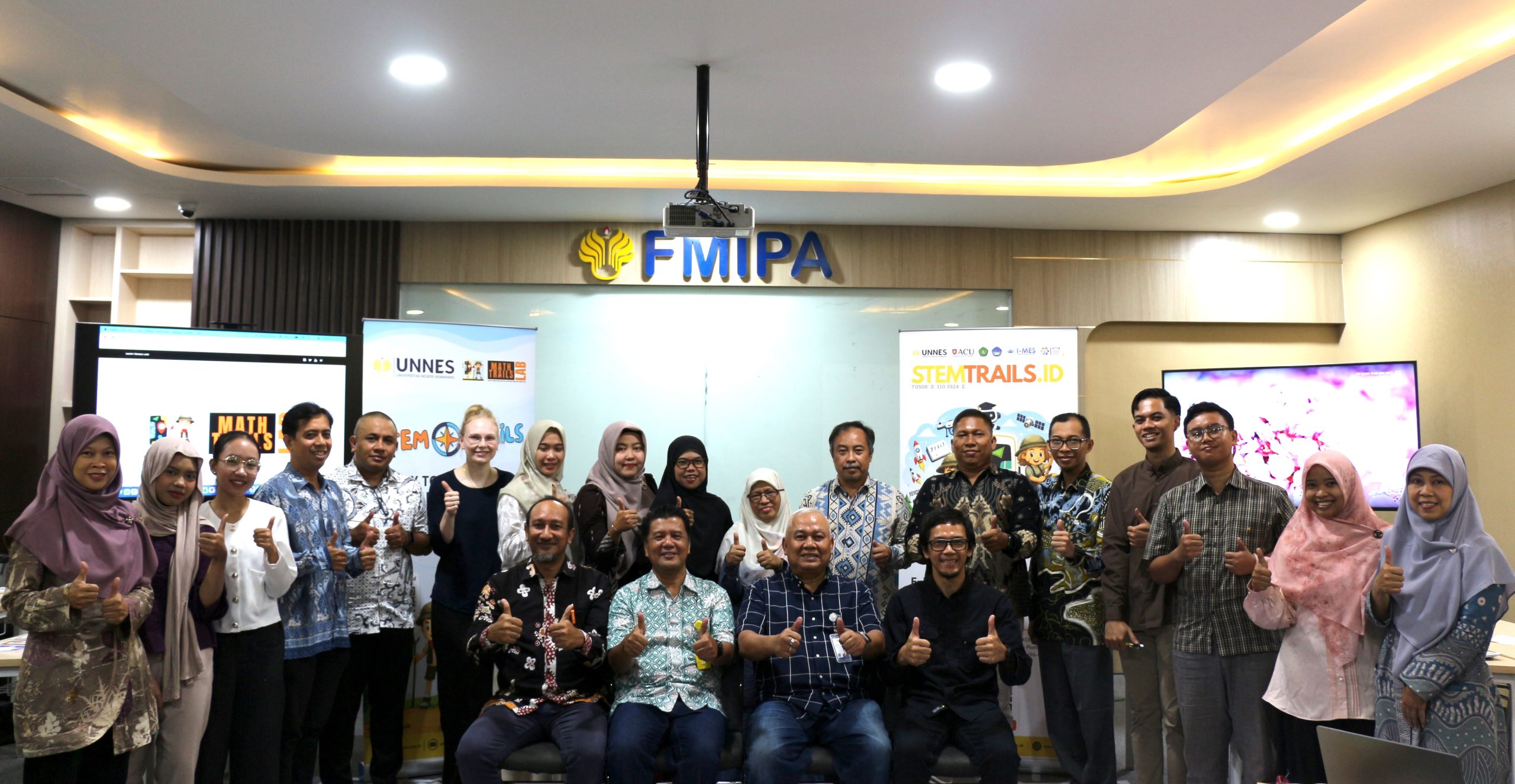
SEMARANG — Universitas Negeri Semarang (UNNES) provides support services for students with disabilities through its Disability Services Unit (Unit Layanan Disabilitas/ULD), which operates under the university’s Center for Language Services, Educational and Professional Training, Career Development, Counseling Guidance, and Disability Services (PLBPPKBKD). The services include academic assistance, accessible learning materials, examination accommodations, mobility support, counseling, and career guidance to help students participate more fully in university life.
Formal Disability Services Support Equal Access
UNNES established a formal management team for its Disability Services Unit through Rector’s Decree No. T/3392/UN37/HK.02/2024, dated August 2, 2024. The decree establishes the management team responsible for the Disability Services Unit under the Institute for Educational and Professional Development (LPPP).
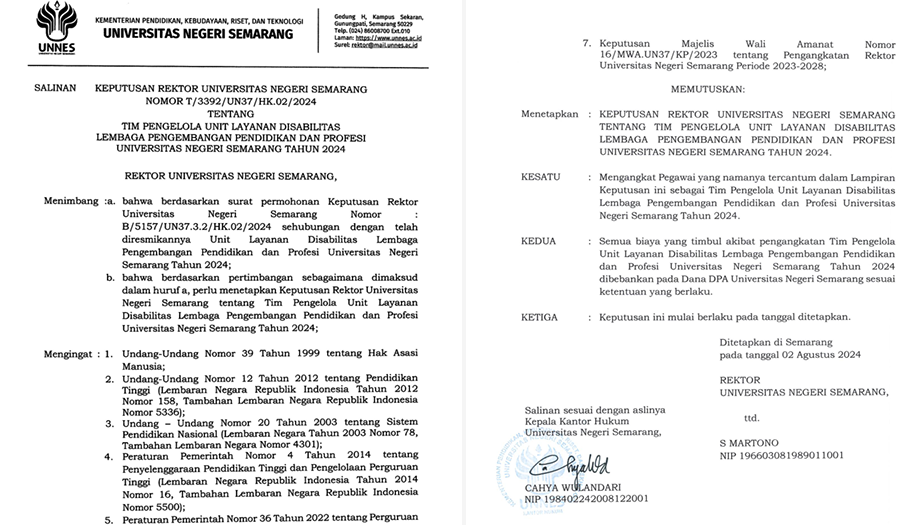
Rector’s Decree No. T/3392/UN37/HK.02/2024 Source: https://jdih.unnes.ac.id/web/view/9ce51d7b-49f7-4ef9-9cd7-38e3ae7eacdc
The university’s services are also supported by Rector’s Regulation No. 116 of 2024 concerning Educational Services for Students with Disabilities. The regulation provides a formal framework for equal access, reasonable accommodations, and support for students with disabilities throughout their academic journey. It covers educational services, students’ rights, the role of the Disability Services Unit, and procedures for reporting barriers or problems related to disability services.
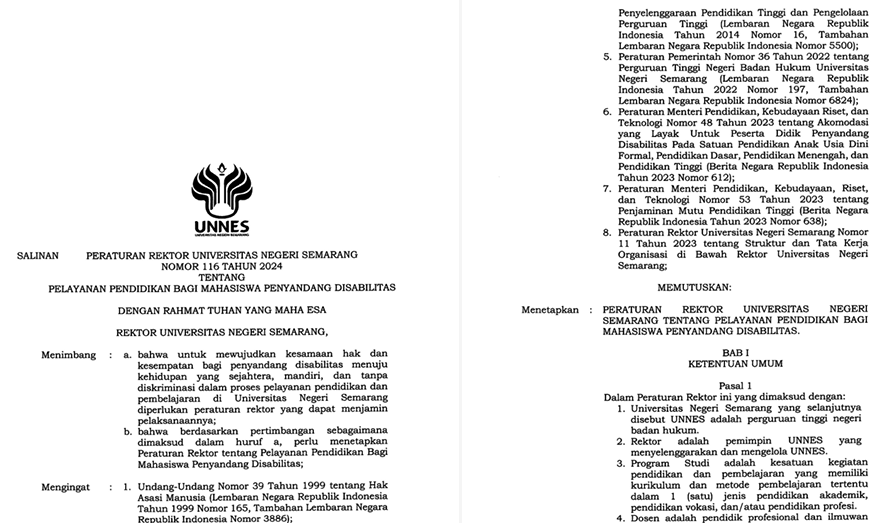
Rector’s Regulation No. 116 of 2024. Source: https://jdih.unnes.ac.id/web/view/9dfd746f-559d-49d1-9323-f9f388e16cff
Through these policies, UNNES recognizes that equal access to higher education may require different forms of assistance depending on individual needs. The objective is to reduce barriers that could otherwise affect students’ participation in lectures, assessments, campus activities, and other aspects of university life.
Academic Assistance and Accessible Learning Materials
One of the main functions of the ULD is to help students access learning activities through appropriate academic support. Services include assistance from trained student volunteers, accessible digital learning materials, and adjustments to teaching and assessment methods.
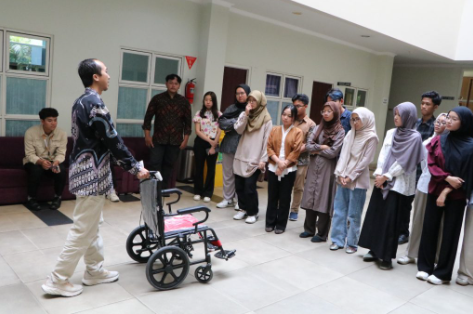
UNNES’s published disability-inclusion policy identifies individualized academic assistance, accessible teaching materials, assistive technologies, and adapted assessments as components of its support framework. The policy also provides for academic mentoring, counseling, and support personnel, including interpreters and peer assistants, where needed.
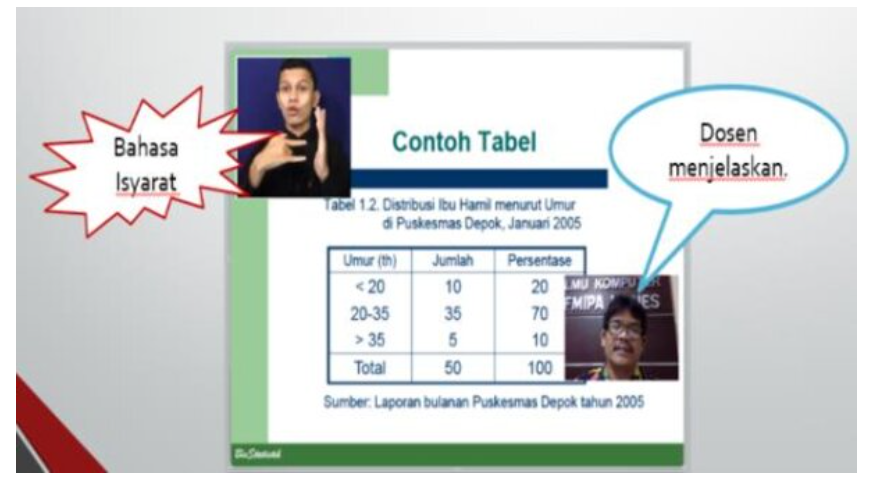
For students who are deaf or hard of hearing, learning resources that incorporate sign-language videos can help make course content more accessible. Examination accommodations and adjustments to assessment procedures can also help ensure that students are assessed fairly without unnecessary barriers associated with their disabilities.
Mobility Assistance and Accessible Campus Facilities
UNNES also works to improve physical access across its campus. Its published disability-support initiatives identify accessibility improvements such as ramps, elevators, and accessible public spaces. These facilities help students with mobility-related disabilities move between buildings and access university services more independently.
In addition to physical infrastructure, ULD volunteers can provide personal assistance and guidance during academic activities. The university held Disability Services Unit volunteer training on August 5, 2024, to equip participants with knowledge and skills for supporting students with disabilities in an empathetic and professional manner.
More recently, UNNES organized another basic volunteer training programme on August 22, 2026. The programme addressed different types of disabilities, appropriate assistance, disability sensitivity, communication, and the importance of respecting individual autonomy. Volunteers were also prepared to help connect students with campus services and provide support during academic and student activities.
These training activities strengthen the university’s capacity to provide assistance that responds to students’ needs while respecting their dignity and independence.
Counseling, Career Guidance, and Inclusive Participation
Disability support at UNNES extends beyond classroom assistance. Through PLBPPKBKD, students can access counseling, career development guidance, and other support services intended to help them navigate academic and personal challenges.
The university’s published service information identifies the Counseling and Disability Services Centre at the third floor of the Integrated Laboratory of LPTK LPPP, Prof. Satmoko Building, Sekaran, Gunungpati, Semarang. The centre is listed as a point of contact for counseling and disability-related services.
Career guidance is another important component of inclusive higher education. By helping students identify career interests, develop skills, and prepare for employment, the university can support their transition from study to professional life.
UNNES also emphasizes disability awareness and inclusive teaching practices. Training for lecturers and university personnel can help them understand different learning needs, prepare accessible teaching materials, and apply appropriate assessment methods. Collaboration with external professionals and counselors further supports the development of disability-responsive services.
Strengthening a More Inclusive University Environment
UNNES’s disability-support framework combines formal institutional policies, a designated service unit, trained volunteers, academic accommodations, counseling, career guidance, and accessibility improvements. Together, these measures demonstrate that support for students with disabilities is incorporated into the university’s educational services rather than being limited to a single facility.
The university’s published policies also establish a basis for coordinating support across faculties and administrative units. This approach is important because students may require different forms of assistance at different stages of their education.
ULD has served 19 students with disabilities. The services included academic assistance, accessible digital learning materials with sign-language videos, examination accommodations, mobility support, disability guidance book, counseling, and disability-awareness activities. Through its Disability Services Unit and related support programmes, UNNES demonstrates an institutional commitment to improving access to higher education for students with disabilities. These services are intended to support students’ independence and participation rather than simply provide assistance on an occasional basis. The appropriate form of support depends on each student’s needs and the requirements of the learning activity.
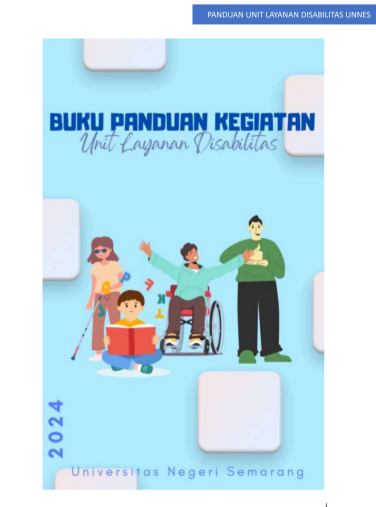
Disability guidance book
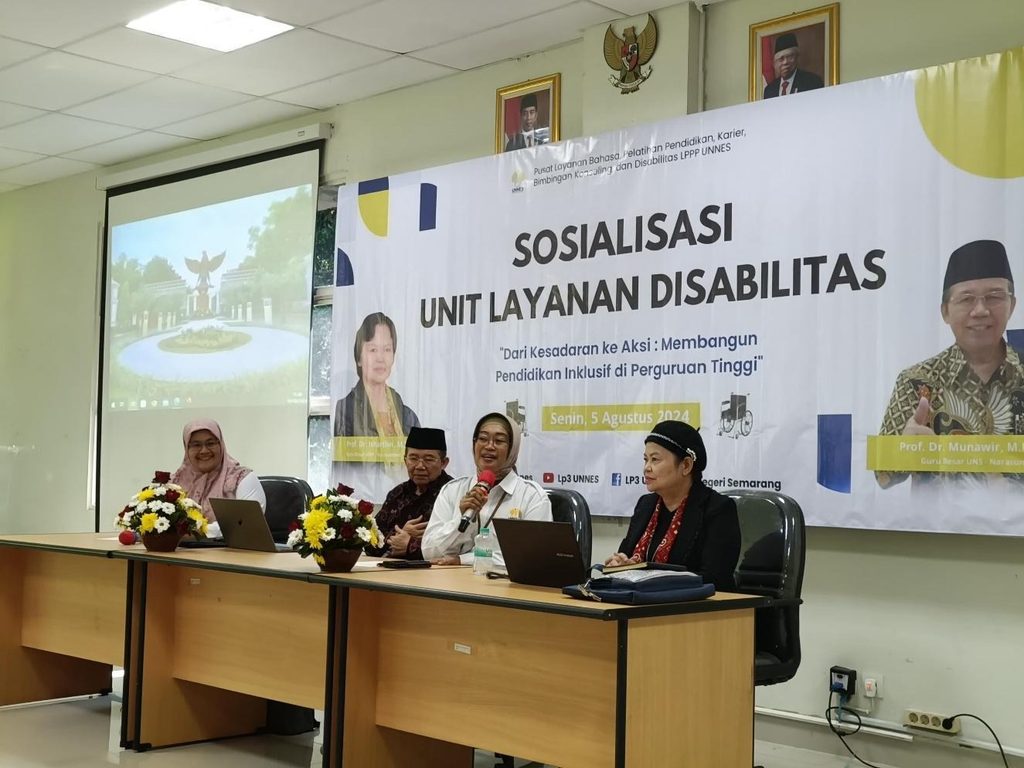
Socializing services at Disability Service Unit for Improving disability awareness
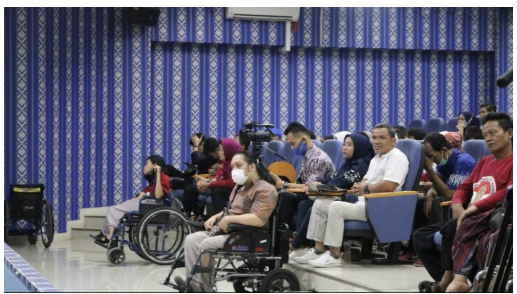
Counselling service
Counseling service in cooperation with Faculty of Education and Psychology
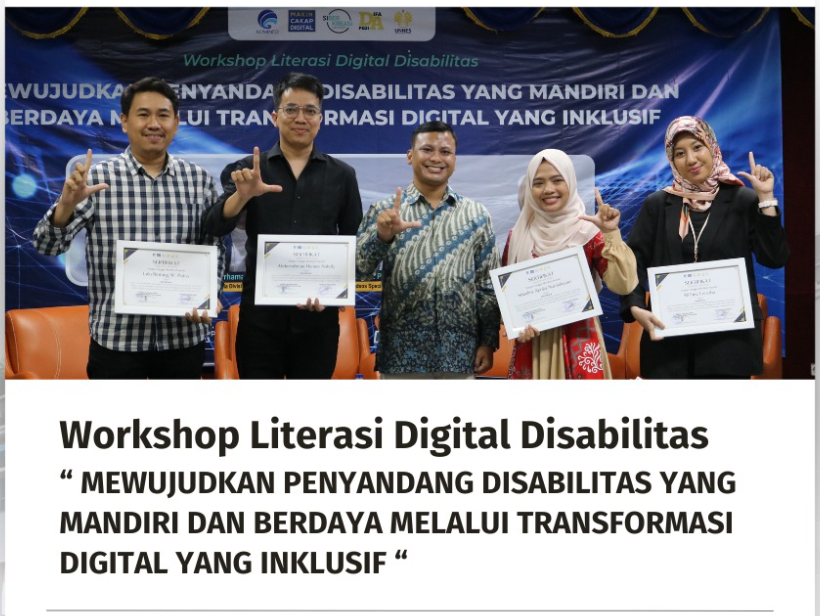
Disability Workshop