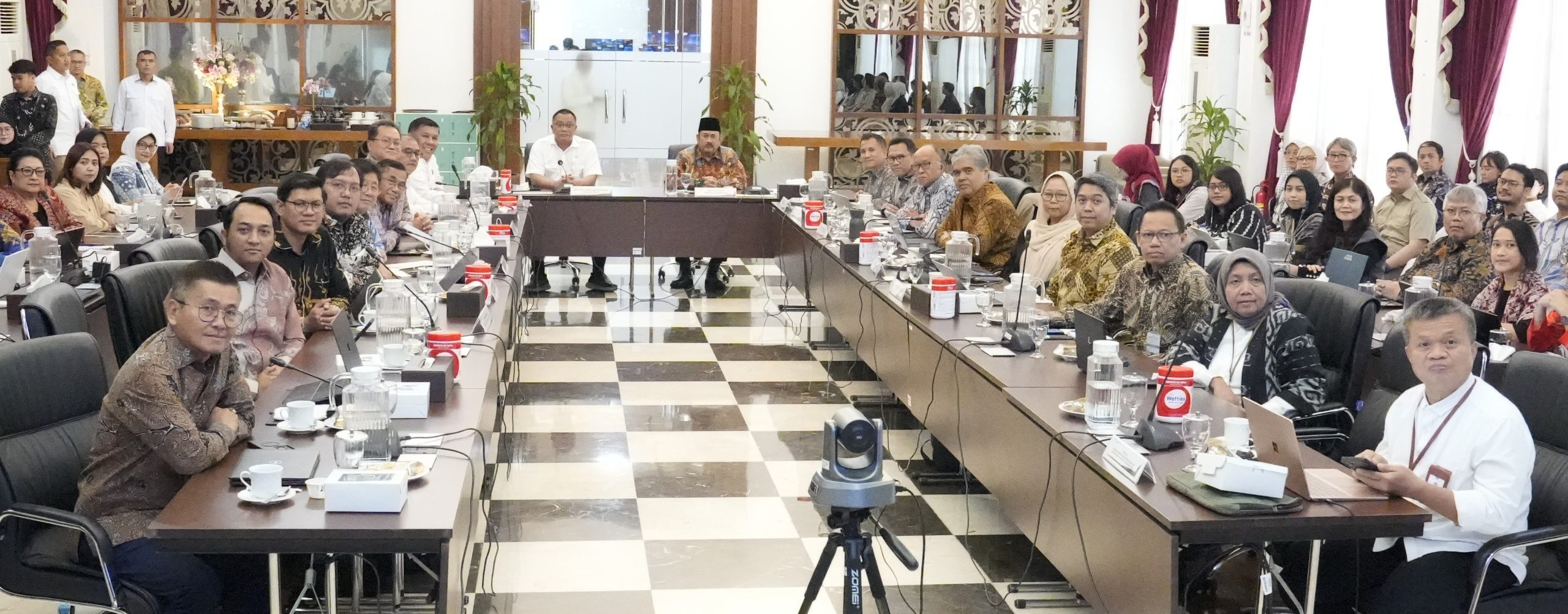
Head of the International Office and SDGs Center of Universitas Negeri Semarang (UNNES), Alfath Yanuarto, participated in the First Focus Group Discussion (FGD I) titled “Indonesia’s Positioning in the Beyond 2030 Agenda Discourse toward the 2027 SDG Summit” held at the Ministry of National Development Planning (Bappenas) Building in Jakarta on Monday (May 11).
The discussion was organized by the Ministry of National Development Planning/Bappenas through the National SDGs Secretariat as an initial step to formulate Indonesia’s national perspective and strategic positioning in response to the global post-2030 development agenda, known as the Beyond 2030 Agenda, ahead of the 2027 SDG Summit.
In his opening remarks, Head of the SDGs Secretariat at Bappenas, Pungkas Bahjuri Ali, emphasized that the Sustainable Development Goals (SDGs), agreed upon by 193 United Nations member states, have evolved from a global commitment into an integral component of Indonesia’s national development framework. He stated that the past decade has provided a critical foundation for accelerating transformative development efforts toward 2030 and beyond.
“Indonesia is currently at a decisive phase—accelerating the achievement of the 2030 Agenda while simultaneously anticipating the direction of global development in the post-2030 era,” Pungkas stated.
Meanwhile, Minister of Environment Jumhur Hidayat stressed that the Beyond 2030 Agenda should not merely focus on achieving development indicators, but also serve as a pathway toward social and ecological justice. He underlined that Indonesia should move beyond being a passive recipient of global norms and instead become an active contributor in shaping global sustainable development governance.
Jumhur outlined five transformation pillars within the Beyond 2030 framework, including eco-region-based development, strengthening environmental and biodiversity indicators, equitable transition financing, the blue-green ridge-to-reef approach, and the implementation of Five-Yearly Risk Reviews and Intergenerational Feasibility Assessments in major policymaking.
“The Asta Cita vision positions the environment not as a complementary issue, but as a fundamental pillar toward realizing Golden Indonesia 2045. Green economic development must provide tangible benefits for local communities while creating decent, safe, productive, and dignified green jobs,” he affirmed.
At the same forum, Minister of National Development Planning and Head of Bappenas, Rachmat Pambudy, highlighted that global SDGs progress remains challenging, with less than 20 percent of global targets currently on track. He noted that many targets have stagnated or even regressed compared to 2015 conditions.
Rachmat added that Indonesia has achieved approximately 68 percent of its SDGs targets despite facing mounting global pressures such as geopolitical tensions, climate change, global economic stagnation, technological disruption, and widening digital inequality.
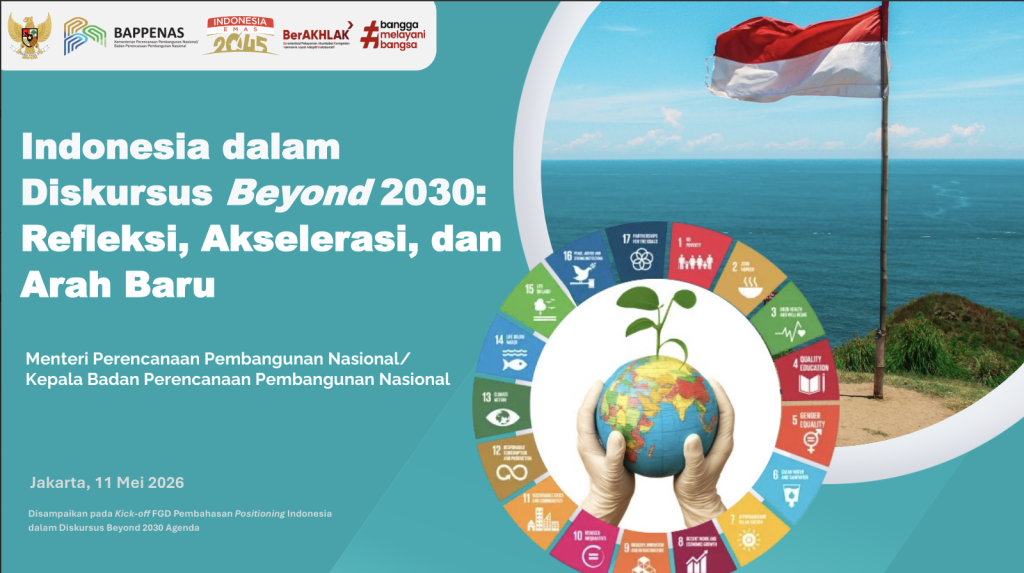
“The remaining years toward 2030 represent a highly crucial acceleration phase. Our focus is not only on achieving the targets, but also on ensuring that development remains relevant, adaptive, and sustainable beyond 2030,” he explained.
He further emphasized Indonesia’s aspiration to play a strategic role in the Beyond 2030 discourse by bridging the interests of developing countries in the Global South, particularly in advocating inclusivity, innovative financing, technology transfer, capacity building, and preparedness for global megatrends such as artificial intelligence, digital transformation, energy transition, and demographic shifts.
Deputy Secretary of the Coordinating Ministry for Law, Human Rights, Immigration, and Corrections, R. Andika Dwi Prasetya, also reaffirmed the ministry’s commitment to strengthening Indonesia’s positioning in the post-2030 global development discourse as part of promoting inclusive, equitable, and sustainable national development.
The event brought together representatives from ministries and government agencies, the Indonesian House of Representatives (DPR RI), regional governments, academics and SDGs Centers, civil society organizations, businesses, philanthropic institutions, youth organizations, development partners, and international organizations.
Through this FGD, the Indonesian government reaffirmed its commitment to advancing a national development agenda that prioritizes not only economic growth, but also social justice, environmental sustainability, and intergenerational responsibility in pursuit of Golden Indonesia 2045.