Universitas Negeri Semarang (UNNES) is strengthening access to higher education for prospective students from economically disadvantaged families through inclusive admission policies and various forms of financial support. Throughout 2025, these efforts were implemented through the Indonesia Smart College Card (Kartu Indonesia Pintar or KIP Kuliah), the Education Patron Council Scholarship (Beasiswa Dewan Penyantun Pendidikan or DPP), and educational assistance provided by Rumah Amal UNNES.
Of the 10,910 new undergraduate and diploma students admitted for the 2025/2026 academic year, 1,142 students from the 2025 cohort were designated as KIP Kuliah recipients. Their designation was stipulated in Rector’s Decree No. B/930/UN37/HK.02/2025, dated 18 September 2025. This assistance provides students with academic potential but facing financial barriers with an opportunity to pursue higher education.
Affirmative Admission Pathways Strengthened from the Admission Stage
These efforts to expand access are supported by UNNES’s new student admission policy, stipulated in Rector’s Regulation No. 132 of 2024 concerning the Guidelines for New Student Admission in 2025. In addition to KIP Kuliah recipients, the policy gives consideration to participants in the Affirmative Higher Education Programme (Afirmasi Pendidikan Tinggi or ADiK) from Papua and prospective students from underdeveloped, frontier, and outermost regions (3T).
For the independent admission selection process, UNNES allocates up to 5% of the total admission capacity to the affirmative pathway. The same guidelines also include admission capacity planning for KIP Kuliah recipients and other scholarship recipients. Accordingly, support for groups facing limited access is considered not only after admission but also during the admission process.
This policy is aligned with Minister of Education, Culture, Research, and Technology Regulation No. 48 of 2022, which stipulates that at least 20% of new students must be recruited, through the applicable admission pathways, from among those with high academic potential and economic constraints and/or those from 3T regions.
DPP and Rumah Amal Scholarships Help Reduce Tuition Costs
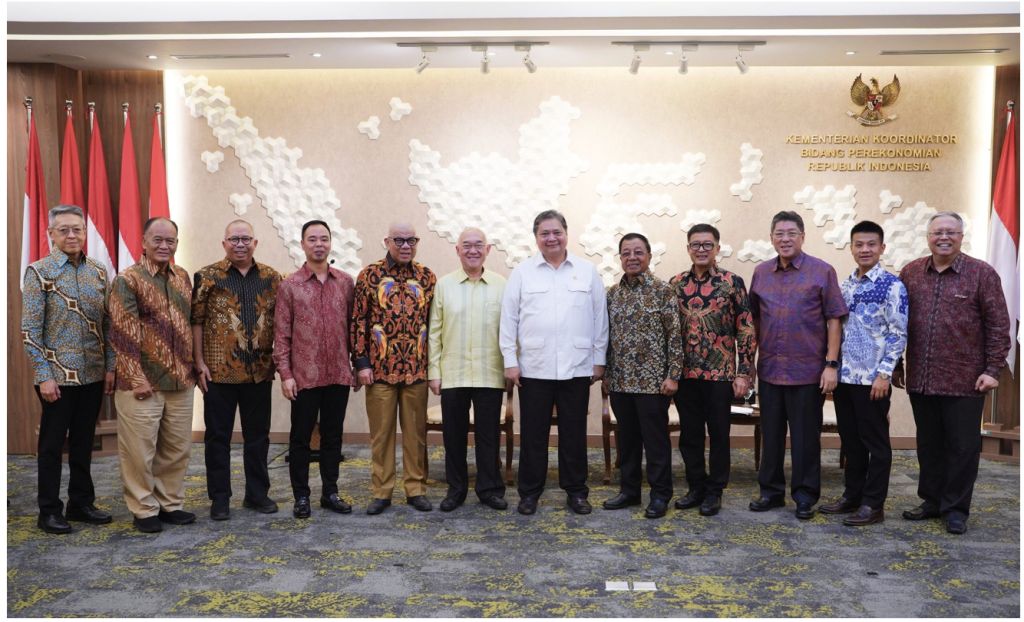
UNNES has also expanded financial support through the Education Patron Council (Dewan Penyantun Pendidikan or DPP). Under Rector’s Decree No. B/1072/UN37/HK.02/2025, dated 3 November 2025, a total of 504 students were designated as DPP Scholarship recipients. The recipients came from various faculties and study programmes, including students from the 2025 cohort admitted through the National Selection Based on Achievement (SNBP), National Selection Based on Test (SNBT), and independent admission pathways. The assistance covers tuition fees (Uang Kuliah Tunggal or UKT) in accordance with applicable provisions, with the scholarship period specified in the decree extending to a maximum of eight semesters.
The programme’s policy framework was further strengthened through Rector’s Regulation No. 143 of 2025, issued on 17 October 2025. This regulation provides scholarship access to students in UKT Categories I and II who meet the applicable requirements, while allowing consideration of students in other categories based on study programme recommendations and selection. One of the achievement-based scholarship schemes also includes criteria relating to economic disadvantage and/or a combined monthly income of less than IDR 4 million for the student’s parents or tuition fee sponsor.
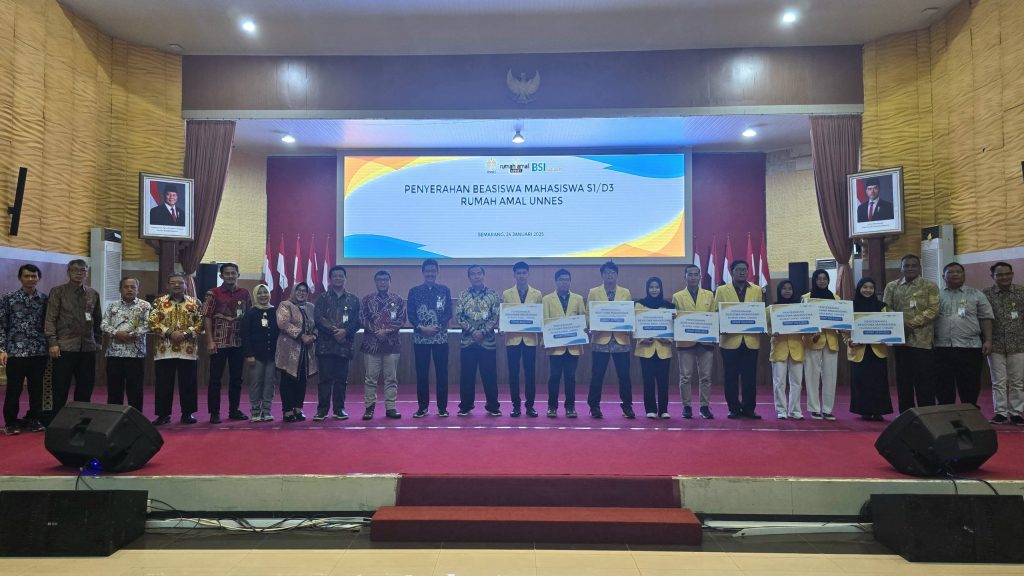
Meanwhile, on 24 January 2025, Rumah Amal UNNES distributed scholarships worth IDR 1,270,450,000 for the second semester of the 2024/2025 academic year. The distribution included regular living-cost assistance for 380 students and Tahfiz Scholarships for 46 students, in addition to tuition fee support provided under the programme.
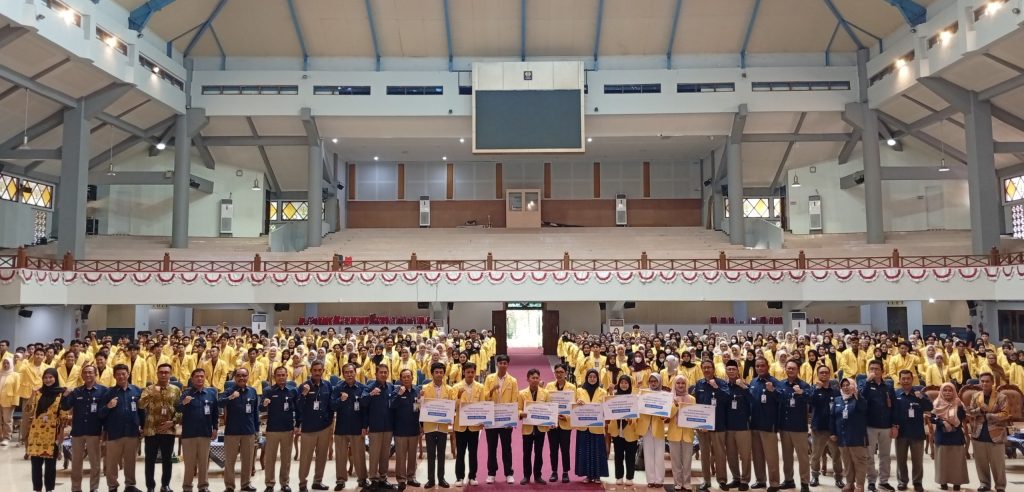
Support continued on 1 September 2025. During the scholarship distribution for the first semester of the 2025/2026 academic year at the UNNES Auditorium, Rumah Amal provided assistance totalling IDR 1,469,500,000 to 516 students. This included 476 recipients of tuition fee assistance and regular living-cost support, as well as 40 Tahfiz Scholarship recipients.
UNNES Vice Rector for Planning, General Affairs, Human Resources, and Finance, Prof. Dr. Heri Yanto, MBA, Ph.D., emphasised the importance of scholarships in helping students complete their education without financial barriers. He also expressed his hope that recipients would continue to achieve academic success and complete their studies on time.
Socioeconomic Data Collection Supports Appropriate Financial Assistance
To ensure that tuition fees and financial assistance are directed to appropriate recipients, UNNES requires students admitted through the 2025 SNBP and SNBT pathways to submit personal information and supporting documents. Family socioeconomic information is used as a basis for determining tuition fee categories and processing KIP Kuliah applications.
At the faculty level, implementation of these programmes is reflected in the Faculty of Engineering’s socialisation of the Rumah Amal Scholarship in January 2025. Regular living-cost scholarships and tuition fee assistance are specifically intended for students from economically disadvantaged families. Meanwhile, admission records from the Faculty of Law show that 134 prospective undergraduate law students had registered as KIP Kuliah applicants, of whom 70 had completed registration as of 3 September 2025.
The combination of affirmative admission policies, tuition assistance, living-cost support, and socioeconomic data collection demonstrates UNNES’s commitment to expanding educational opportunities throughout 2025. Through collaboration involving government assistance, university support, the Education Patron Council, and Rumah Amal, UNNES continues to work towards ensuring that family financial constraints do not prevent students from accessing and completing higher education.