SEMARANG — Universitas Negeri Semarang (UNNES) strengthened community access to basic services throughout 2025 through the construction and handover of a rainwater harvesting system, support for primary healthcare services, and assistance with environmental sanitation management. These initiatives were implemented through collaboration among faculty members, students, village governments, healthcare professionals, and community groups across various areas of Central Java.
One of the key outcomes was the construction and handover of a rainwater harvesting installation with an 8,000-liter storage tank to residents of Monggot Village, Grobogan Regency. UNNES also supported community healthcare services in Pekalongan Regency, enhanced the capacity of Integrated Healthcare Post (Posyandu) cadres in Semarang City, and provided assistance for community-based waste management in Pemalang Regency.
These initiatives were designed to help communities access the facilities, skills, and institutional support necessary to meet their basic needs, particularly in areas facing water scarcity, healthcare challenges, and environmental sanitation issues.
UNNES Builds and Hands Over an 8,000-Liter Rainwater Harvesting System to Grobogan Residents
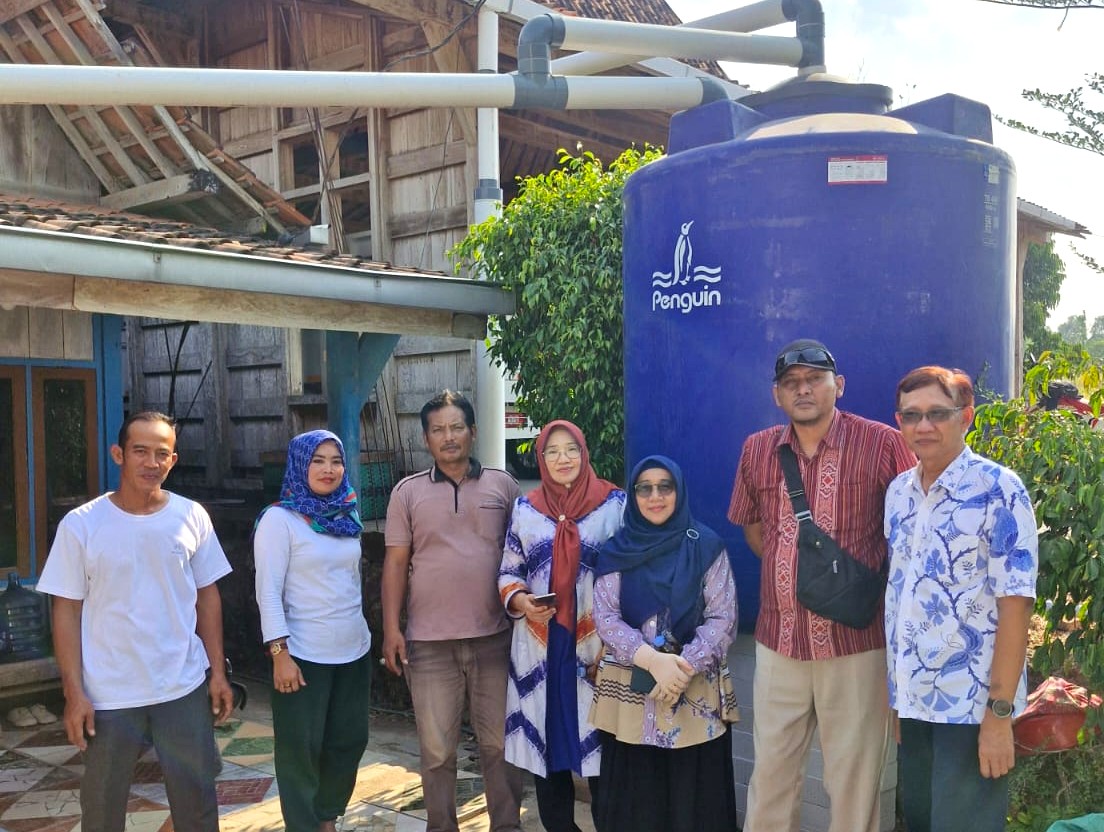
On July 2, 2025, a community service team from UNNES’s Faculty of Social and Political Sciences (FISIP), together with residents of Ngasem Hamlet, RT 02/RW 05, Monggot Village, Geyer District, Grobogan Regency, constructed a rainwater harvesting installation (Instalasi Pemanenan Air Hujan or IPAH) as an alternative source of reserve water for the community.
The program was led by Prof. Dr. Tri Marhaeni Pudji Astuti, M.Hum., in collaboration with an interdisciplinary team of faculty members and the Ngudi Rahayu Forest Farmers Group (Kelompok Tani Hutan or KTH).
Monggot Village faces water scarcity, particularly during the dry season, when water levels in several residents’ wells decline or the wells run dry. These conditions complicate the fulfillment of daily water needs and have prompted the community to seek alternative water sources.
To address this challenge, the UNNES team and local residents constructed a rainwater harvesting system equipped with an 8,000-liter storage tank. Residents participated directly in site preparation, installation of system components, and the arrangement of the water storage infrastructure.
The pilot installation was located at the home of Suwaji, Chair of KTH Ngudi Rahayu, in Ngasem Hamlet. The facility was designed to collect and store rainwater as a reserve supply that residents could use according to their needs, particularly when water availability declines.
In addition to constructing the facility, the UNNES team provided guidance on the installation’s operating principles, rainwater utilization, and tank maintenance. This assistance aimed to equip residents with the knowledge and skills to operate and maintain the infrastructure independently.
Water Facility Handover Accompanied by Operational Training and Maintenance Commitments
The program in Monggot Village extended beyond physical construction.
According to the community service report prepared by the implementing team, the program involved three site visits: coordination with the village government and farmers’ group, construction of the rainwater harvesting installation, and the handover of the installation and storage tank to the community.
During the third visit, the UNNES team handed over the IPAH system and storage tank to the community, accompanied by a group discussion on the importance of clean water and the proper use of the installation.
Through this initiative, residents received both water storage infrastructure and practical knowledge of its operation and maintenance. The community service team and local residents also established a shared commitment to maintaining the facility to support its long-term use.
This community-based management model is important because the provision of water services requires not only infrastructure development but also residents’ readiness to maintain facilities and manage their use.
The installation in Ngasem Hamlet serves as a pilot model for rainwater harvesting that can be developed further according to local environmental conditions and community needs. The 8,000-liter capacity represents the facility’s maximum storage capacity, while the actual volume