Semarang, Indonesia — Universitas Negeri Semarang (UNNES) collaborates with non-governmental and community-based environmental organizations on mangrove rehabilitation and biodiversity conservation. These partnerships connect university education and community service with ecosystem protection, with coastal rehabilitation providing a practical contribution to climate adaptation through shoreline protection.
Coastal Rehabilitation with P3MP Kendal and AbraSea
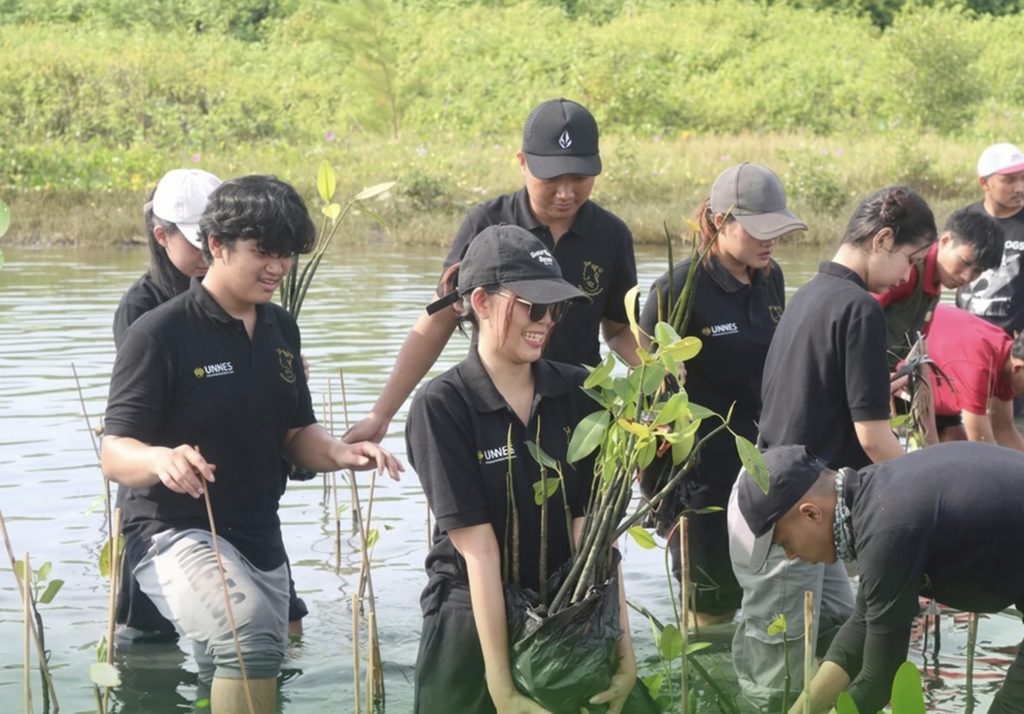
Through Bentang Biru 2025, the Student Executive Board of the Faculty of Mathematics and Natural Sciences (BEM FMIPA UNNES) collaborated with P3MP Kendal and AbraSea at Muara Kencana Beach, Kendal Regency, on May 31–June 1, 2025. The program brought together 80 participants, including students, lecturers, environmental organizations, and coastal residents.
P3MP Kendal, identified by UNNES as a non-governmental organization working on coastal conservation, abrasion prevention, and community empowerment, supplied mangrove seedlings and helped select planting locations suited to local ecological conditions. UNNES lecturers provided field guidance, connecting academic learning with practical conservation.
The collaboration’s adaptation contribution lies in restoring mangroves that help protect coastlines from erosion and sustain coastal ecosystems. Environmental education accompanied planting activities, strengthening participants’ understanding of the relationship between healthy mangroves, shoreline protection, biodiversity, and coastal livelihoods.
Rare Plant Conservation with Yayasan Akar Banir Indonesia
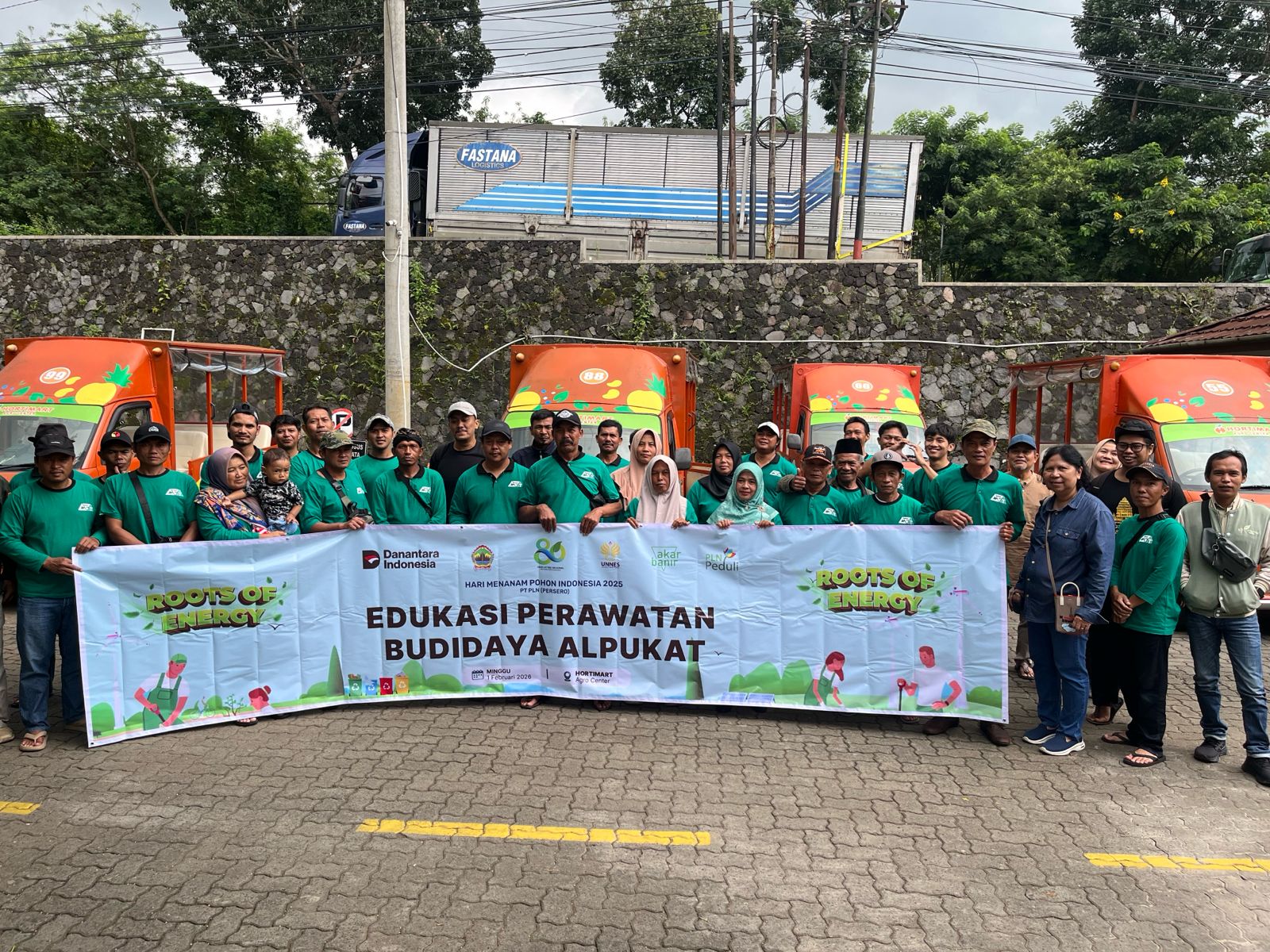
UNNES also partnered with Yayasan Akar Banir Indonesia, an environmental foundation with plant cultivation expertise, to develop a rare plant nursery at Ecofarm UNNES. The community service initiative responded to pressures on local flora and fauna associated with land conversion around the university.
The collaboration established a 36-square-meter shade house and developed seedlings representing 21 rare Indonesian plant species. UNNES contributed nursery facilities, while Akar Banir brought cultivation knowledge to support plant propagation and conservation.
This partnership primarily documents biodiversity conservation and nursery development. Its relevance to climate adaptation is indirect: maintaining plant diversity and planting resources can support ecosystem restoration and resilience. Together with the coastal rehabilitation partnership, it demonstrates how UNNES works with environmental organizations to protect ecological resources and strengthen community engagement in conservation.