

Semarang — Universitas Negeri Semarang (UNNES) works directly with industry to support coastal ecosystem rehabilitation through its collaboration with PT Kawasan Industri Wijayakusuma (KIW). Through ILING Project 2025, the partnership documented the planting of 1,000 mangrove seedlings at Mangunharjo Beach, Tugu District, Semarang, on 21 June 2025, connecting university engagement with corporate environmental responsibility.
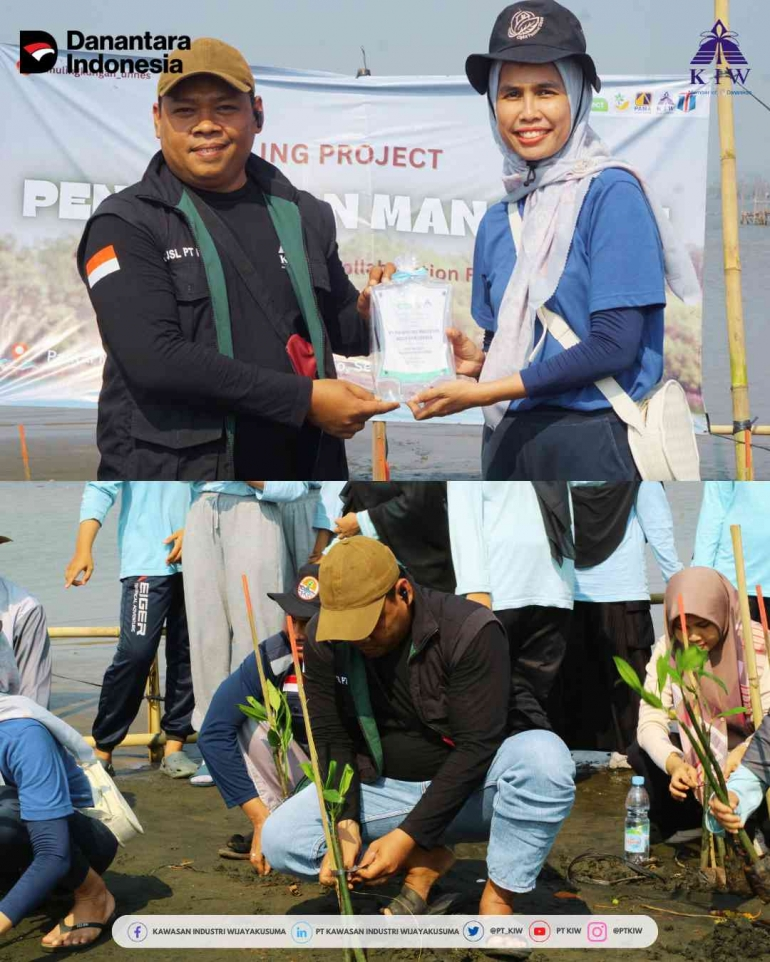
Direct University–Industry Collaboration
The initiative brought together KIW’s Social and Environmental Responsibility team and the Environmental Science Study Program of the UNNES Faculty of Mathematics and Natural Sciences. Under the theme “One Action, One Solution, Collaboration for the Ocean,” the partners participated in practical conservation activities focused on Semarang’s coastal environment.
KIW’s report records 1,000 seedlings for this collaboration, while UNNES’s broader report records 7,000 seedlings across ILING Project 2025. The figures describe different reporting scopes and are not added together as separate planting achievements.
Connecting Industry Support with Local Conservation
The seedlings documented by KIW were sourced from the Mangrove Lestari Farmers Group, linking the university–industry partnership with a local coastal conservation organization. This involvement connected planting activities with community participation and local seedling provision.
KIW also described the initiative as supporting mangrove nursery development for continuing ecosystem rehabilitation. The collaboration therefore brought together academic participation, corporate environmental support, and community involvement around a shared coastal conservation activity.
Supporting Coastal Vegetation and Aquatic Habitats
Mangrove planting formed the project’s practical response to coastal degradation. The initiative aimed to support shoreline protection and the ecological functions of mangrove habitats, linking the rehabilitation of coastal plants with environments used by aquatic and coastal animals.
The partnership demonstrates direct university engagement with an industrial partner in implementing a nature-based conservation practice. Its documented result is the planting activity; the available reports do not quantify seedling survival, biodiversity recovery, or reductions in industrial pollution.
Through ILING Project 2025, UNNES connected its conservation mission with industry participation and local knowledge, contributing to efforts to protect coastal vegetation and the aquatic life associated with mangrove ecosystems.