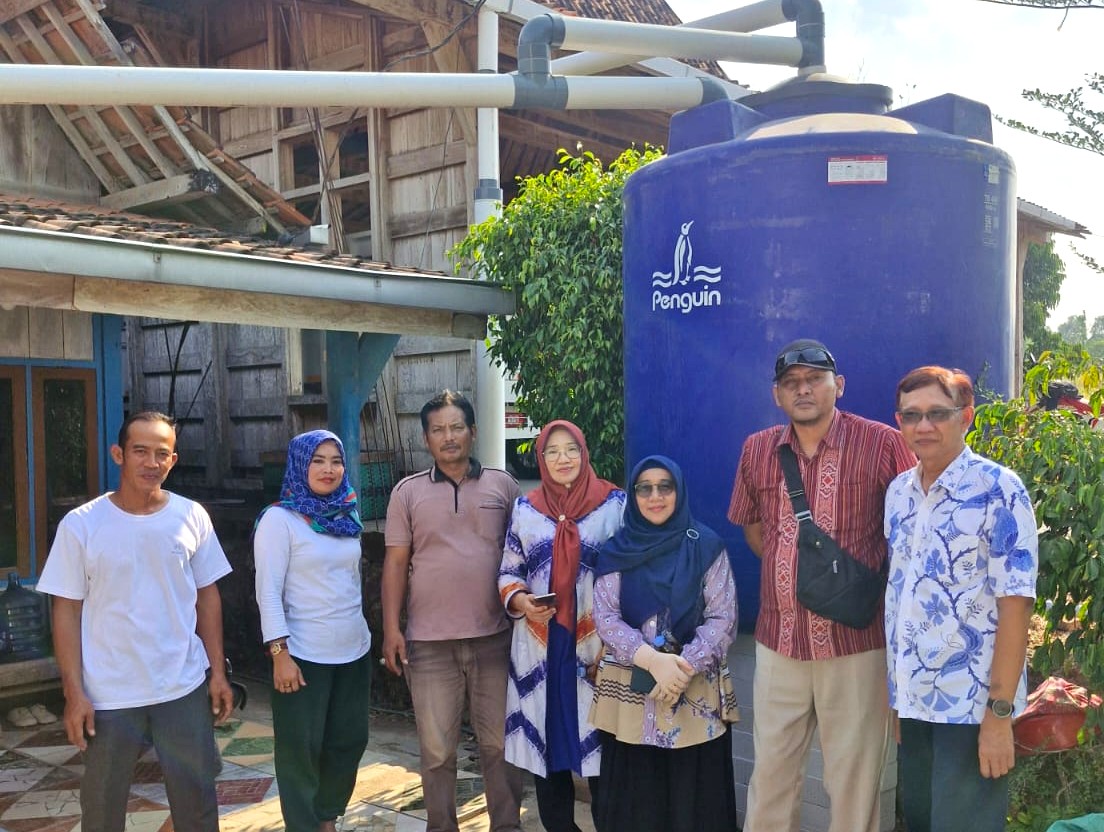
Universitas Negeri Semarang (UNNES), with a total university population of 49,410 people, implements an integrated food waste monitoring and management system as part of its commitment to environmental sustainability and responsible resource consumption. In 2025, the university recorded 24.6 metric tons (24,600 kg) of food waste, equivalent to approximately 0.50 kg per person annually. This measurement covers food waste collected from university facilities, including academic buildings, administrative offices, campus canteens, and other areas where students and staff consume meals.
Through systematic collection, measurement, and treatment, UNNES ensures that food waste is monitored and processed into reusable resources. These initiatives contribute to reducing environmental impacts while supporting circular economy practices and community participation.
Integrated Waste Management Facility (TPST UNNES)
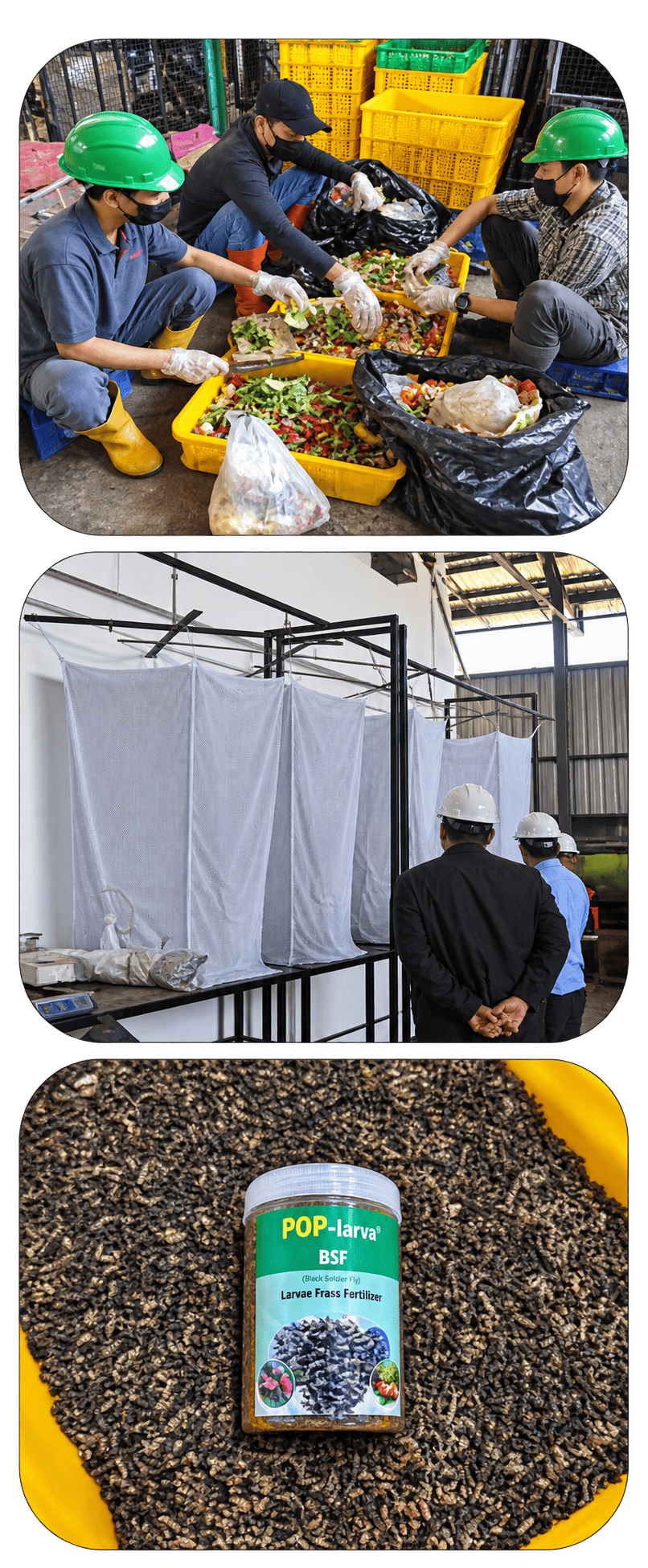
UNNES operates an Integrated Waste Management Facility (TPST) that coordinates waste collection, segregation, measurement, and processing across the campus. Cleaning service teams collect waste daily from university buildings and transport it to the facility, where it is weighed, categorized, and recorded to support institutional waste monitoring.
The facility manages several categories of waste, including food scraps, fallen leaves, branches, and other organic materials. Food waste is directed toward biological treatment through maggot cultivation, while leaf litter is converted into compost through organic processing methods. Branches and woody residues are handled separately using appropriate waste treatment equipment.
The resulting compost is reused to support campus landscaping, tree planting, and soil improvement, with some distributed to surrounding communities. This integrated system enables UNNES to transform organic waste into valuable resources while reducing dependence on conventional waste disposal.
Maggot Cultivation: Converting Food Waste into Valuable Resources
One of UNNES’s key food waste treatment initiatives is the cultivation of Black Soldier Fly (BSF) larvae, commonly known as maggots. Food waste collected from campus buildings serves as a primary substrate for larvae cultivation, allowing organic materials to be biologically decomposed and transformed into beneficial products.
The harvested larvae can be utilized as protein-rich feed for poultry and fish, while residual organic materials can be processed into soil amendments and fertilizers. This approach supports resource recovery and contributes to sustainable agricultural practices.
To maintain sufficient organic feedstock for cultivation, UNNES also collaborates with nearby communities and food vendors to collect additional food waste. This collaboration expands the environmental benefits of the initiative beyond campus boundaries and encourages responsible organic waste management among local stakeholders.
Community Empowerment Through Maggot Cultivation Training
Beyond internal waste management, UNNES promotes community participation through educational and practical training activities. The Faculty of Mathematics and Natural Sciences (FMIPA), together with the Environmental Conservation Center (PPLH), facilitates training programs focused on maggot cultivation and organic waste processing.
These activities introduce participants to waste segregation, larvae cultivation techniques, organic decomposition, and the utilization of maggot products for animal feed and agricultural purposes. Students, local residents, and small-scale entrepreneurs gain practical knowledge that can be applied to household waste management and environmentally responsible business activities.
Through these programs, UNNES connects environmental education with community empowerment, supporting the development of local circular economy initiatives and sustainable livelihoods.
Data-Driven Food Waste Monitoring and Measurement
UNNES applies a systematic monitoring approach to evaluate food waste generation and treatment across its campus facilities. The university recorded 24.6 metric tons of food waste in 2025, measured against a total university population of 49,410 people.
Based on these figures, the university’s annual food waste generation was approximately 0.50 kg per person, providing a measurable institutional indicator for evaluating waste management performance.
Waste collection and measurement are coordinated through operational teams and the Green Campus initiative. Collected data are documented and utilized to evaluate waste generation patterns, identify opportunities for improvement, and support sustainability reporting.
This evidence-based approach also provides opportunities for academic research and student learning related to waste reduction, environmental management, and circular economy innovation.