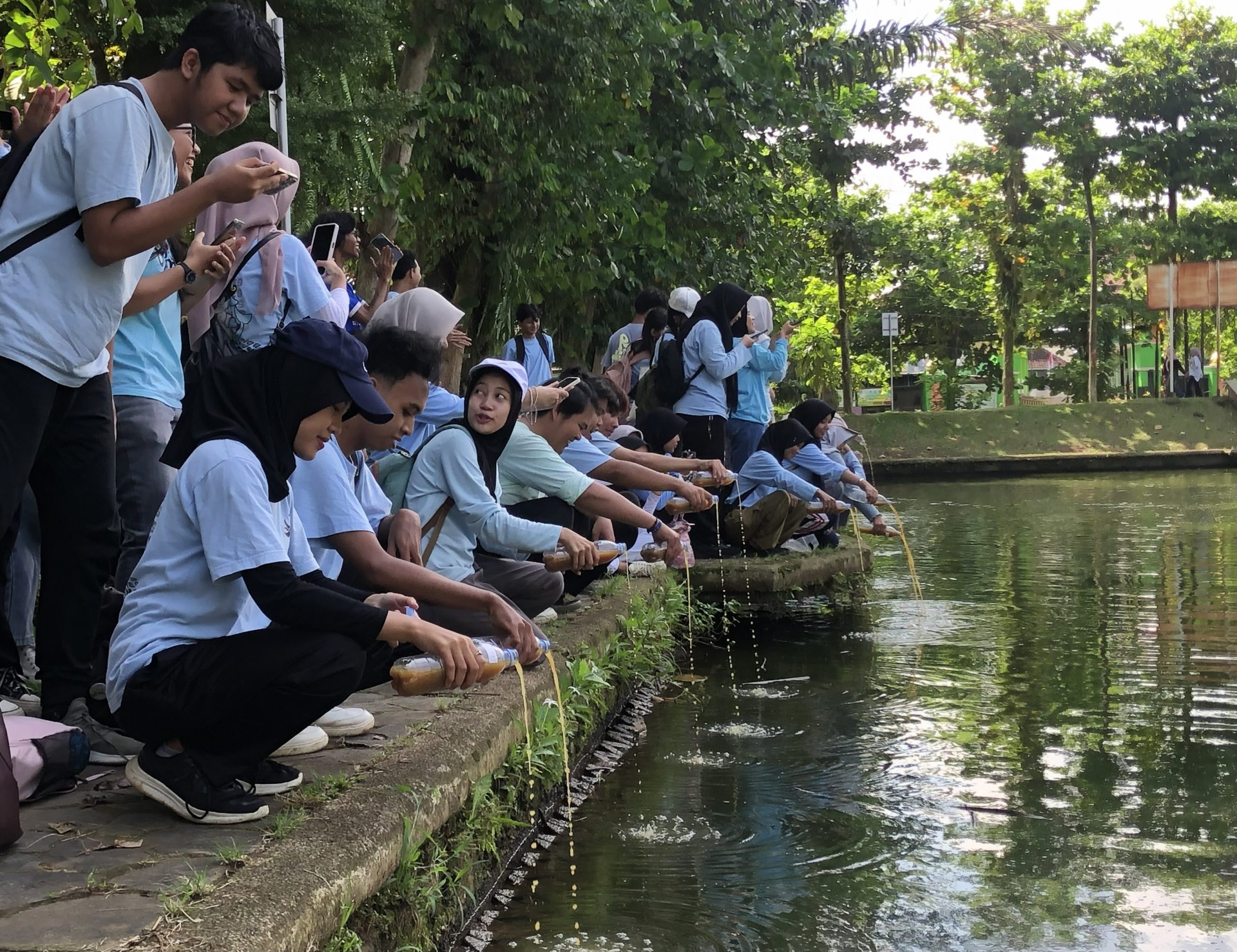
In commemoration of Earth Day 2026, the academic community of the Faculty of Mathematics and Natural Sciences (FMIPA), Universitas Negeri Semarang (UNNES), organized an environmental action by pouring eco-enzyme into the UNNES reservoir (embung) on Saturday, April 25, 2026. This initiative represents a concrete effort by the university to address environmental pollution issues, which are part of the broader concept of the Triple Planetary Crisis.
The activity involved lecturers and approximately 90 students from the Environmental Science Study Program at FMIPA UNNES. The event was attended by the Coordinator of the Environmental Science Program, Dr. Andhina Putri Heriyanti, M.Si., along with a team of lecturers including Trida Ridho Fariz, M.Sc., Abdul Jabbar, M.Ling., Amnan Haris, M.Ling., and Noer Farida, S.Pd.
According to Trida Ridho Fariz, M.Sc., who is also part of the FMIPA SDGs and Conservation team, Earth Day serves as an important momentum to strengthen collective awareness of environmental pollution, particularly in aquatic ecosystems. He emphasized that hydrologically, the UNNES area is located in the upstream and midstream regions of the Garang Watershed, giving it a strategic responsibility in maintaining water resource quality.
“This position requires us to be more active in protecting water bodies, as the impact is felt not only within the campus environment but also downstream,” he stated.
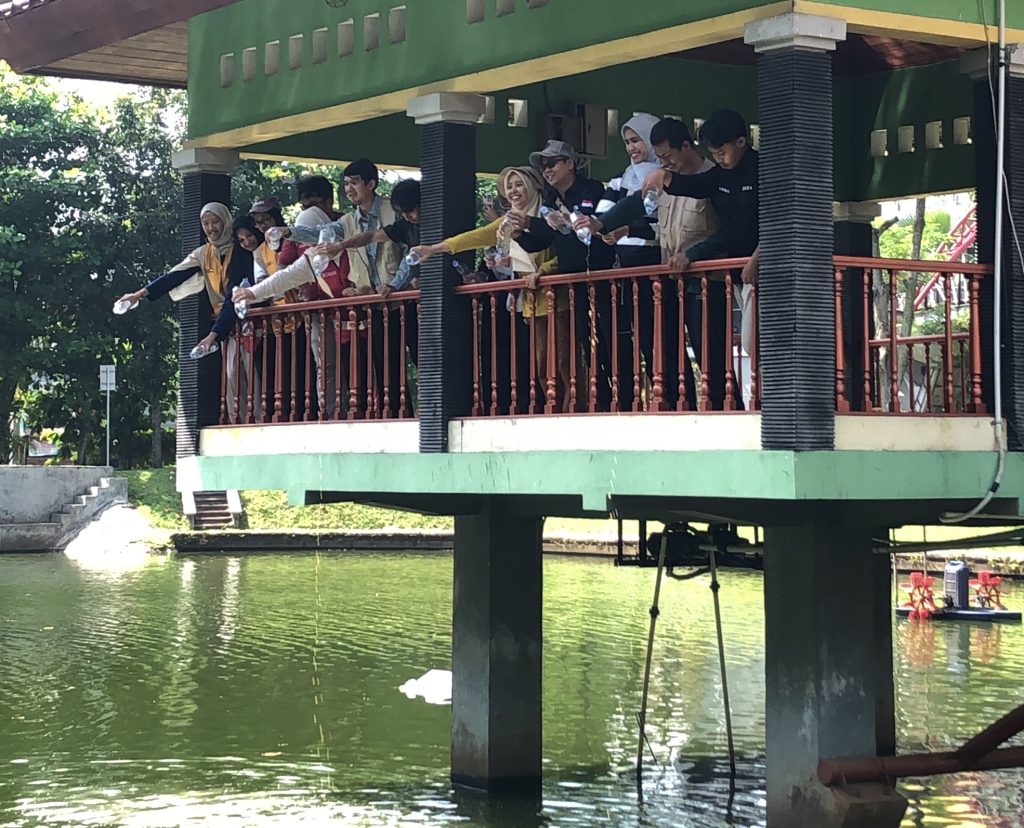
The eco-enzyme used in this activity was produced as part of a learning project from the Environmental Chemistry course taught by Abdul Jabbar, M.Ling., Dr. Triastuti Sulistyaningsih, M.Si., and Prof. Dr. Murbangun Nuswowati, M.Si. The product was created through the fermentation of approximately 18 kilograms of organic waste, including vegetable scraps and fruit peels, resulting in around 63 liters of eco-enzyme.
Abdul Jabbar, M.Ling., explained that this activity is an implementation of the “impactful practicum” concept—learning that not only enhances students’ knowledge but also contributes directly to environmental sustainability.
“Students not only understand chemical concepts and waste management, but also actively participate in environmental conservation efforts, particularly in aquatic ecosystems,” he explained.
Functionally, eco-enzyme has the potential to stimulate natural microbial activity and help reduce odors and light organic pollutants in water bodies such as reservoirs. Therefore, its application in this activity is not merely symbolic, but also serves as practical environmental education.
This initiative also supports the achievement of several Sustainable Development Goals (SDGs), particularly SDG 12 (Responsible Consumption and Production), SDG 13 (Climate Action), and SDG 6 (Clean Water and Sanitation), through efforts to maintain water quality.
Through this activity, FMIPA UNNES is expected to continue serving as a driving force in developing action-based learning that contributes to environmental sustainability, while strengthening the role of higher education institutions in addressing global challenges.