Perkuat Keterbukaan Informasi Publik, UNNES Gelar Workshop DIP dan DIK

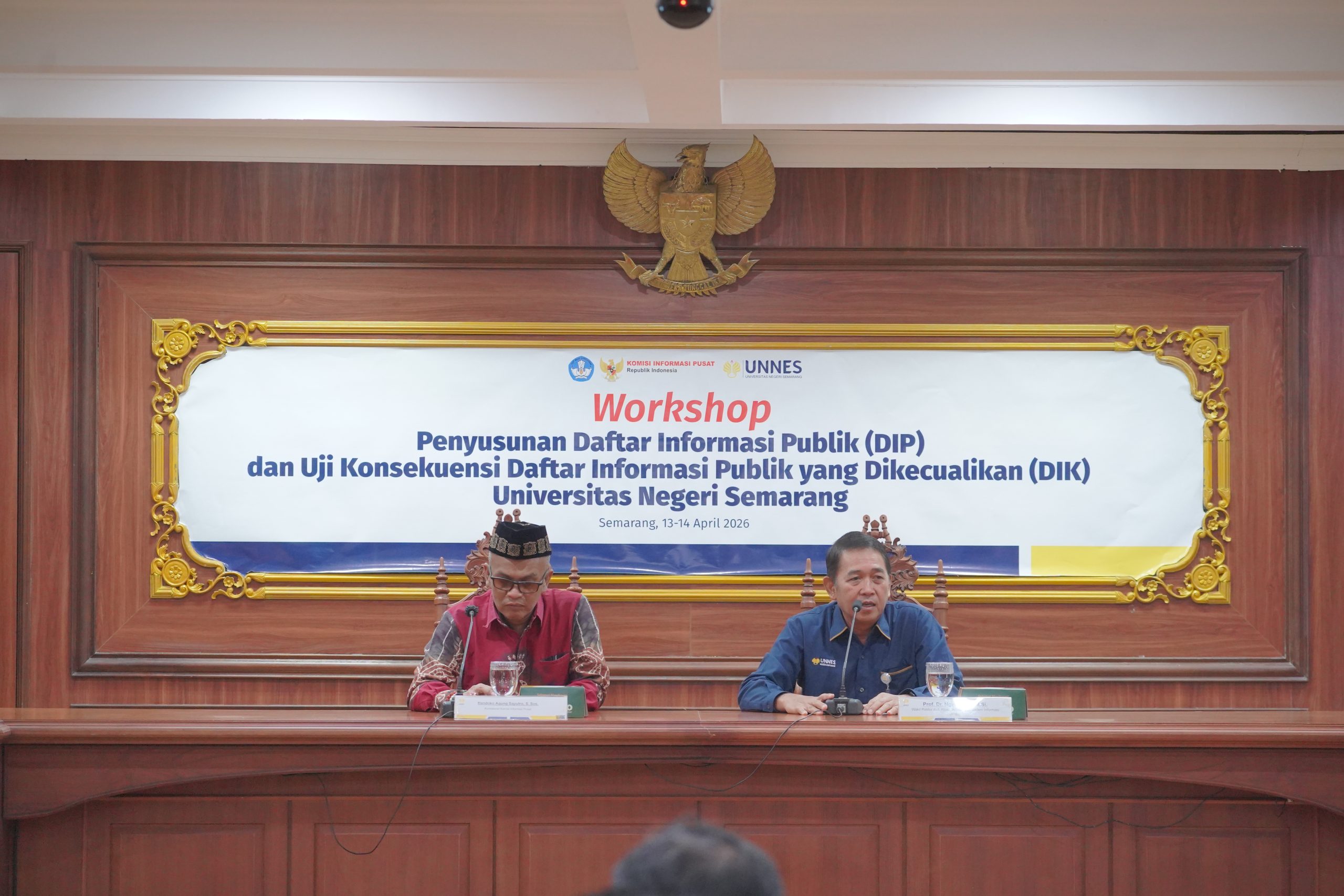
Universitas Negeri Semarang (UNNES) terus memperkuat komitmen dalam keterbukaan informasi publik melalui workshop penyusunan Daftar Informasi Publik (DIP) dan Daftar Informasi yang Dikecualikan (DIK) yang diselenggarakan selama dua hari pada 13–14 April 2026.

Kegiatan ini menghadirkan narasumber dari Komisi Informasi Pusat untuk memberikan penguatan baik secara konseptual maupun teknis kepada para pengelola informasi di lingkungan UNNES.

Pada hari pertama, materi disampaikan oleh Komisioner Komisi Informasi Pusat, Handoko Agung Saputro, S.Sos, yang menekankan pentingnya pemahaman prinsip dasar keterbukaan informasi publik. Ia menjelaskan bahwa pada dasarnya seluruh informasi bersifat terbuka, kecuali yang dikecualikan sesuai ketentuan peraturan perundang-undangan. Selain itu, peran pimpinan menjadi faktor krusial dalam mendorong implementasi keterbukaan informasi di setiap unit kerja.

Diskusi yang berlangsung juga menyoroti berbagai dinamika di lapangan, termasuk permintaan transparansi informasi keuangan oleh mahasiswa serta pengelolaan informasi dalam pengadaan barang dan jasa. Narasumber menegaskan bahwa publik memiliki hak untuk mengetahui informasi, namun tidak memiliki kewenangan untuk memeriksa, sehingga penyajian informasi perlu dilakukan secara tepat dan mudah dipahami.

Memasuki hari kedua, workshop dilanjutkan dengan pemaparan teknis oleh Siti Ajijah, S.H., M.H., selaku Tenaga Ahli Komisi Informasi Pusat. Ia memberikan penjelasan lebih mendalam mengenai penyusunan DIP dan DIK, termasuk pengelompokan informasi, mekanisme uji konsekuensi, serta pentingnya kejelasan akses informasi bagi publik. Dalam pemaparannya, ia juga menekankan bahwa pengelolaan informasi publik harus didukung dengan sistem yang terstruktur dan berbasis regulasi agar dapat menjamin transparansi dan akuntabilitas.

Wakil Rektor III UNNES, Prof. Dr. Ngabiyanto, M.Si., dalam kesempatan tersebut menyampaikan bahwa penguatan kapasitas pengelolaan informasi publik menjadi bagian penting dalam mewujudkan tata kelola perguruan tinggi yang baik.

“Melalui kegiatan ini, kami berharap seluruh unit kerja memiliki pemahaman yang sama serta mampu mengimplementasikan keterbukaan informasi publik secara optimal di lingkungan UNNES,” ujarnya.

Melalui kegiatan ini, UNNES diharapkan dapat terus meningkatkan kualitas layanan informasi publik serta mempertahankan capaian sebagai perguruan tinggi yang informatif, sekaligus mendorong terciptanya transparansi dan akuntabilitas yang lebih baik di masa mendatang.
Related Posts

Leave a Reply

* Kode Akses Komentar:

* Tuliskan kode akses komentar diatas:

GDPR

  • Privacy Policy

Privacy Policy

Who we are

Our website address is: https://unnes.ac.id.

Comments

When visitors leave comments on the site we collect the data shown in the comments form, and also the visitor’s IP address and browser user agent string to help spam detection.

An anonymized string created from your email address (also called a hash) may be provided to the Gravatar service to see if you are using it. The Gravatar service privacy policy is available here: https://automattic.com/privacy/. After approval of your comment, your profile picture is visible to the public in the context of your comment.

Media

If you upload images to the website, you should avoid uploading images with embedded location data (EXIF GPS) included. Visitors to the website can download and extract any location data from images on the website.

Cookies

If you leave a comment on our site you may opt-in to saving your name, email address and website in cookies. These are for your convenience so that you do not have to fill in your details again when you leave another comment. These cookies will last for one year.

If you visit our login page, we will set a temporary cookie to determine if your browser accepts cookies. This cookie contains no personal data and is discarded when you close your browser.

When you log in, we will also set up several cookies to save your login information and your screen display choices. Login cookies last for two days, and screen options cookies last for a year. If you select “Remember Me”, your login will persist for two weeks. If you log out of your account, the login cookies will be removed.

If you edit or publish an article, an additional cookie will be saved in your browser. This cookie includes no personal data and simply indicates the post ID of the article you just edited. It expires after 1 day.

Embedded content from other websites

Articles on this site may include embedded content (e.g. videos, images, articles, etc.). Embedded content from other websites behaves in the exact same way as if the visitor has visited the other website.

These websites may collect data about you, use cookies, embed additional third-party tracking, and monitor your interaction with that embedded content, including tracking your interaction with the embedded content if you have an account and are logged in to that website.

Who we share your data with

If you request a password reset, your IP address will be included in the reset email.

How long we retain your data

If you leave a comment, the comment and its metadata are retained indefinitely. This is so we can recognize and approve any follow-up comments automatically instead of holding them in a moderation queue.

For users that register on our website (if any), we also store the personal information they provide in their user profile. All users can see, edit, or delete their personal information at any time (except they cannot change their username). Website administrators can also see and edit that information.

What rights you have over your data

If you have an account on this site, or have left comments, you can request to receive an exported file of the personal data we hold about you, including any data you have provided to us. You can also request that we erase any personal data we hold about you. This does not include any data we are obliged to keep for administrative, legal, or security purposes.

Where your data is sent

Visitor comments may be checked through an automated spam detection service.