

Wedhang uwuh merupakan minuman herbal tradisional khas Yogyakarta yang dibuat dari berbagai rempah dan bahan alami, seperti jahe, kayu secang, cengkih, kayu manis, dan daun-daunan aromatik. Minuman ini memiliki karakteristik yang menarik karena memadukan aroma rempah, cita rasa hangat, serta warna kemerahan yang khas. Secara sederhana, wedhang uwuh memiliki kemiripan dengan mulled wine atau Glühwein, minuman hangat berbumbu rempah yang populer di sejumlah negara Eropa, khususnya Jerman. Perbedaannya, wedhang uwuh umumnya tidak mengandung alkohol dan memiliki kekhasan bahan serta tradisi penyajian yang mencerminkan kearifan lokal Indonesia.
Keunikan wedhang uwuh tersebut menjadi inspirasi bagi Prof. Sudarmin dan tim peneliti Fakultas Matematika dan Ilmu Pengetahuan Alam Universitas Negeri Semarang (FMIPA UNNES) untuk mengembangkan inovasi pembelajaran sains berbasis budaya dan teknologi digital melalui pendekatan Ethno-Virtual Reality (Ethno-VR). Inovasi ini mengintegrasikan pengetahuan tradisional mengenai wedhang uwuh dengan konsep-konsep ilmiah melalui lingkungan pembelajaran virtual yang interaktif.
Penelitian tersebut dikembangkan melalui dua artikel ilmiah yang saling berkaitan. Artikel pertama berjudul “Integrating Ethno-VR Wedhang Uwuh into an Inquiry Project Learning Model to Actualize Science and Technology Literacy in Accordance with Sustainable Development Goal 4” telah diterbitkan dalam prosiding internasional E3S Web of Conferences, Volume 695, Artikel 05003 (2026), dari konferensi ICSChem 2025 yang terindeks Scopus. Penelitian ini berfokus pada integrasi media Ethno-VR dengan model pembelajaran proyek berbasis inkuiri untuk mendukung literasi sains dan teknologi mahasiswa.
Sementara itu, penelitian kedua berjudul “Ethno-Virtual Reality Media on Wedhang Uwuh as a Traditional Indonesian Herbal Beverage for Enhancing Scientific and Technological Literacy” dikembangkan untuk publikasi pada Jurnal Pendidikan IPA Indonesia (JPII), jurnal internasional terindeks Scopus Q3. Penelitian ini memberikan perhatian khusus pada pengembangan, validitas, dan respons mahasiswa terhadap media pembelajaran Ethno-VR sebagai lingkungan belajar imersif yang menghubungkan sains, teknologi, dan budaya lokal.
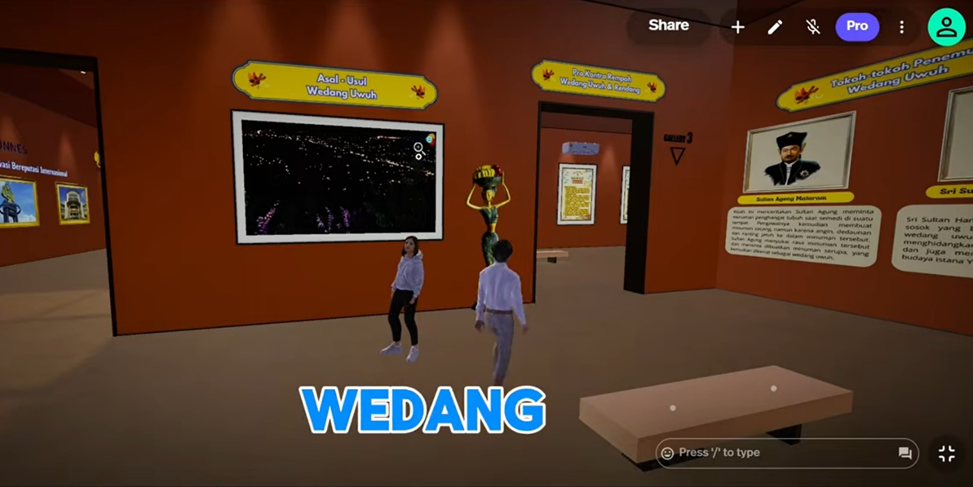
Pengembangan media Ethno-VR dilakukan melalui pendekatan penelitian dan pengembangan (research and development) dengan memanfaatkan hasil observasi, wawancara, studi literatur, serta kegiatan eksperimen. Media yang dihasilkan berbentuk museum virtual interaktif yang memperkenalkan sejarah dan budaya wedhang uwuh, proses pembuatannya, serta penjelasan ilmiah mengenai karakteristik bahan penyusunnya. Pengguna dapat mengeksplorasi materi melalui tur museum virtual, multimedia pembelajaran, dan berbagai aktivitas ilmiah, termasuk pengujian organoleptik, analisis fitokimia, pengamatan struktur bahan, serta pengenalan karakteristik aroma.
Kedua penelitian tersebut menunjukkan potensi pemanfaatan teknologi virtual reality untuk menghadirkan pengalaman belajar yang lebih kontekstual dan menarik. Melalui pendekatan ini, mahasiswa tidak hanya mempelajari konsep kimia dan sains secara teoritis, tetapi juga diajak memahami keterkaitannya dengan produk budaya yang dekat dengan kehidupan masyarakat. Meskipun demikian, hasil penelitian terutama menunjukkan validitas media dan respons positif mahasiswa, sehingga peningkatan kemampuan literasi sains dan teknologi secara langsung masih memerlukan pengujian lebih lanjut.
Inovasi Ethno-VR wedhang uwuh juga memiliki dampak positif dalam memperkenalkan dan mendokumentasikan pengetahuan tradisional Indonesia melalui teknologi digital. Pemanfaatan museum virtual membuka peluang bagi generasi muda untuk mengenal warisan budaya lokal melalui pendekatan yang lebih interaktif, sekaligus memahami nilai ilmiah di balik pemanfaatan rempah-rempah tradisional. Pendekatan ini juga dapat menjadi inspirasi pengembangan media pembelajaran berbasis kearifan lokal lainnya.
Dari perspektif pembangunan berkelanjutan, kedua penelitian tersebut mendukung Sustainable Development Goals (SDGs), khususnya SDG 4 (Pendidikan Berkualitas) melalui pengembangan inovasi media pembelajaran digital yang kontekstual, interaktif, dan berorientasi pada penguatan literasi sains serta teknologi. Selain itu, inovasi ini juga memiliki relevansi dengan SDG 11 (Kota dan Permukiman yang Berkelanjutan), terutama Target 11.4 yang berkaitan dengan upaya pelindungan dan pelestarian warisan budaya. Digitalisasi pengetahuan mengenai wedhang uwuh melalui museum virtual berpotensi mendukung dokumentasi, pengenalan, dan pewarisan pengetahuan budaya tradisional kepada generasi berikutnya.
Melalui pengembangan Ethno-VR wedhang uwuh, Prof. Sudarmin dan tim menunjukkan bagaimana kekayaan budaya lokal dapat menjadi sumber inovasi dalam pendidikan sains modern. Penelitian ini diharapkan dapat mendorong pengembangan pembelajaran yang tidak hanya adaptif terhadap kemajuan teknologi, tetapi juga tetap berpijak pada identitas budaya dan kearifan lokal Indonesia sebagai bagian dari upaya mewujudkan pendidikan berkualitas dan pelestarian warisan budaya secara berkelanjutan.