


The Faculty of Mathematics and Natural Sciences (FMIPA) at Universitas Negeri Semarang continues to expand its international network through Collaborative Teaching SCE 523 in partnership with Universiti Teknologi MARA (UiTM), Malaysia. This initiative forms part of FMIPA UNNES’s strategy to internationalize the curriculum and enhance global engagement in science education.
In this collaborative program, lecturers from the Physics Education Study Program of FMIPA UNNES served as international guest lecturers in UiTM’s course, reflecting the faculty’s commitment to fostering globally oriented, cross-cultural, and interdisciplinary learning environments.
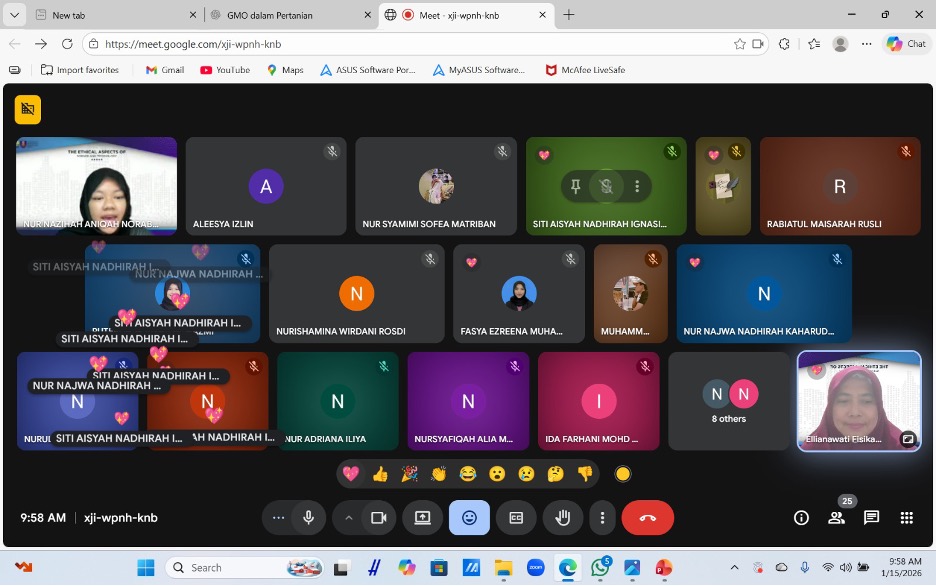
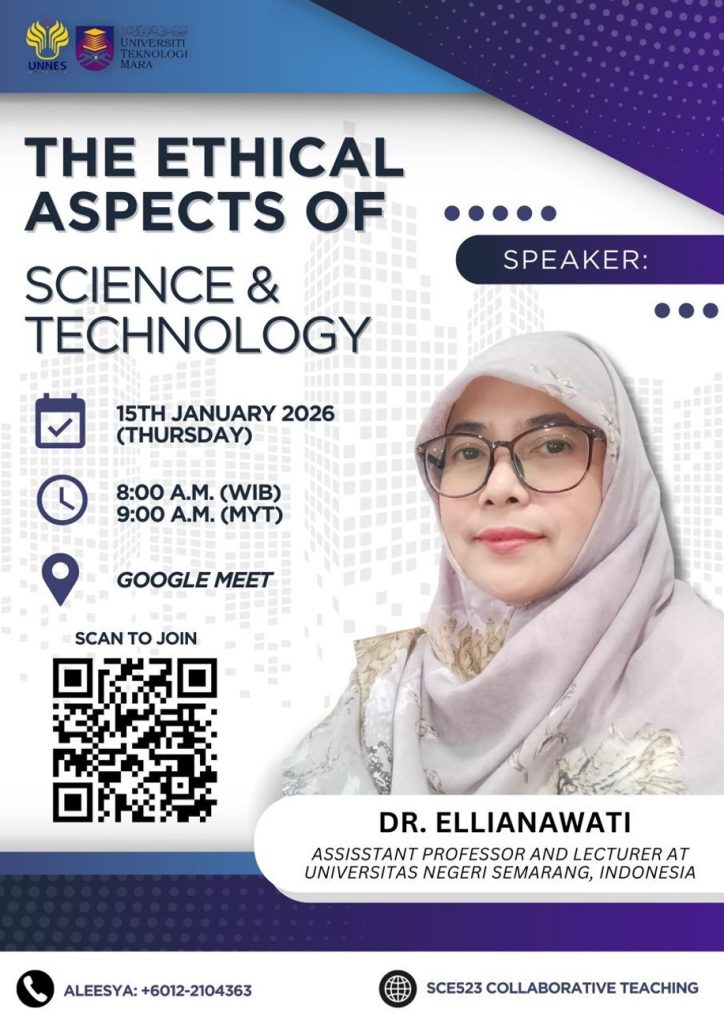
On Thursday, 15 January 2026, Dr. Ellianawati, Assistant Professor and lecturer in the Physics Education Study Program at FMIPA UNNES, delivered a lecture entitled “The Ethical Aspects of Science and Technology” via Google Meet at 08.00 WIB / 09.00 MYT. Her presentation addressed ethical issues in science and technology development, including scientists’ responsibilities, moral implications of technological innovation, and the relevance of ethics in 21st-century science education.
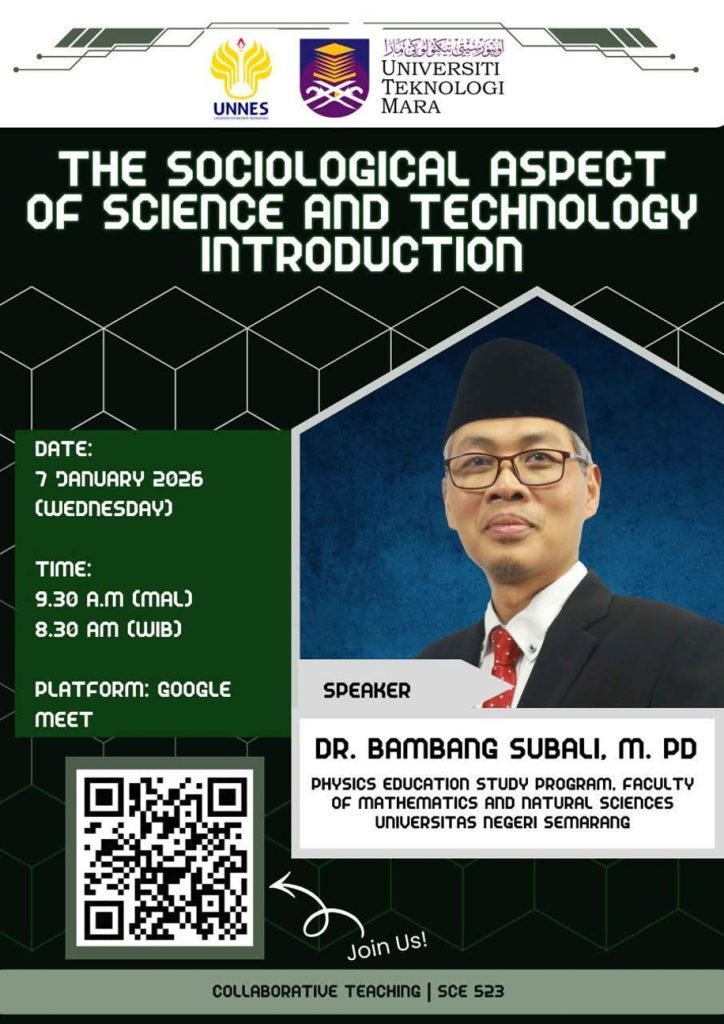
Previously, on Wednesday, 7 January 2026, Dr. Bambang Subali, M.Pd., a lecturer in the Physics Education Study Program at FMIPA UNNES, presented a lecture titled “The Sociological Aspect of Science and Technology Introduction” at 08.30 WIB / 09.30 MYT. He discussed sociological perspectives on the introduction of science and technology, highlighting how social, cultural, and educational factors shape the understanding and acceptance of technology across society and academic contexts.
The Collaborative Teaching SCE 523 program represents a tangible outcome of the UNNES–UiTM international partnership, particularly in joint teaching, international guest lecturing, and internationalization of the curriculum. Through this initiative, UiTM students gained international perspectives from UNNES lecturers, while UNNES academics enhanced their global teaching experience and strengthened the institution’s international recognition.
This collaboration also supports UNNES’s vision as a conservation-based university with an international reputation by promoting the integration of ethical, social, and sustainability values in science and technology development. The program is expected to serve as a foundation for further collaboration, including joint research, co-publications, student exchange programs, and joint supervision at both undergraduate and postgraduate levels.
FMIPA UNNES remains committed to expanding global partnerships, increasing international exposure for both lecturers and students, and advancing science education that is responsive to global challenges and societal needs.