

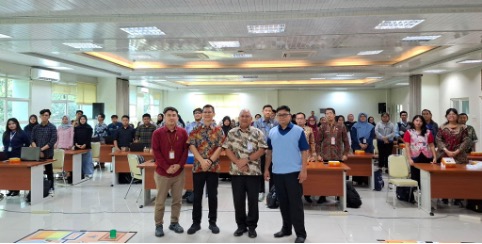
Semarang, 27/5 – In order to improve digital literacy and prepare the younger generation to face future challenges based on technology, UNNES STEM EduCenter, Rumah Edukasi and the S1 S2 Science Education Study Program of FMIPA collaborated to hold a Coding, Artificial Intelligence (AI), and Robotics Training and Robot for Mission (R4M) Simulation based on STEAM (Science, Technology, Engineering, Arts, and Mathematics). This activity was held on Tuesday, 27/5 at the Bordobudhur LP3M Building, Semarang State University, and was attended by 150 participants consisting of science teachers of Semarang City and UNNES students.
This training activity was held as a concrete effort to bridge the achievement of the fourth point of the SDGs of Quality Education with the rapid development of cutting-edge technology, especially in the fields of computer programming (coding), artificial intelligence (AI), and robotic systems. Through the STEAM approach, participants are invited to understand technical aspects, hone creative, collaborative, and solution-oriented thinking skills to real problems packaged in the form of robot mission simulations (Robot for Mission/R4M).
The series of training began with singing the Indonesian national anthem together and was officially opened by Arif Widiyatmoko, Ph.D. as the head of the Unnes STEM EduCenter who in his speech conveyed the importance of integrating technology into the education system as a foundation for building superior human resources in the digital era. Not only that, he emphasized the importance of implementing STEM, Coding, and Robotics in learning in the current era. The training activity presented experienced speakers in the fields of coding and robotics, namely Mr. Mulia Anton from Rumah Edukasi, a practitioner of robotics, coding and AI. During the activity, participants also received intensive guidance from the facilitator team of the Undergraduate and Masters Programs in Science Education, which consisted of experienced students who were also the driving force behind the UNNES STEM Educenter.
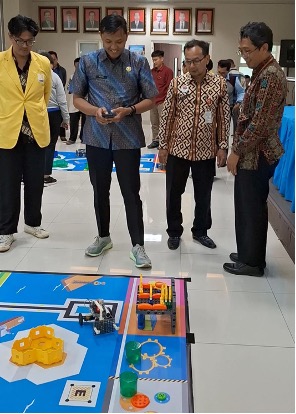
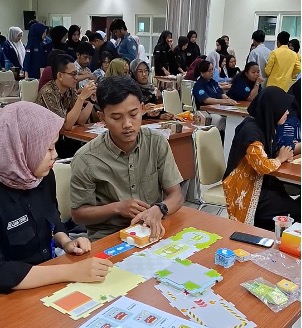
The training material is divided into several interactive sessions. The first session begins with an introduction to the basics of programming logic and coding through basic block-based programming algorithms Scratch on programming paper or referred to as coding for kids. Then, participants are introduced to the basic concepts of coding and programming, such as pattern recognition, simple data processing, to the use of coding in everyday life. In this session, direct practice is also carried out related to block coding and coding arrangement according to the speaker’s instructions.
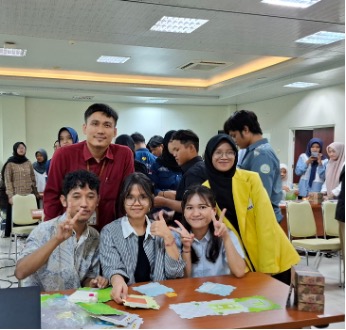
After the first session, participants attended the second session on scratch microbit training. Next, participants assembled robots & R4M simulations. The second session in this training focuses on programming microcontroller-based robots with sensors and actuators that play a role in carrying out certain missions. The peak of this activity is the Robot for Mission (R4M) Simulation where participants are divided into groups to design and run robots in completing challenges based on certain mission scenarios. At this stage, participants are required to think technically and apply elements of art and design with collaborative strategies in teams. Participants are challenged to be able to successfully complete the mission. Furthermore, this simulation can also provide space for presenting their work and testing it with a competition against other participants to collect the most points. Participants who successfully achieve the highest points become champions and receive attractive prizes.
According to the head of UNNES STEM Educenter, this training is expected to foster interest and self-confidence in each participant to understand more about technology to support improving the quality of education. “We hope that this activity will be the first step to build an educational ecosystem that is more adaptive, creative, and relevant to future needs,” he said. All participants admitted that they were very enthusiastic about participating in this training. Participants said that the direct learning experience with practice and simulation was very enjoyable and motivating to continue to develop themselves in order to be competent in the field of educational technology. Participants from among students even admitted that they usually only study theory, but in this training they had the opportunity to directly assemble robots and operate them to complete missions. This was an extraordinary valuable experience for them.
The teachers who participated in the Coding, AI, and Robotics Training and Robot for Mission (R4M) Simulation based on STEAM gave a positive response. They considered this training as a breath of fresh air for the world of education that is adapting to digital transformation. According to the teachers, the material presented was not only relevant to the needs of 21st century learning, but also provided real experience in integrating technology during the teaching and learning process. They found it helpful to better understand how STEAM concepts can be practically applied through programming robotics activities, as well as seeing firsthand how this method can increase students’ interest and creativity.
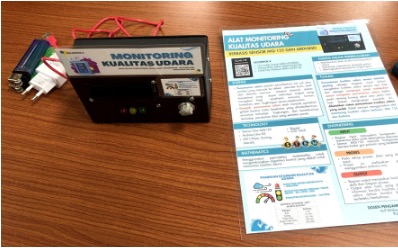
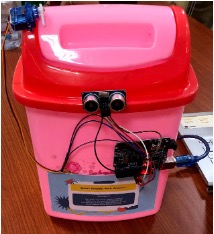
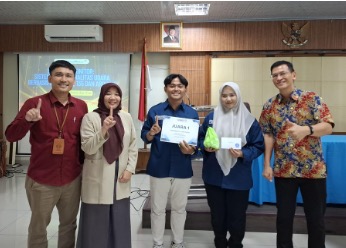
A series of trainings were enlivened by the STEM Project Competition participated by students. Not only competing, this activity also supports the realization of SDGs, namely Climate Change Mitigation. Innovative projects in this competition are aimed at improving students’ attitudes towards climate change and environmental literacy. Each team consisting of students creates a project to solve problems in everyday life with STEM aspects. Each presents the results of the work that has been created and assessed by the jury. The winners of this competition receive attractive prizes from UNNES STEM Educenter, education house, and Science Education Study Program. It is hoped that this competition can increase students’ motivation to produce creative work as a solution to various challenges in a sustainable manner based on STEM.
This activity was closed with a reflection session and a group photo with all participants. The committee also hopes that similar activities can continue to be carried out sustainably in various regions in order to expand the reach of digital literacy and STEAM-based education in Indonesia. It is hoped that teachers and prospective teachers who have received knowledge about STEM, coding, and robotics can apply it as an innovation in learning, so that they can hone students’ abilities and creativity. In addition, by implementing this activity, it is hoped that participants will be able to integrate technological knowledge into the learning process, become pioneers of change in schools, communities, and the wider community, so that brilliant education can be realized in the future.