



The Bengawan Solo River is a river that stretches from Central Java to East Java and passes through the Cepu District. This river is the main source of water for Cepu residents. However, this river is often contaminated with oil and industrial waste from both within and outside the Cepu area. Waste is a residual substance produced from a production process, both industrial and domestic (household), which is no longer used and disposed of into the environment (Yusuf, 2015). Oil waste is the remainder or waste from the processing, use, or disposal of petroleum and its derivatives. While industrial waste is the remainder or waste from an industrial process. Oil and industrial waste found in the Bengawan Solo River is hazardous waste that is toxic if consumed or used in the daily lives of Cepu residents.
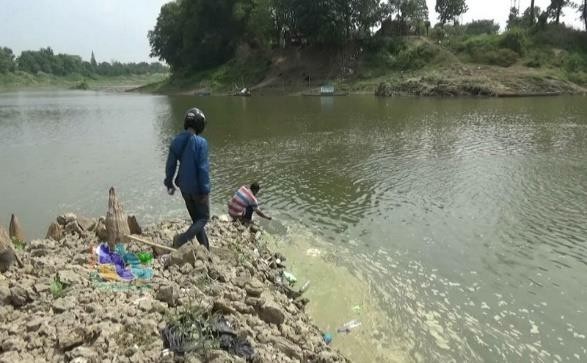
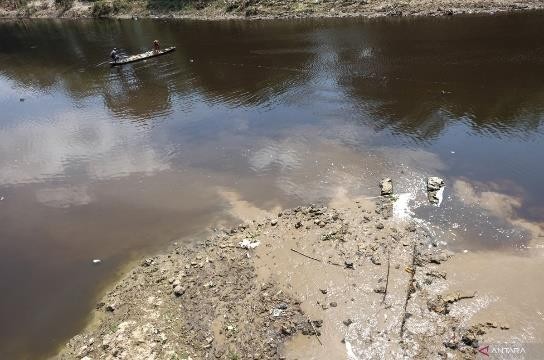
Figure 1. (A) Oil waste pollution of the Bengawan Solo River, (B) Industrial waste pollution of the Bengawan Solo River
The beginning of the pollution process of the Bengawan Solo River
Oil and industrial waste produced by various activities along the Bengawan Solo River, such as factories, workshops, and oil refineries that can pollute the river. The pollution process begins with the discharge or leakage of waste directly into the river body. Oil waste and toxic chemicals will be carried by the river current, settle at the bottom, and seep into the soil. Inadequate waste management, both in terms of processing facilities and the level of company compliance, is the main trigger for pollution of the Bengawan Solo River by oil and industrial waste.
The impact of pollution of the Bengawan Solo River
Ecologically, this pollution can disrupt and damage river ecosystems, such as killing fish and other aquatic organisms and reducing biodiversity along the river. It can also damage the habitat of aquatic animals and plants that depend on river health. The impact on human health cannot be ignored either. Polluted river water can cause various dangerous diseases such as diarrhea, cholera, hepatitis, and leptospirosis. Polluted river water cannot be used for bathing, washing, or other household needs. Consuming fish or aquatic products from polluted rivers can also be harmful to health.
Economically, pollution of the Bengawan Solo River can reduce agricultural productivity that uses irrigation water from the river, reduce fisheries yields and fishermen’s income, and increase water treatment costs for household and industrial needs. The types of dangerous microbes that can be found in this river include pathogenic bacteria such as Escherichia coli, Salmonella, Shigella, and Vibrio cholerae, as well as hepatitis A and E viruses, and the parasites Giardialamblia and Cryptosporidiumparvum (Halim & Rahayu, 2024). Escherichia coli is an indicator of fecal contamination in river water and can cause diarrhea, hemorrhagic colitis, and hemolytic uremic syndrome. While Salmonella and Shigella can cause digestive tract infections in the form of salmonellosis and bacillary dysentery. Vibrio cholerae can cause cholera which can be fatal.
Efforts to combat pollution of the Bengawan Solo River
Efforts to overcome pollution in the Bengawan Solo River can be carried out by utilizing microbiological concepts, namely biological waste processing by utilizing the ability of microorganisms to decompose and degrade organic materials and eliminate pollutants in waste. Aerobic and anaerobic waste processing technology can be utilized, using bacteria, fungi, and microalgae as decomposing agents. The concept of bioremediation can also be implemented where microorganisms or plants are used to remove or reduce pollutants in the environment, such as oil, heavy metals, and hazardous organic compounds (Aulia et al., 2023). The bioremediation process in river pollution involves the use of microorganisms such as bacteria, fungi, and algae which naturally have the ability to degrade various types of organic and inorganic pollutants. These microorganisms will consume pollutants as their source of nutrition, then convert them into simpler and less hazardous compounds such as water (H2O) and carbon dioxide (CO2) (Jekti, 2018). Some microorganisms are even able to accumulate heavy metals in their bodies, thereby reducing the concentration of hazardous metals in the water. In its implementation, bioremediation can be carried out with two main approaches: in-situ and ex-situ. In-situ bioremediation is carried out directly at the location of pollution, where microorganisms are added or stimulated to grow in the polluted river. Meanwhile, ex-situ bioremediation involves moving polluted water or sediment to a special treatment location, where the remediation process can be better controlled (Wijayanti & Lestari, 2017). The effectiveness of bioremediation in dealing with river pollution is highly dependent on various environmental factors such as temperature, pH, nutrient availability, and dissolved oxygen levels. Therefore, monitoring and regulating optimal environmental conditions are the keys to the success of the bioremediation process. In addition, selecting the right type of microorganism according to the type of pollutant to be degraded is also very important to ensure the efficiency of the cleaning process. Other efforts that can be made include education and counseling for the community regarding the dangers of river pollution by pathogenic microbes and involving the community in monitoring and managing water quality (Desrina et al., 2024).
The presence of pathogenic bacteria in oil and industrial waste
The Bengawan Solo River, which is polluted by oil and industrial waste, contains various types of pathogenic bacteria that are harmful to human health. According to Syofyan, 2019, the bacteria contained will be carried by the river current and pollute the water, sediment, and other aquatic organisms. This causes the water of the Bengawan Solo River to be unsafe for use, both for daily needs, irrigation, and consumption of fish and aquatic products. The impact can threaten the health of people living along this river. Therefore, effective waste management and adequate river water treatment are very important to reduce the risk of pathogenic bacterial infection and protect public health.
Daftar Pustaka
Aulia, A. J., Ridwan, I., & Tambung, A. (2023). Bioremediasi Tanah Tercemar Logam Berat Kadmium (Cd) dari Tempat Pembuangan Akhir Sampah Tamangapa di Kota Makassar Menggunakan Saccharomyces cerevisiae untuk Budidaya Tanaman Kedelai (Glycine max L.). JurnalLanskapdanLingkungan (Julia), 1(2), 108-119.
Desrina, R. A., Quratuainniza, H. S., Azzahra, E. A., Sahwahita, P. N., & Telaumbanua,
K. A. (2024). PARTISIPASI KELOMPOK LINGKUNGAN DALAM MENINGKATKAN KESADARAN MASYARAKAT SEKITAR SUNGAI
CISADANE MENGENAI AIR BERSIH. Triwikrama: Jurnal Ilmu Sosial, 5(2), 81-90.
Halim, I. S., & Rahayu, T. (2024). Skrining Bakteri Lipolitik Pendegradasi Polystrene (PS) dari TPU Bonoloyo, TPS Makam Haji, dan Aliran Sungai Bengawan Solo. Bioscientist: Jurnal Ilmiah Biologi, 12(1), 1178-1193.
Jekti, D. S. D. (2018, June). Peranan Mikroba Dalam Pengelolaan Lingkungan.
In ProsidingSeminarNasionalPendidikanBiologi(pp. 1-9).
Syofyan, E. R. (2019). Partisipasi Masyarakat Dalam Rangka Penanggulangan Pencemaran Sungai. Jurnal Ilmiah Poli Rekayasa, 14(2), 39-48.
Wijayanti, T., & Lestari, D. E. G. (2017). Bioremediasi Limbah Tercemar Kadmium (Cd) Pada Perairan di Kabupaten Pasuruan Menggunakan Bakteri Indigen Secara Ex-situ. Jurnal Pena Sains Vol, 4(2).
Yusuf, W. F. Y. W. F. (2015). Media Limbah Botol Untuk Meningkatkan Pembelajaran Pai Di Ra Miftahul Khoir I Karangrejo Purwosari. JurnalAl-Murabbi, 1(1), 117- 140.
Author Biodata
Reno Oridilla Devareski is the name of the author of this article. Born in Blora Regency, Central Java on July 1, 2005. The author studied at SD Negeri 6 Cepu (graduated in 2017) continued to SMP Negeri 3 Cepu (graduated in 2020) and SMA Negeri 1 Cepu (graduated in 2023), now studying at the Faculty of Mathematics and Natural Sciences, Biology Education Study Program, Biology Cluster, Semarang State University (UNNES) Semarang City. The author also has experience participating in 2 OSIS periods in junior high school, the Volunteer Climate Moving Planting Mangrove Roeang Hidoep BEM KM UNNES activity at Mangunharjo Beach, Semarang City and the Second Generation Legislative School DPM KM UNNES 2024. Within the scope of the study program, the author also has experience as a commander of the Biology Education Class A 2023 in the Laboratory Engineering and Management course in Semester 1.