



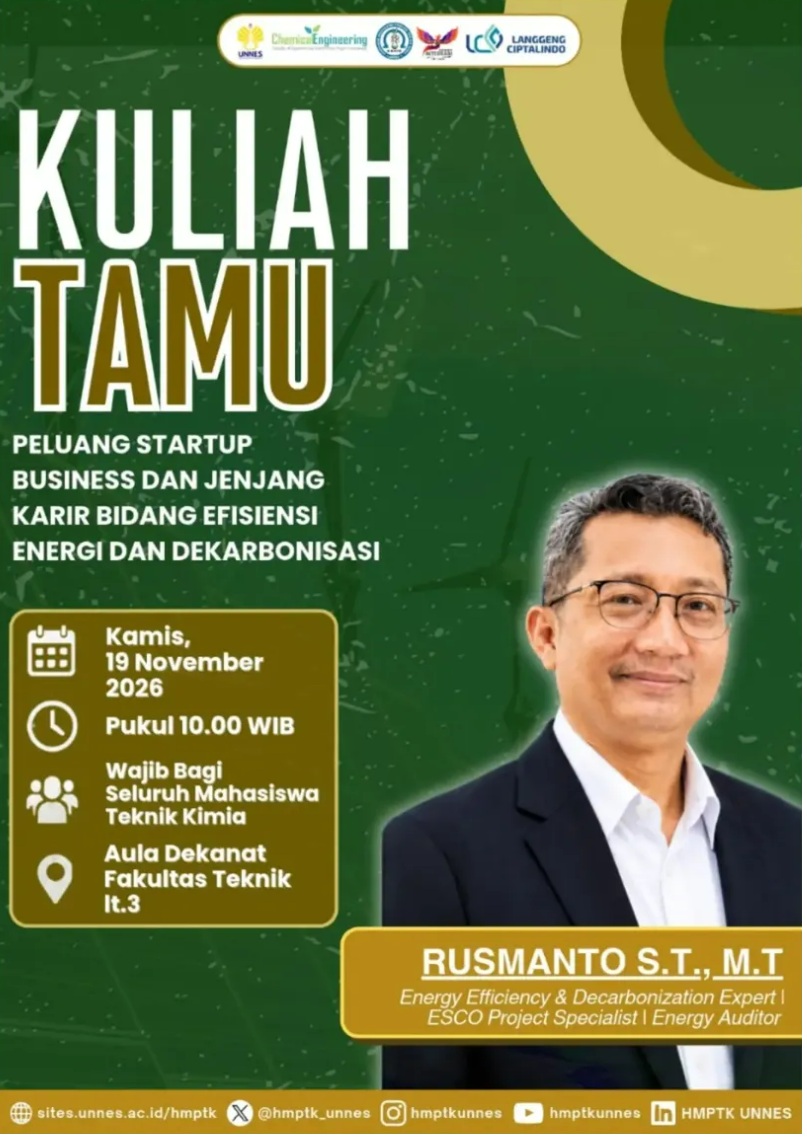
Semarang – The Chemical Engineering Student Association (HMPTK) of the Faculty of Engineering, Universitas Negeri Semarang (FT UNNES), organized the 2026 Chemical Engineering Guest Lecture on Thursday, November 19, 2026, at 10:00 a.m. Western Indonesian Time (WIB), in the third-floor auditorium of the Faculty of Engineering Dean’s Office. The event aimed to broaden students’ understanding of energy sector developments, entrepreneurial opportunities, and professional career prospects in energy efficiency and decarbonization.
The guest lecture featured Rusmanto, S.T., M.T., an energy efficiency and decarbonization expert with professional experience as an ESCO Project Specialist and Energy Auditor. During the session, he delivered a presentation entitled “Startup Business Opportunities and Career Pathways in Energy Efficiency and Decarbonization.”
The initiative was organized in recognition of the importance of developing students’ competencies in response to the transformation of the energy sector and the growing industrial demand for efficient and sustainable technologies. Chemical engineering plays a strategic role in optimizing energy consumption, reducing carbon emissions, and developing environmentally responsible industrial processes.
Through the presentation and the sharing of practical professional experiences, students were introduced to various career development and entrepreneurial opportunities in energy efficiency and decarbonization. The event was expected to broaden students’ perspectives on applying academic competencies to industrial challenges while identifying sustainability-oriented business opportunities.
The guest lecture reflects HMPTK FT UNNES’ efforts to strengthen the connection between higher education and the professional community. By engaging industry practitioners, students gain opportunities to understand developments in the energy sector and prepare themselves for evolving workforce demands.
The initiative aligns with UNNES’ commitment to advancing the Sustainable Development Goals (SDGs), particularly SDG 7: Affordable and Clean Energy, by strengthening students’ understanding of energy efficiency and decarbonization strategies while developing human resource competencies to support the transition toward more efficient and sustainable energy systems.