



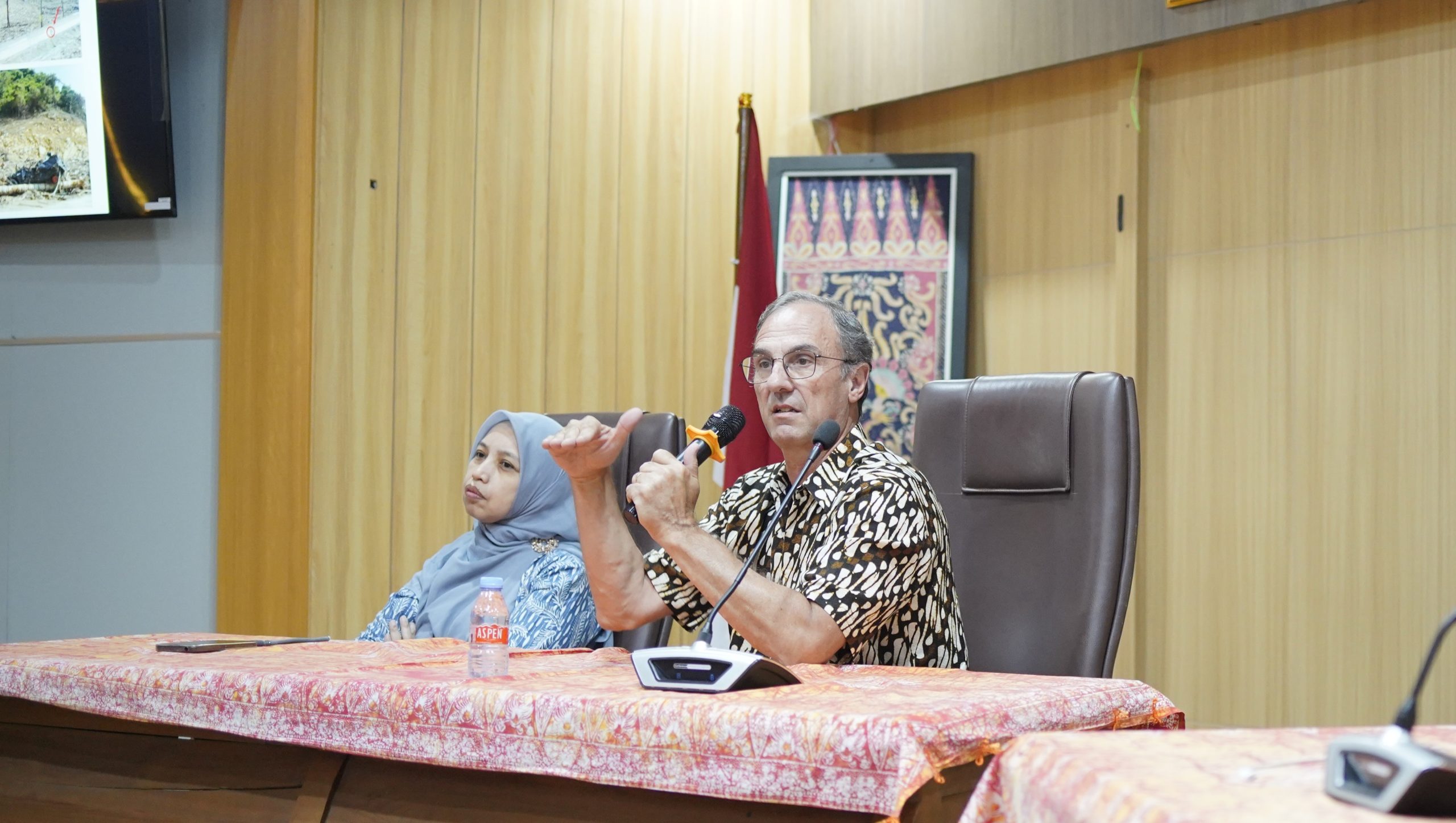
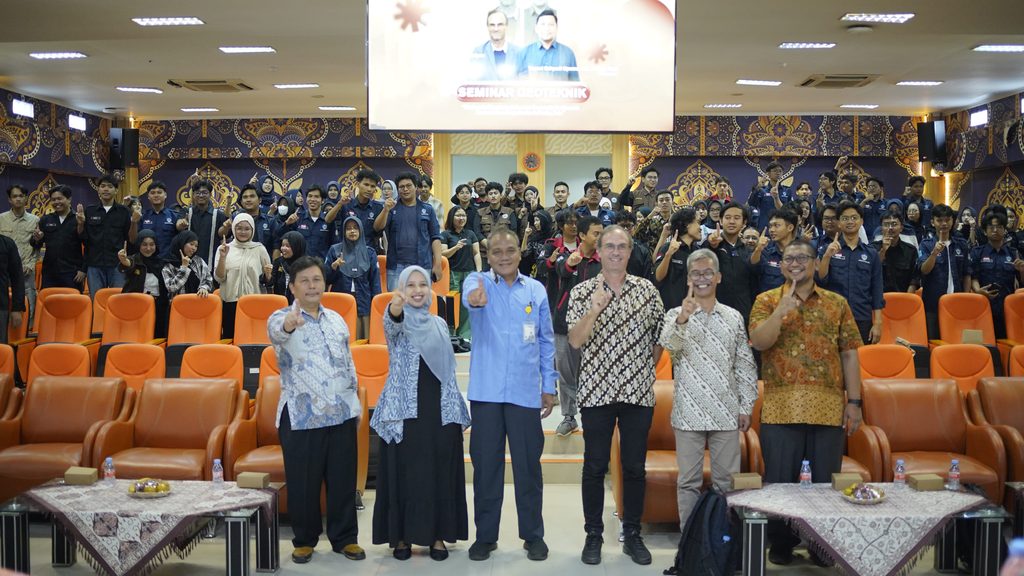
Semarang, November 6, 2026 — The Faculty of Engineering at Universitas Negeri Semarang (FT UNNES) held a Geotechnical Engineering Seminar entitled “Earthquake Disasters in Indonesia: Community Resilience in Banda Aceh and Liquefaction in Petobo, Palu” on Friday, November 6, 2026. The event took place from 7:30 to 10:00 AM Western Indonesian Time (WIB) at the third-floor meeting facilities of the Faculty of Engineering Dean’s Office Building. The seminar featured two distinguished speakers with expertise in disaster studies and geotechnical engineering: Prof. Franck Lavigne and Togani Cahyadi Upomo, S.T., M.Eng., Ph.D.
The seminar was organized as an academic learning platform to broaden students’ knowledge, particularly in understanding earthquake phenomena, the impacts of geological disasters, and the importance of community resilience in disaster preparedness and response. Through case studies of the earthquake disaster in Banda Aceh and the liquefaction phenomenon in Petobo, Palu, participants were encouraged to recognize that natural disasters are not solely geological events but also involve soil conditions, infrastructure, disaster mitigation, and community preparedness.
The selected theme is particularly relevant to Indonesia, which is located within the Pacific Ring of Fire and is therefore exposed to various geological hazards, including earthquakes and liquefaction. This condition highlights the importance of scientific knowledge and technological advancement, particularly in geotechnical engineering, to better understand disaster risks and support appropriate infrastructure planning.
Bringing Academic Perspectives and Disaster Experience Together
During the seminar, Prof. Franck Lavigne shared academic perspectives on earthquake disasters in Indonesia, particularly lessons learned from the disaster in Banda Aceh. The topic of community resilience was an important aspect of the discussion, highlighting how communities can prepare for, adapt to, and recover from major disasters.
The disaster in Banda Aceh provides valuable lessons regarding the impacts of earthquakes and tsunamis on communities, the environment, and infrastructure. It demonstrates that disaster risk reduction cannot rely solely on physical infrastructure development. Community preparedness, risk awareness, and sustainable recovery efforts are equally important in building long-term resilience.
Meanwhile, Togani Cahyadi Upomo, S.T., M.Eng., Ph.D. presented insights into geotechnical engineering, particularly the liquefaction phenomenon that occurred in Petobo, Palu. Liquefaction occurs when saturated soil loses its strength and stiffness due to earthquake-induced ground shaking, causing it to behave similarly to a liquid. This phenomenon can trigger ground movement and result in significant damage to buildings and infrastructure.
The Petobo liquefaction case provides an important learning opportunity in geotechnical engineering, particularly in understanding soil characteristics, local geological conditions, groundwater levels, and soil responses to dynamic earthquake loading. Knowledge of these aspects is essential for soil investigation, hazard assessment, foundation engineering, and the development of infrastructure that is more resilient to natural disasters.
By presenting these two perspectives, the seminar offered participants a broader understanding of the relationship between geological phenomena, geotechnical engineering, infrastructure resilience, and community preparedness.
Expanding Students’ Knowledge and Professional Competencies
The Geotechnical Engineering Seminar provided students with an opportunity to gain broader knowledge through direct academic engagement with experts in their respective fields. The presentations not only enriched the theoretical concepts learned in regular lectures but also offered practical insights into how geotechnical engineering principles can be applied to address disaster-related challenges in Indonesia.
Through the case studies of Banda Aceh and Petobo, Palu, students gained opportunities to understand how earthquakes can produce different impacts depending on geological conditions, soil characteristics, and the environmental and social factors of affected areas. These insights are valuable in developing critical thinking, problem-solving abilities, and an understanding of the multidisciplinary approaches required in civil and geotechnical engineering.
Beyond academic enrichment, the seminar was also expected to strengthen students’ awareness of the professional responsibility of engineers in creating safe and disaster-resilient built environments. As future engineering professionals, students need to understand that infrastructure planning and development must consider geological conditions and potential disaster risks to ensure public safety and deliver long-term benefits to society.
Academic interaction during the seminar also provided opportunities for knowledge exchange between students and speakers. Such engagement allows students to explore developments in geotechnical engineering, gain broader perspectives, and connect theoretical knowledge with real-world engineering challenges.
Supporting SDG 4: Quality Education
The Geotechnical Engineering Seminar aligns with Universitas Negeri Semarang’s commitment to supporting the Sustainable Development Goals (SDGs), particularly SDG 4: Quality Education. This goal emphasizes inclusive and equitable quality education and the promotion of lifelong learning opportunities for all.
In higher education, academic seminars serve as an important supplementary learning platform that enriches students’ educational experiences beyond regular classroom activities. The participation of speakers with diverse expertise and perspectives provides students with opportunities to access relevant knowledge, understand real-world problems through case studies, and strengthen their academic and professional competencies.
More specifically, the seminar contributes to strengthening students’ understanding of disaster risks and the application of scientific knowledge in addressing engineering challenges. Learning about earthquakes, liquefaction, and community resilience also encourages students to develop greater awareness of public safety and sustainable infrastructure development.
Through initiatives such as this seminar, the Faculty of Engineering UNNES continues to promote a learning environment that goes beyond theoretical knowledge by providing contextual, practical, and relevant academic experiences that respond to the challenges facing society.
Preparing Future Engineers to Address Disaster-Related Challenges
Through the Geotechnical Engineering Seminar, the Faculty of Engineering UNNES hopes to strengthen students’ understanding of the importance of geotechnical engineering in supporting safe, reliable, and sustainable infrastructure development. Lessons from the disasters in Banda Aceh and Petobo, Palu, are expected to serve as valuable academic references and reminders of the essential role of engineering knowledge in reducing disaster risks and impacts.
The seminar also forms part of FT UNNES’s ongoing efforts to strengthen educational quality through knowledge development, academic exchange, and enriched student learning experiences. By connecting academic learning with real-world phenomena and challenges, students are expected to develop stronger competencies and greater awareness of society’s needs.
Moving forward, the Faculty of Engineering UNNES remains committed to organizing academic activities that provide added value for students, expand academic networks, and support the development of competent, adaptable, and professionally responsible graduates capable of addressing various development challenges, particularly in engineering and disaster risk management.