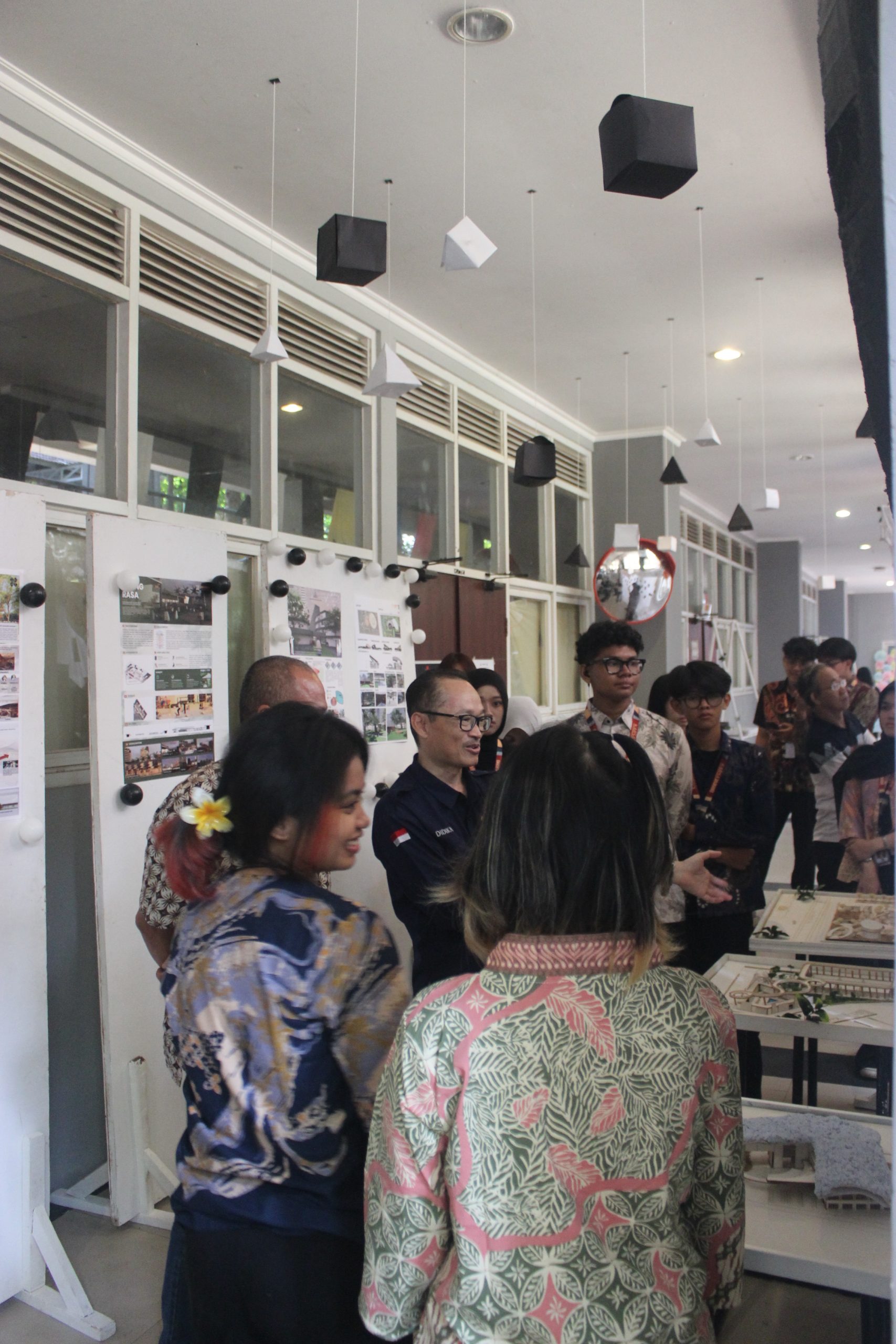




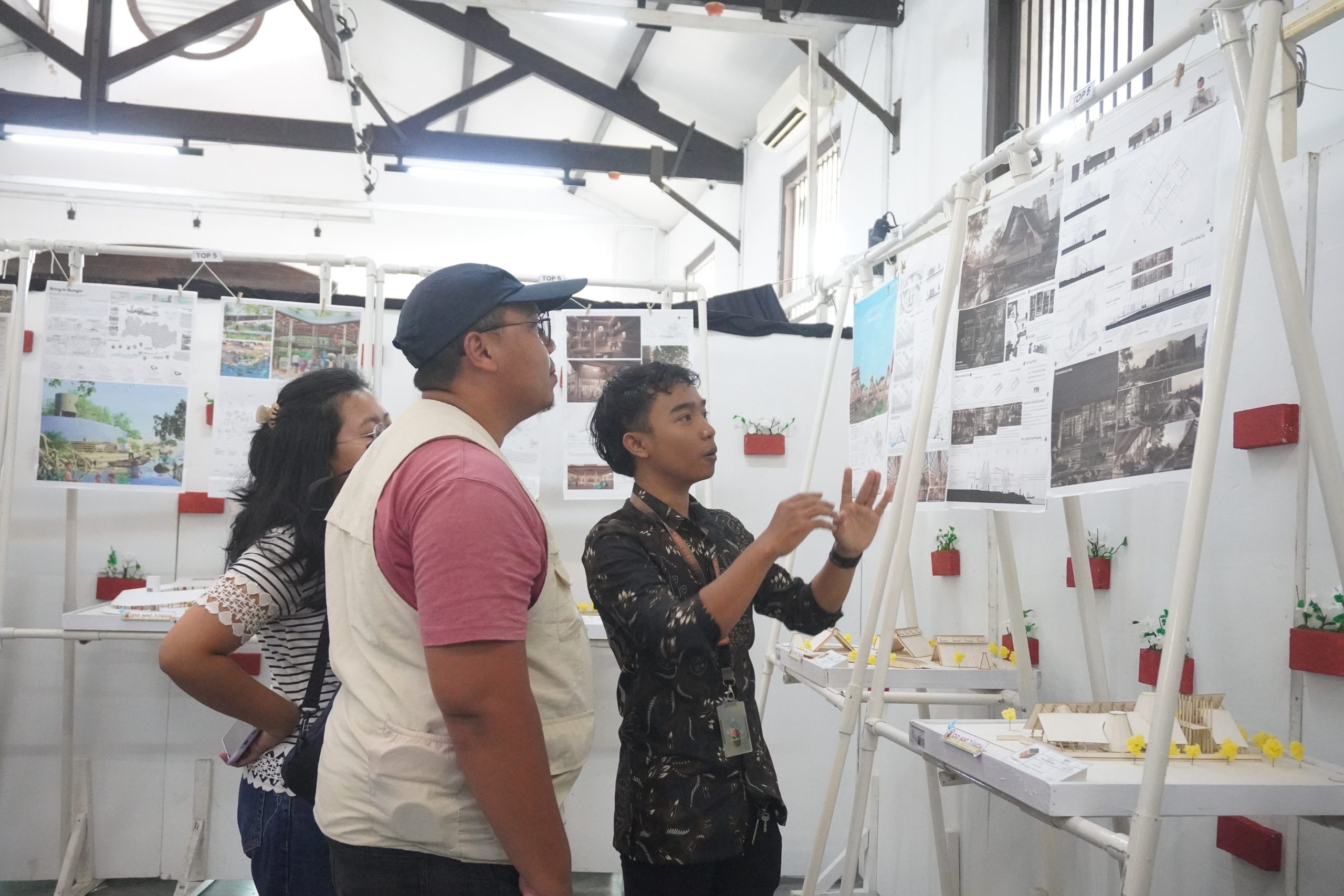
SEMARANG — The ETALASE 2026 event series, themed “Architecture for Interspecies: Walking in Step, Harmony, and Rhythm with Nature,” took place from September 18–20, 2026, in the Old Town (Kota Lama) area of Semarang, centered at the Oudetrap Building and the Event Space at Hotel Kotta. Championing the idea that design is more than just constructing space—and that space does not belong solely to humans—the event invited participants and the public to view architecture as an integral part of an ecosystem shared by all living beings. Over the course of three days, ETALASE 2026 featured five main programs. On the first day, Friday (September 18, 2026), the architectural exhibition SYMBION (“Space for All Living Beings”) opened, showcasing installations, visual works, interactive media, and cross-species spatial interpretations. This was accompanied by a Project Submission Presentation (1:00 PM–3:00 PM WIB) and a “Funsketch with Etalase” session throughout the Old Town area (3:00 PM–5:30 PM WIB). The SYMBION exhibition remained open for the entire three-day duration, with varying visiting hours each day.
The program continued on Saturday (September 19, 2026) with a panel discussion, STALK (Etalase Talk) 2026, themed “Interspecies Living Spaces Amidst Land-Use Conversion: How Architecture Can Minimize Damage,” held at the Event Space at Hotel Kotta in Semarang’s Old Town. The session featured speakers Ar. Relan Masato, M.Ars, IAI, and Ar. Ir. Jimmy R. Purba, M.T., IAI, AA, with Naufal Rizky Pratama serving as the moderator. On the final day, Sunday (September 20, 2026), an Open Judging Competition titled “Commons of Coexistence: Shared Space, Shaped for Resilience” was held and broadcast live via YouTube. The jury panel included Marco Kusumawijaya, Nabila Larasati Pranoto, Maria Lackovicova, and Dr. Rer. Nat. Ari Rahadini, S.T., M.T. The design approach—which emphasizes the resilience of shared spaces, adaptation to extreme climates, and the sustainability of ecosystems for both humans and other species—aligns this event with the Sustainable Development Goals (SDGs).
Specifically, ETALASE 2026 addresses SDG 11 (Sustainable Cities and Communities) by exploring resilient and adaptive shared spaces in urban areas; SDG 13 (Climate Action) through design responses to extreme climate phenomena and land-use changes; and SDG 15 (Life on Land) by incorporating an interspecies architectural perspective that maintains ecological balance for all living beings. Through a combination of exhibitions, live sketching, critical discussions, and competition judging, ETALASE 2026 fosters the development of architectural concepts that are more attuned to ecological relationships, environmental resilience, and the sustainability of future living spaces.