



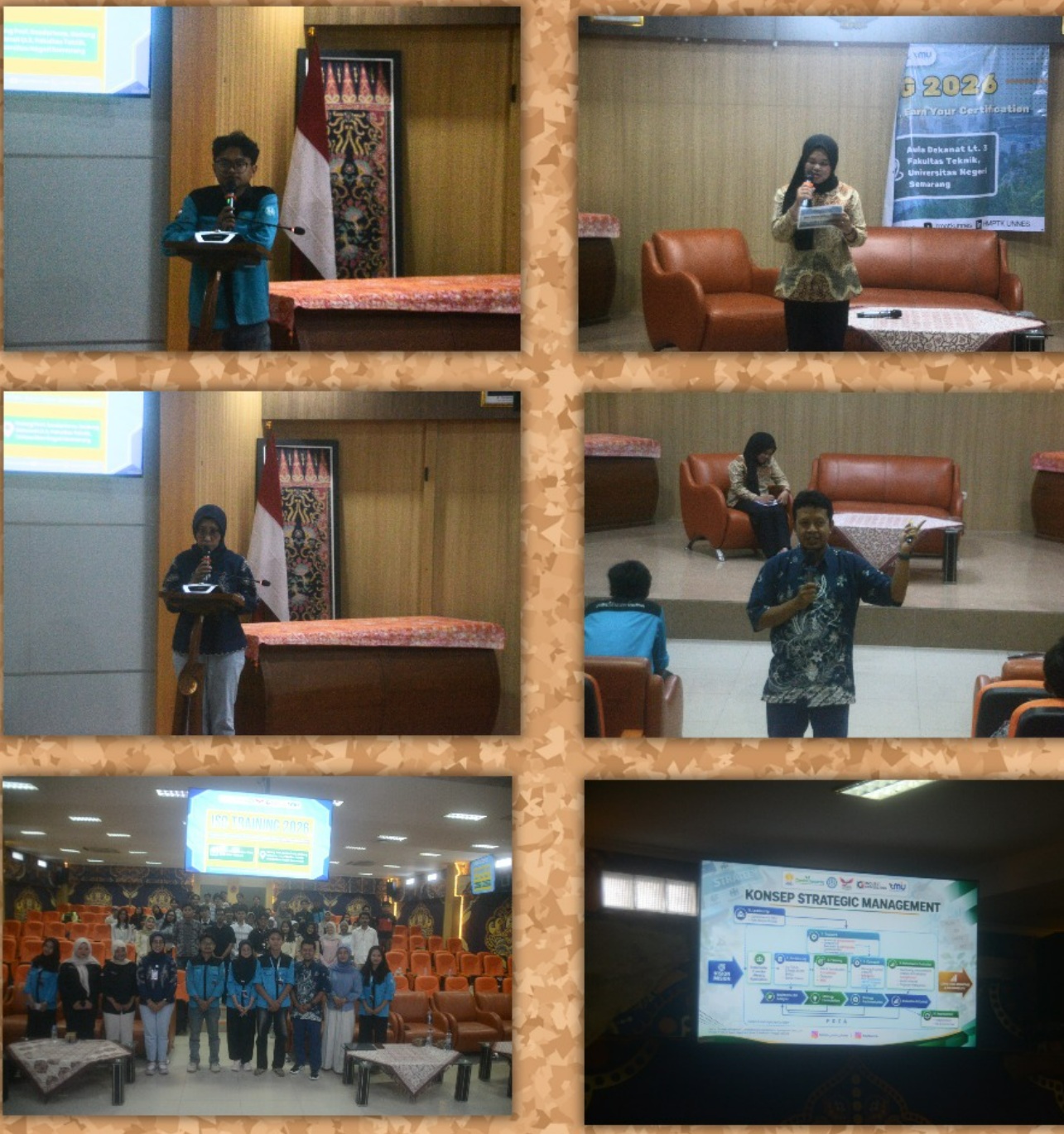
Semarang – The Chemical Engineering Student Association (HMPTK) of the Faculty of Engineering, Universitas Negeri Semarang (FT UNNES), organized ISO Training 2026 on Friday, September 18, 2026, at 1:30 p.m. Western Indonesian Time (WIB), in the Prof. Soedartono Room, on the third floor of the Faculty of Engineering Dean’s Office Building. The training aimed to enhance Chemical Engineering students’ knowledge and understanding of international standards and their relevance to industrial requirements.
The initiative was organized in recognition of the importance of understanding standardization in response to industrial developments and professional demands. International standards developed by the International Organization for Standardization (ISO) play an important role in supporting quality, consistency, safety, and effectiveness in industrial processes.
Through the training, students were introduced to the importance of implementing international standards in industrial process management. An understanding of standardization provides Chemical Engineering students with foundational knowledge of quality control, operational efficiency, safety, and continuous process improvement.
Beyond enriching academic knowledge, ISO Training 2026 also aimed to strengthen students’ readiness to meet workforce demands. Knowledge of international standards is expected to help students understand the relationship between academic competencies and professional practices in industrial environments.
The initiative reflects HMPTK FT UNNES’ efforts to support student competency development through learning opportunities beyond formal classroom activities. Through this training, students are expected to gain broader perspectives on the importance of a quality-oriented culture, professionalism, and the implementation of standards in supporting effective and sustainable industrial processes.
ISO Training 2026 aligns with UNNES’ commitment to advancing the Sustainable Development Goals (SDGs), particularly SDG 4: Quality Education, by enhancing knowledge of international standardization, developing industry-relevant competencies, and strengthening students’ readiness to address professional challenges.