Raker FISIP UNNES Bahas Target dan Tantangan 2026

Universitas Negeri Semarang > Faculty of Social Sciences and Political Science > Berita > Raker FISIP UNNES Bahas Target dan Tantangan 2026

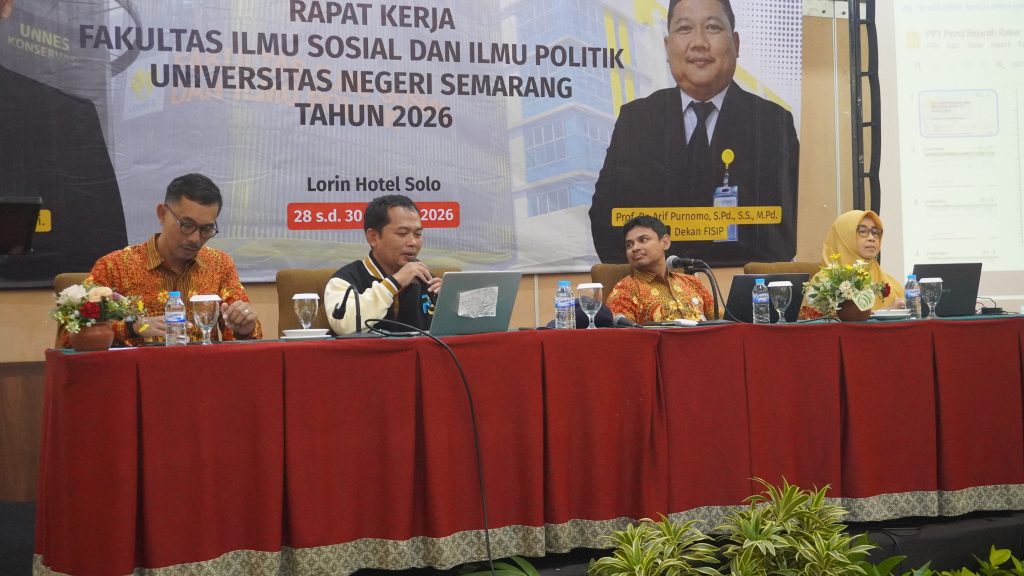
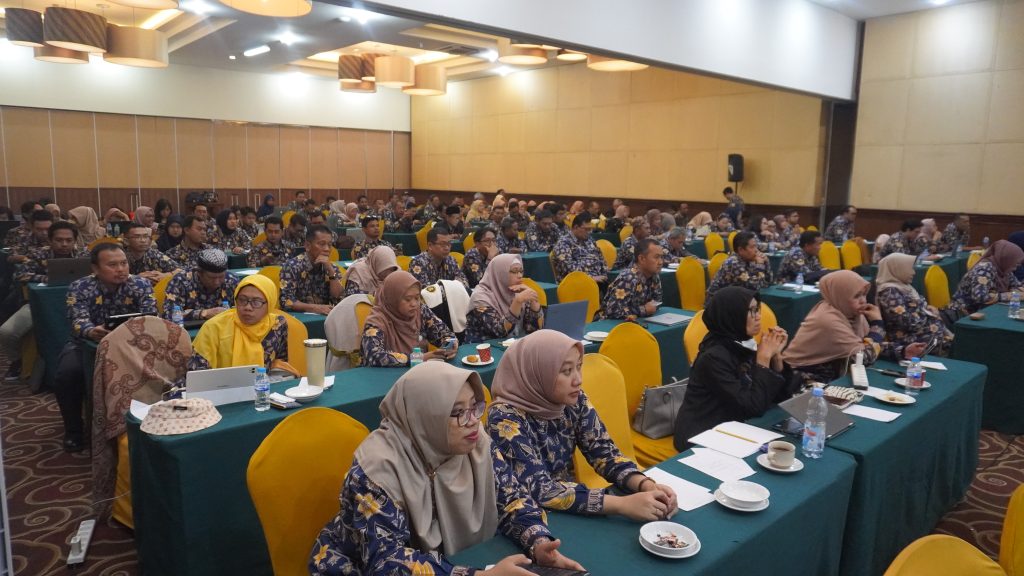
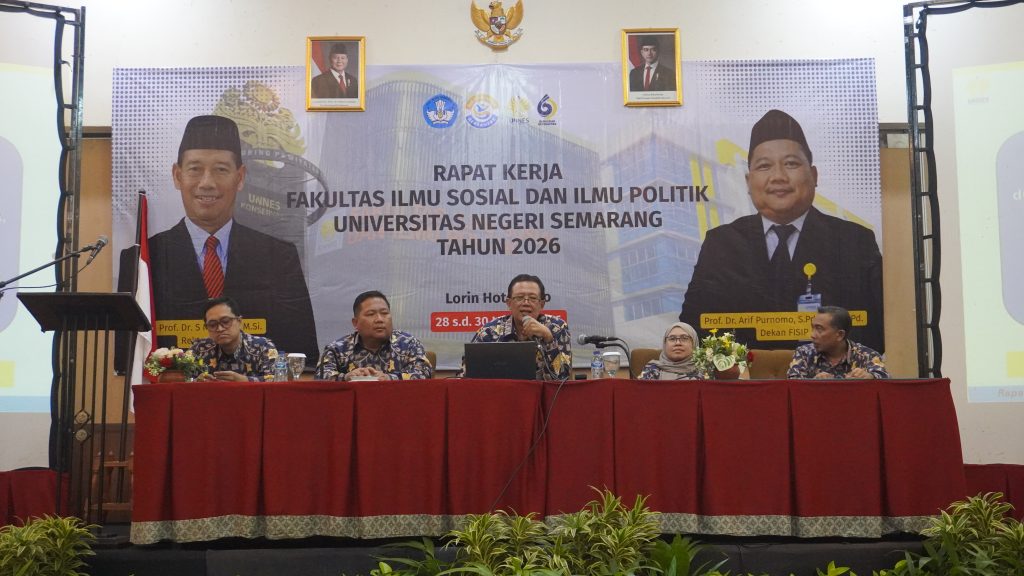
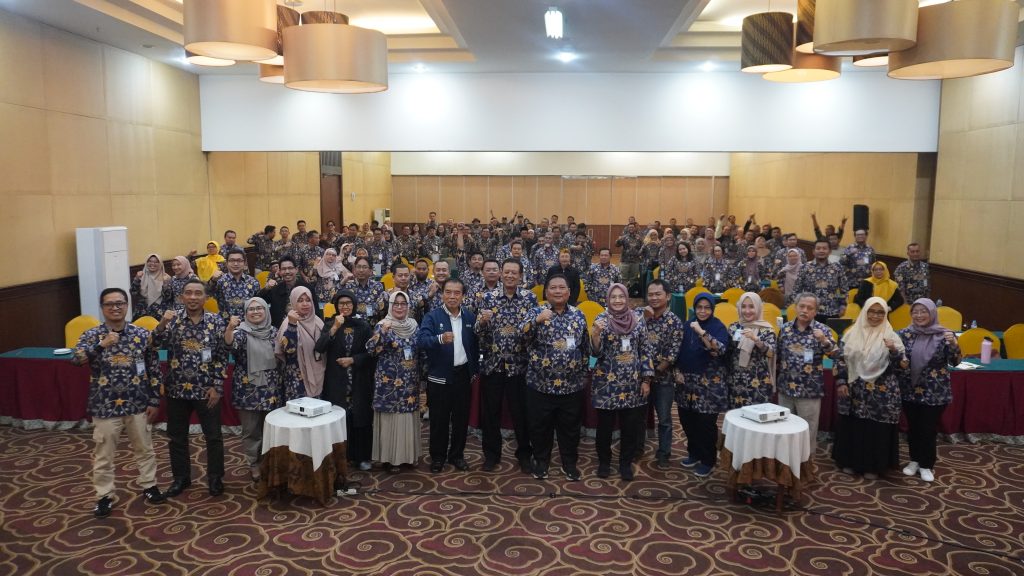
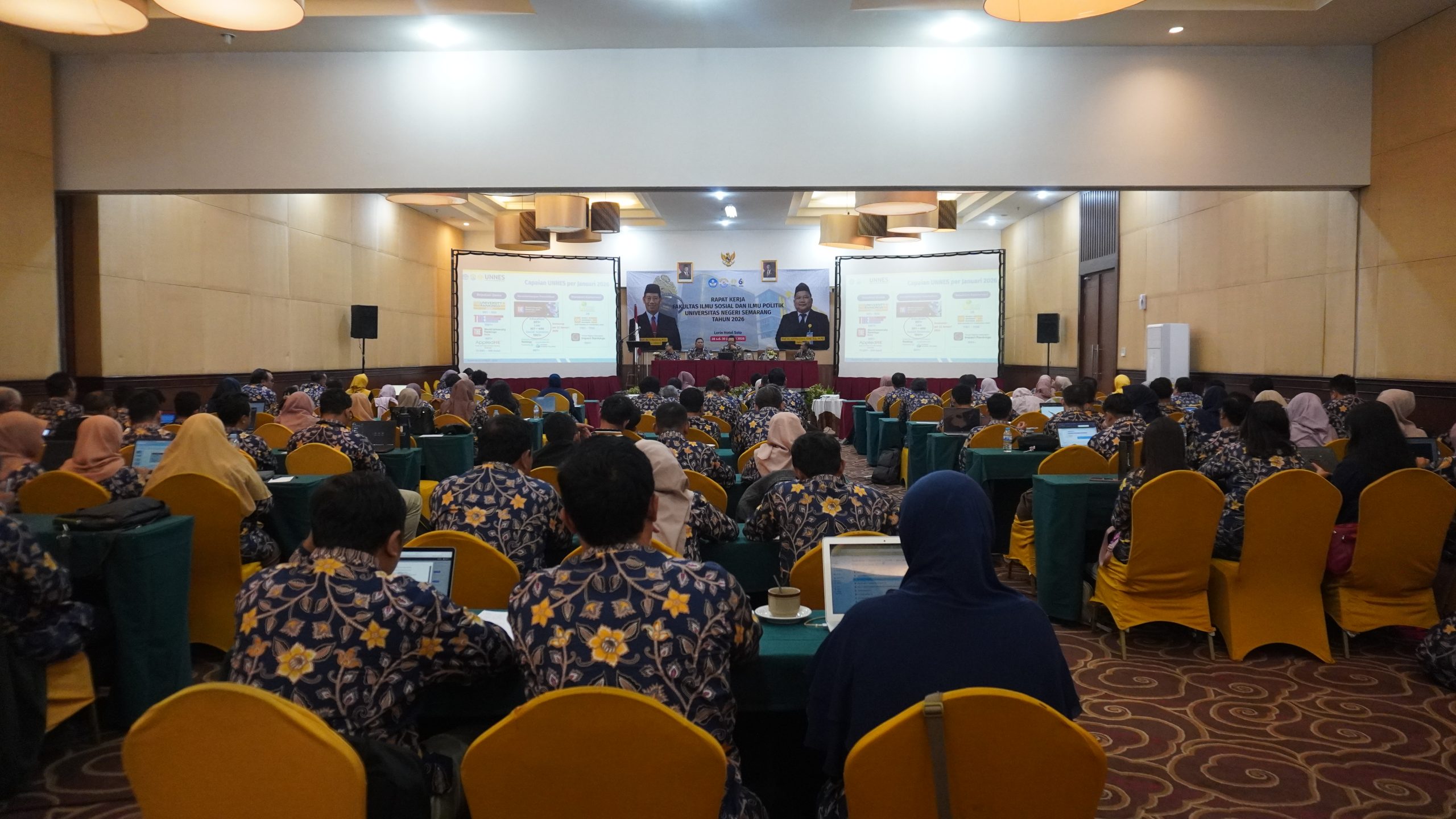
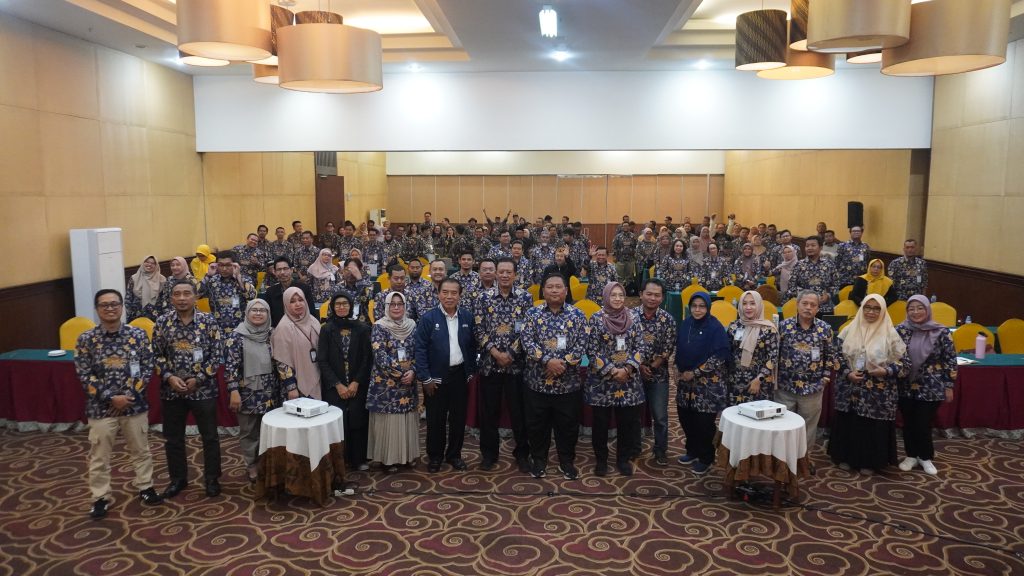
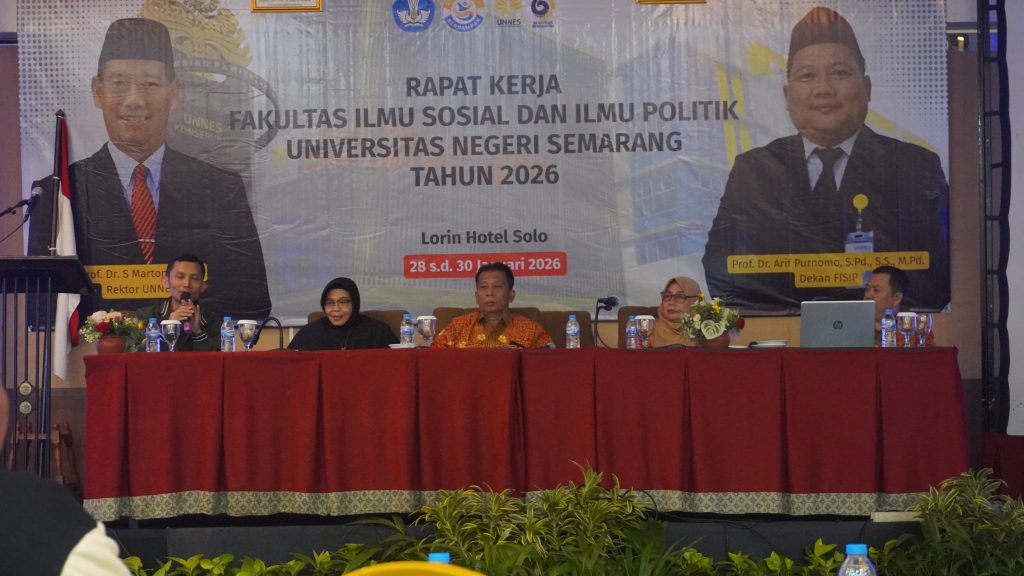
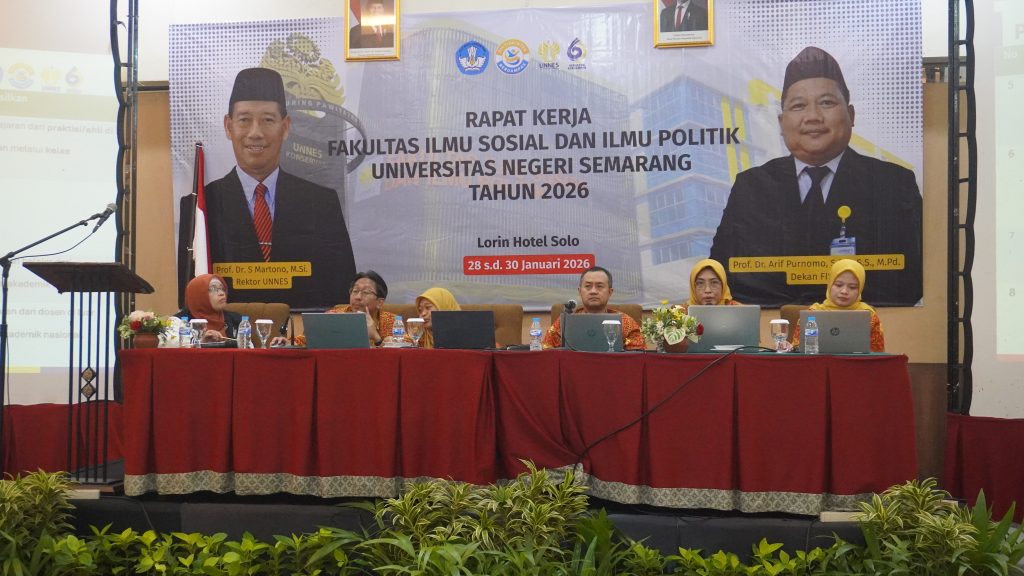
FISIP menggelar Rapat Kerja di Hotel Lorin, Solo, Jawa Tengah, pada 28–30 Januari 2026. Raker ini menjadi forum konsolidasi arah kebijakan fakultas dalam menjawab target kinerja dan tantangan tahun UNNES di tahun ini.

Skretaris UNNES Prof. Sugianto menyampaikan bahwa arah kebijakan FISIP pada 2026 sepenuhnya diselaraskan dengan kebijakan kementerian dan kontrak kinerja yang telah ditandatangani Rektor UNNES dengan Kementerian Pendidikan Tinggi, Sains, dan Teknologi pada 5 Januari 2026. Kontrak kinerja tersebut menjadi pijakan utama kebijakan lembaga, terutama yang terkait Indikator Kinerja Utama (IKU).

Dekan FISIP, Prof. Arif Purnomo menambahkan ada dua IKU yang menjadi prioritas. “Dari sebelas IKU yang ditetapkan, FISIP memiliki fokus langsung pada IKU 1 sampai IKU 8. Inilah yang menjadi prioritas utama kita bersama,” ujar Prof. Arif.

Dalam bidang riset dan publikasi, FISIP menghadapi tantangan signifikan. Dari total 126 dosen yang dimiliki FISIP, target kinerja publikasi yang dibebankan mencapai 127 luaran.
Namun, capaian publikasi FISIP pada tahun sebelumnya tercatat baru 74 publikasi. Kondisi ini mendorong penguatan kebijakan One Lecturer One Scopus (OLOS) sebagai strategi utama peningkatan kinerja riset.

Prof. Arif juga menegaskan bahwa kebijakan publikasi bersifat inklusif. Tidak hanya dosen, tenaga kependidikan (tendik) juga diberikan ruang untuk menulis dan berkontribusi dalam publikasi bereputasi, termasuk jurnal terindeks Scopus.

Universitas juga menyiapkan dukungan article processing charge (APC), terutama bagi publikasi pada jurnal internasional bereputasi tinggi, mulai Q1 hingga Q4, termasuk jurnal kategori top tier.
Perubahan signifikan juga terjadi pada IKU 5 terkait kerja sama. Jika sebelumnya kerja sama cukup dihitung berbasis dokumen implementation arrangement (IA), kini kebijakan menekankan luaran nyata. Kerja sama harus ditindaklanjuti dengan hasil konkret seperti publikasi jurnal nasional bereputasi, jurnal nasional, atau luaran riset dan pengabdian lainnya.

Dalam konteks pengabdian kepada masyarakat, proposal pengabdian yang akan dibuka pada Februari 2026 diwajibkan melibatkan mitra. Tidak hanya sebagai objek kegiatan, mitra juga diharapkan terlibat sebagai co-author dalam luaran ilmiah.

Isu kelulusan tepat waktu menjadi perhatian utama dalam IKU 1. Secara nasional, target minimal kelulusan tepat waktu ditetapkan 75 persen. Namun, di tingkat FISIP, standar dinaikkan menjadi 85 persen. Artinya, dosen pembimbing S1 hingga S3 didorong melakukan akselerasi bimbingan agar mahasiswa dapat lulus sesuai target waktu.

Kebijakan karya tulis mahasiswa sebagai syarat kelulusan tetap diberlakukan pada 2025, dengan fleksibilitas bentuk luaran, termasuk artikel jurnal prototipe. Langkah ini diharapkan mampu mendongkrak persentase kelulusan tepat waktu FISIP.

Selain itu, peningkatan kualifikasi dosen juga menjadi agenda strategis. Saat ini, persentase dosen FISIP berkualifikasi doktor (S3) masih sekitar 50 persen. Target jangka menengah ditetapkan pada 2030, dengan persentase dosen S3 di atas 70 persen. Dosen yang telah menempuh studi doktoral lebih dari empat tahun diharapkan segera menyelesaikan studinya, sementara dosen berkualifikasi S2 didorong merencanakan studi lanjut secara strategis.

Raker FISIP UNNES 2026 menegaskan komitmen fakultas dalam memperkuat kinerja tridarma, meningkatkan kualitas sumber daya manusia, serta berkontribusi aktif pada pencapaian IKU universitas. Dengan konsolidasi kebijakan, akselerasi kelulusan, dan penguatan riset bereputasi, FISIP diharapkan menjadi bagian penting dalam mewujudkan visi UNNES sebagai World Class Conservation University dan Role Model of Education
Related Posts

Leave a Reply

* Kode Akses Komentar:

* Tuliskan kode akses komentar diatas:

GDPR

  • Privacy Policy

Privacy Policy

At unnes.ac.id, the privacy of our visitors is of extreme importance to us. This privacy policy document outlines the types of personal information that is received and collected by unnes.ac.id and how it is used.

Log Files

Like many other Web sites, unnes.ac.id makes use of log files. The information inside the log files includes internet protocol (IP) addresses, type of browser, Internet Service Provider (ISP), date/time stamp, referring/exit pages, and number of clicks to analyze trends, administer the site, track user’s movement around the site, and gather demographic information. IP addresses and other such information are not linked to any information that is personally identifiable.

Cookies

unnes.ac.id uses cookies to store information about visitors’ preferences, to record user-specific information on which pages the site visitor accesses or visits, and to personalize or customize our web page content based upon visitors’ browser type or other information that the visitor sends via their browser.

Third-party ad servers or ad networks use technology in their respective advertisements and links that appear on unnes.ac.id and which are sent directly to your browser. They automatically receive your IP address when this occurs. Other technologies (such as cookies, JavaScript, or Web Beacons) may also be used by our site’s third-party ad networks to measure the effectiveness of their advertising campaigns and/or to personalize the advertising content that you see on the site.

unnes.ac.id has no access to or control over these cookies that are used by third-party advertisers.

You should consult the respective privacy policies of these third-party ad servers for more detailed information on their practices as well as for instructions about how to opt-out of certain practices. unnes.ac.id’s privacy policy does not apply to, and we cannot control the activities of, such other advertisers or web sites.

If you wish to disable cookies, you may do so through your individual browser options. More detailed information about cookie management with specific web browsers can be found at the browsers’ respective websites.

Consent

By using our website, you hereby consent to our privacy policy and agree to its terms.

Update

This Privacy Policy was last updated on: 2023-02-14. Should we update, amend or make any changes to our privacy policy, those changes will be posted here.

Contact Us

If you have any questions, comments, or concerns about our Privacy Policy or our practices with regards to your personal information, please feel free to contact us through the contact form on our website or by emailing us at humas[at]mail.unnes.ac.id.

This Privacy Policy is intended as a general guide to our practices in collecting and using information. If there is any inconsistency between this Privacy Policy and the terms of the Service Agreement or any other terms that may apply to specific services you use, then those specific service terms shall apply.

Terms of Use

By using our website, you agree to abide by this Privacy Policy. If you do not agree with this Privacy Policy, please do not use our website. We reserve the right to update this Privacy Policy from time to time without prior notice. Please review our Privacy Policy periodically to check for changes. Your continued use of our website following the posting of changes to this Privacy Policy means that you accept the changes.

Thank you for reading our Privacy Policy. We are committed to protecting the privacy of our website visitors and will continue to update our Privacy Policy to ensure optimal protection.