



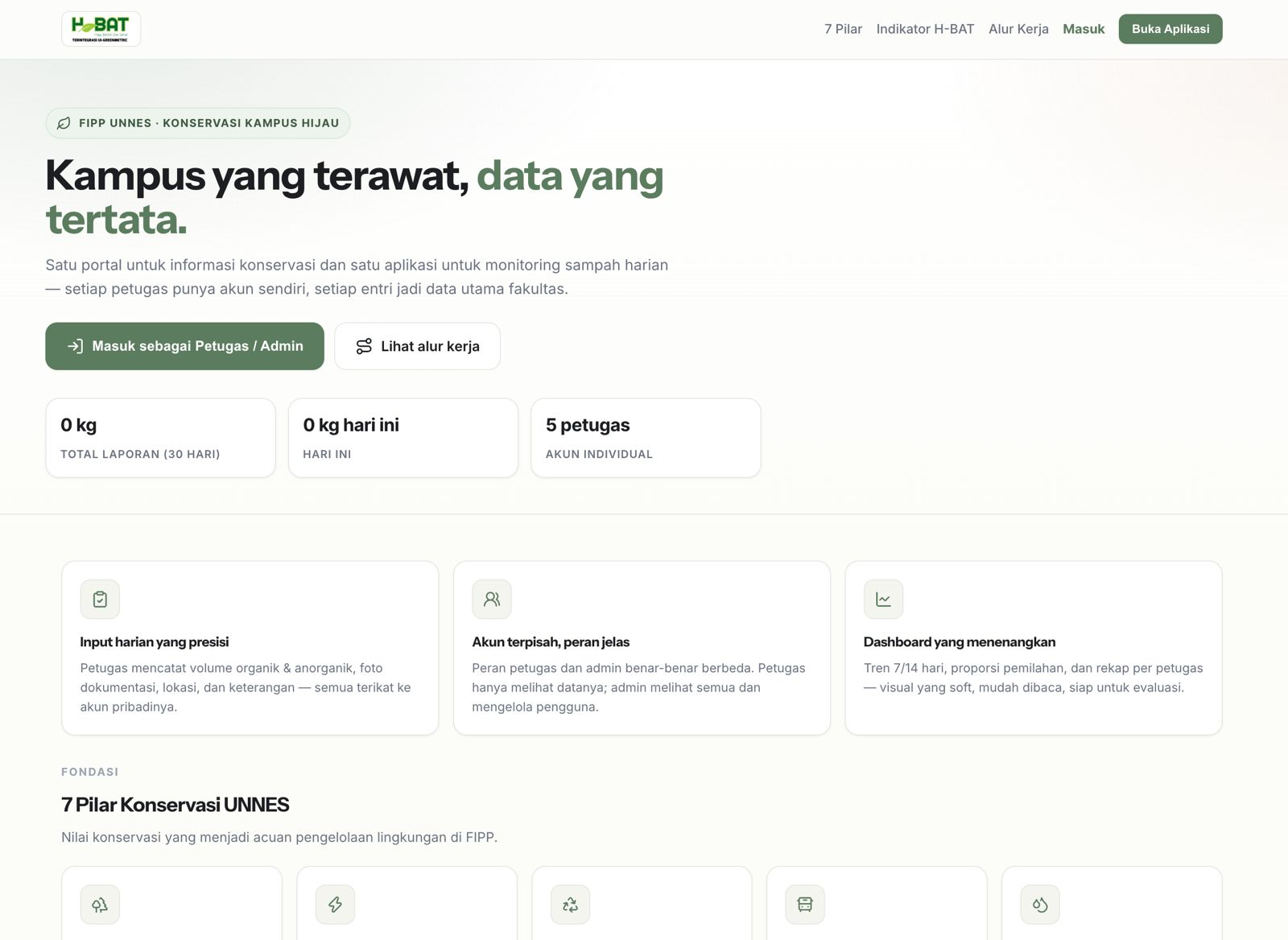
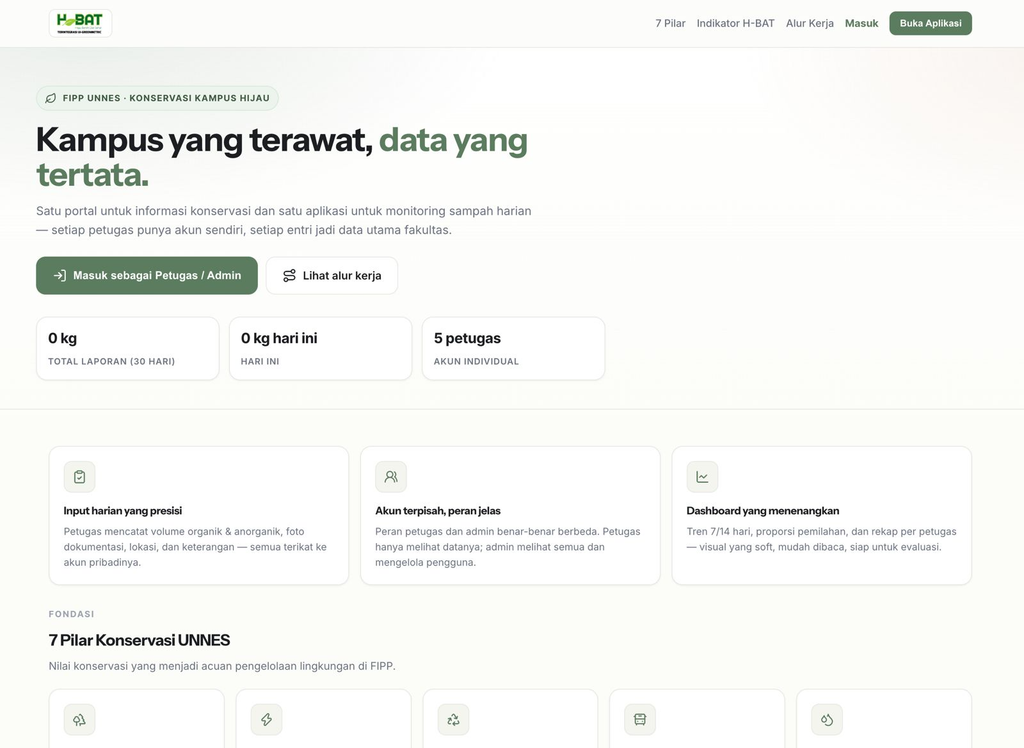
Semarang — The Faculty of Education and Psychology (FIPP) of Semarang State University (UNNES) has developed a waste sorting monitoring application as part of its efforts to strengthen waste management and a culture of conservation within the faculty. The application is designed to support more structured and data-driven recording, monitoring, and evaluation of waste sorting activities. The application was developed to address FIPP’s need to obtain more systematic waste management data. Through the application, staff can input daily waste sorting reports by recording waste volumes based on organic and inorganic categories. The system also provides space for documentation, location, and descriptions so that every sorting activity can be recorded and traced.
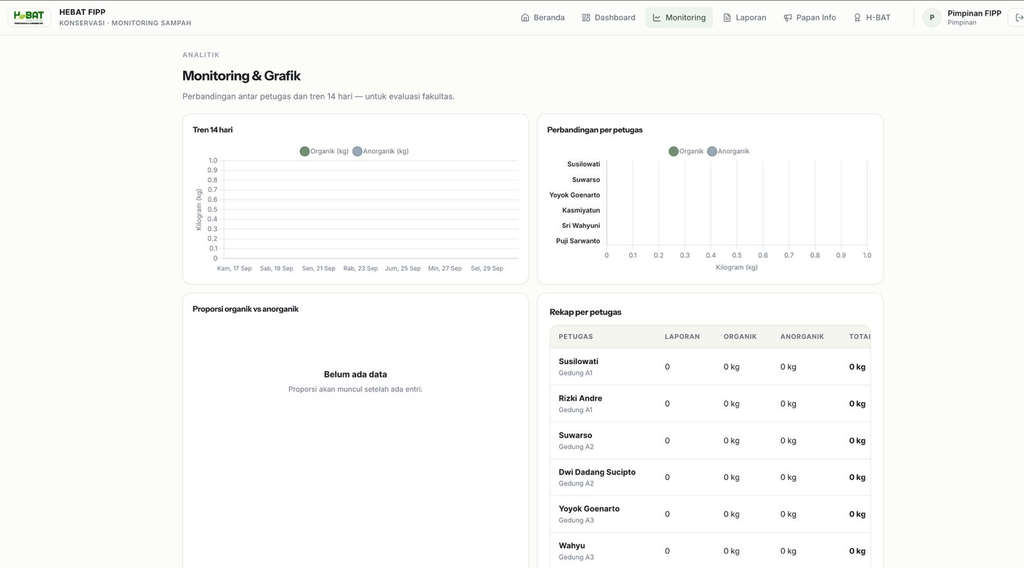
This monitoring application uses individual accounts for each officer. Each officer has access to record waste sorting activities according to their responsibilities and work location. Meanwhile, administrators or faculty managers can view the overall data so that information from various locations can be compiled in a single system. The entered data is then displayed via a monitoring dashboard. This feature allows FIPP to monitor the progress of waste sorting, see management trends over a certain period, compare records between officers, and determine the proportion of organic and inorganic waste. Thus, data that was previously administrative can be developed into information that supports the evaluation of waste management within the faculty environment.
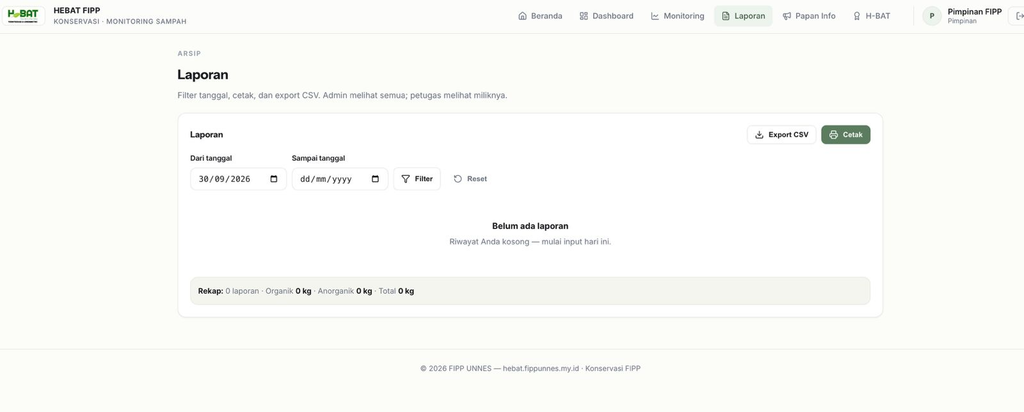
In addition to monitoring, the application also provides reporting and data export features. These features allow sorting data to be used as documentation and evaluation material for the faculty. This digital system is expected to help FIPP build a more consistent monitoring mechanism while providing a database for the development of future waste management policies and programs. The development of the FIPP waste sorting monitoring application is a form of utilizing digital technology to strengthen environmental conservation practices in the campus environment. This initiative is in line with the Sustainable Development Goals (SDGs), specifically SDG 12 on Responsible Consumption and Production, SDG 11 on Sustainable Cities and Human Settlements, and SDG 13 on Climate Change Management. Through data-based waste sorting recording and monitoring, FIPP UNNES encourages more orderly and responsible waste management while building a culture of conservation and sustainability in the campus environment.