Universitas Negeri Semarang (UNNES) continues to strengthen its commitment to sustainable campus development by integrating green building principles into the construction, renovation, and management of university facilities. This initiative supports UNNES’s Green Campus agenda and its vision as a Conservation University, emphasizing the importance of environmentally responsible infrastructure that supports academic activities while promoting efficient resource use.
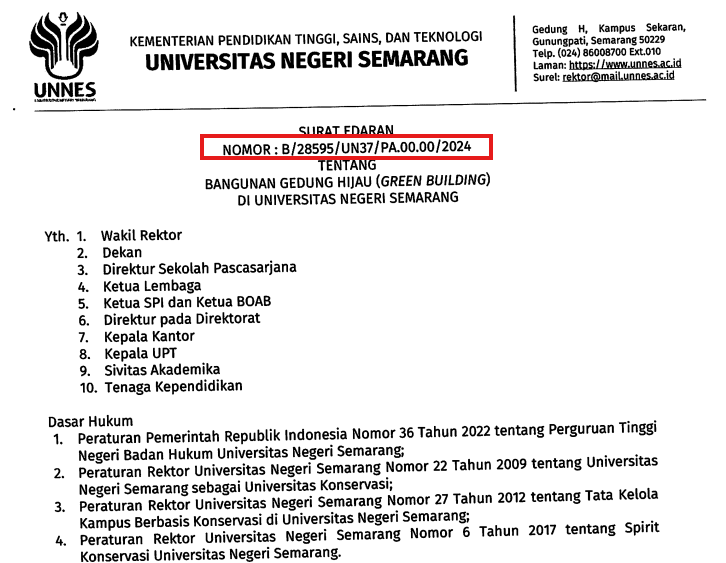
The university’s commitment is formalized through Circular Letter No. B/28595/UN37/PA.00.00/2024 on Green Buildings at UNNES. The policy provides institutional guidance for campus infrastructure development and encourages the integration of sustainability considerations throughout the building life cycle, from planning and construction to operation and maintenance. These principles include energy and water efficiency, environmentally responsible material selection, waste management, and the preservation of green open spaces.
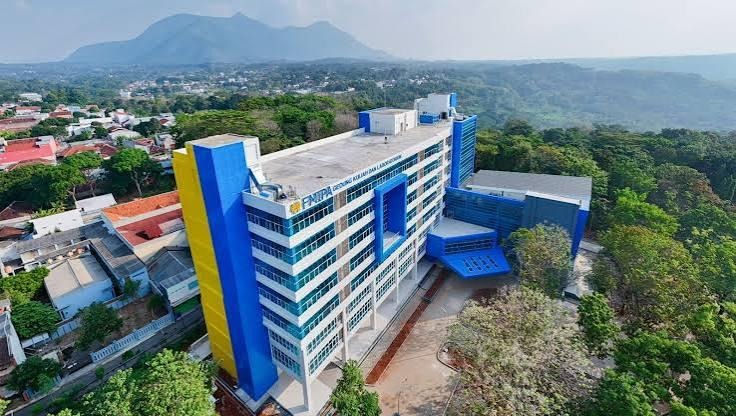
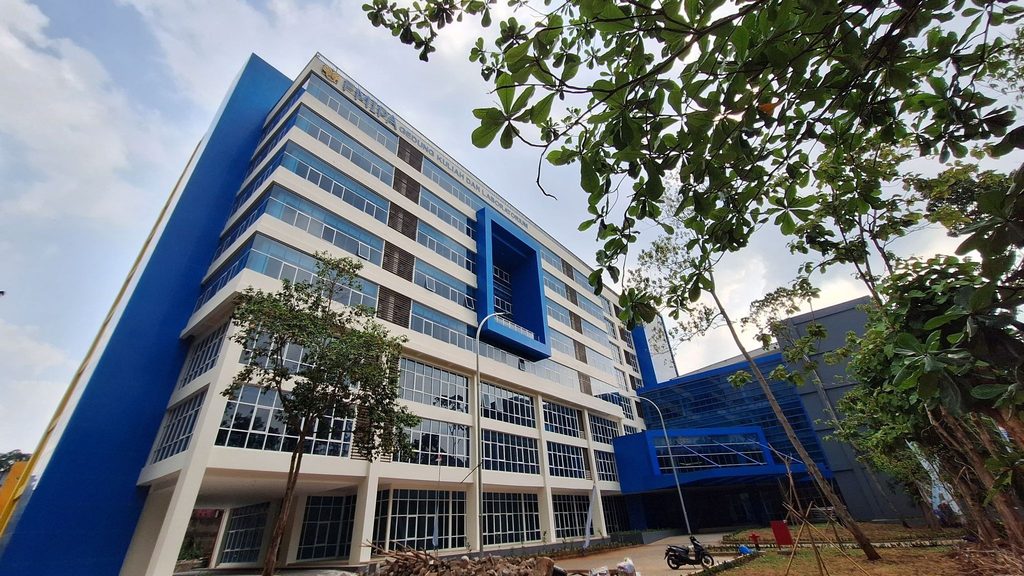
One example of UNNES’s ongoing infrastructure development is the new Faculty of Mathematics and Natural Sciences (FMIPA) building. The development reflects the university’s efforts to provide facilities that support teaching, research, and other academic activities while advancing its broader commitment to sustainable campus planning. The construction of academic buildings offers an opportunity to incorporate environmental considerations into building design and long-term facility management.
UNNES’s green building framework also emphasizes the importance of natural lighting and cross-ventilation to improve indoor comfort and reduce reliance on artificial lighting and mechanical cooling. Other sustainability considerations include efficient water use, environmentally responsible drainage systems, and the appropriate management of construction and operational waste. The application of these measures should be assessed through project-specific documentation to establish how sustainability principles are implemented in individual buildings.
To support accountability, green building practices are documented through approved design and technical documents, green building checklists, records of energy and water efficiency measures, and relevant certification documentation. Certification through the Green Building Council Indonesia (GBCI) provides additional evidence of a building’s performance against recognized green building criteria.
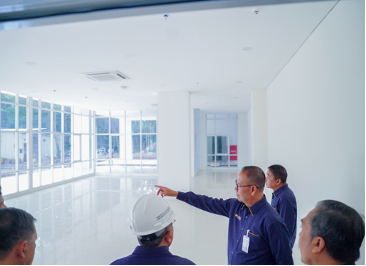
Through its green building policy and continued campus infrastructure development, UNNES seeks to align the provision of academic facilities with environmental conservation and responsible resource management. These efforts reinforce the university’s commitment to a more efficient, healthy, and sustainable campus environment, contributing to Sustainable Development Goal 7 (Affordable and Clean Energy) and SDG 13 (Climate Action).