PERKUAT PENDAMPINGAN EMOSI ANAK, LABSCHOOL UNNES GELAR PELATIHAN PEMBELAJARAN SOSIAL EMOSIONAL (SEL) BAGI GURU PAUD DAN SD

Universitas Negeri Semarang > Lembaga Pengembangan Pendidikan dan Profesi > Tentang LPPP > Berita > PERKUAT PENDAMPINGAN EMOSI ANAK, LABSCHOOL UNNES GELAR PELATIHAN PEMBELAJARAN SOSIAL EMOSIONAL (SEL) BAGI GURU PAUD DAN SD

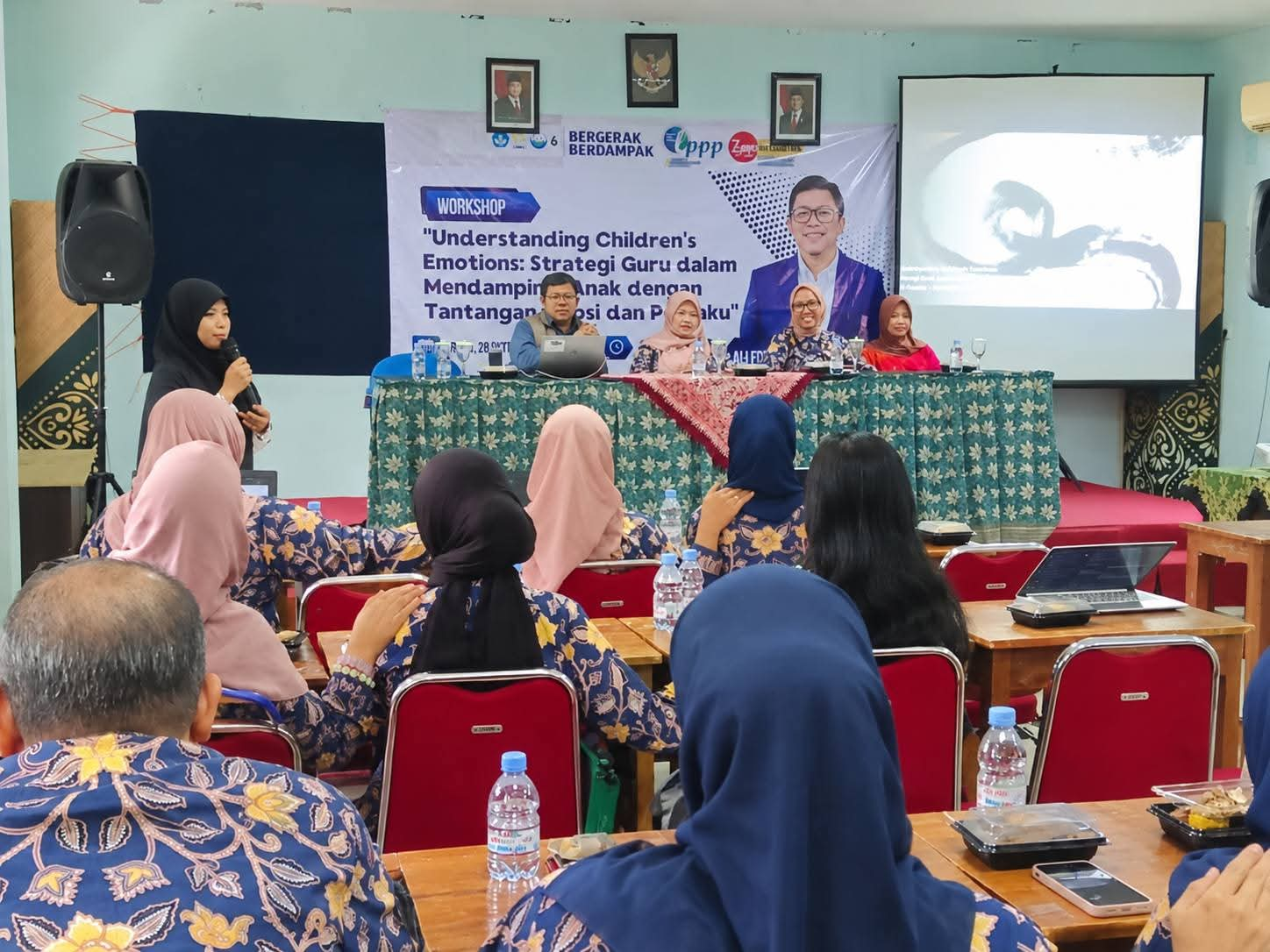
Semarang, 28 Oktober 2026 — Labschool Universitas Negeri Semarang (UNNES) menyelenggarakan kegiatan penguatan kapasitas guru bertajuk “Understanding Children’s Emotions: Strategi Guru dalam Mendampingi Anak dengan Tantangan Emosi dan Perilaku”. Acara ini berlangsung pada hari Rabu, 28 Oktober 2026, bertempat di Aula Labschool UNNES dengan menghadirkan pakar pendidikan anak, Ali Formen, S.Pd., M.ED., Ph.D. dari PGPAUD FIPP UNNES.

Acara ini secara resmi dibuka oleh Kepala Pusat Pengembangan Labschool UNNES, Dr. Indah Anisykurlillah, S.E., M.Si., Akt., CA., serta dihadiri oleh jajaran Kepala Sekolah PAUD dan SD. Pelatihan ini diikuti secara antusias oleh para peserta yang terdiri dari Pengasuh Daycare, Guru PAUD dan SD.

Kegiatan ini dilatarbelakangi oleh pentingnya pemahaman emosi dan pengelolaan perilaku anak usia dini hingga jenjang Sekolah Dasar (SD). Dalam pemaparannya, Ali Formen menegaskan bahwa emosi merupakan hal yang alami dan perlu divalidasi, namun ekspresi perilaku tetap memiliki batasan. “Semua emosi boleh dirasakan, tetapi tidak semua tindakan boleh dilakukan,” tegas Ali Formen di hadapan para peserta.

Potret Baseline Efikasi Guru dan Pentingnya Pendekatan Berbasis Bukti

Sebelum sesi pendalaman materi, sebanyak 35 guru peserta mengisi inventori asesmen awal (baseline) efikasi Pembelajaran Sosial-Emosional (SEL). Dari data yang dikumpulkan, potret efikasi awal menunjukkan rerata skor tertinggi berada pada aspek pengenalan & ekspresi emosi (3,81/5), sedangkan skor rerata terendah ada pada pemahaman emosi (3,59/5). Secara khusus, dua butir keterampilan yang perlu ditingkatkan adalah mengenali pemicu emosi tanpa terburu-buru menyimpulkan (skor 3,31) serta mengamati pola pemicu-perilaku-konsekuensi (skor 3,46).

Hasil analisis data juga menunjukkan bahwa lama pengalaman mengajar maupun sertifikasi tidak serta-merta menjamin tingginya efikasi SEL guru. Oleh karena itu, perancangan intervensi dan pendampingan di sekolah harus berpatokan pada kebutuhan praktis dan konteks spesifik anak.

Strategi Co-Regulation dan Penanganan Perilaku Menantang

Para peserta dibekali dengan kerangka kerja Social and Emotional Learning (CASEL) dan konsep Co-regulation. Guru diajarkan untuk menjadi “jangkar” penenang bagi anak melalui alur bertahap:

Regulate Yourself: Guru menenangkan diri terlebih dahulu sebelum merespons.

Connect & Validate: Membangun koneksi dan mengakui perasaan anak (“Kamu boleh marah…”).

Boundary & Guide: Menentukan batasan aman dan mengajarkan alternatif perilaku (“…tapi aku tidak membiarkan kamu memukul”).

Selain itu, materi juga mengupas pemetaan perilaku menantang menggunakan analisis kerangka ABC (Antecedent – Behaviour – Consequence) untuk memahami pemicu serta kebutuhan tersembunyi anak, seperti kebutuhan komunikasi, sensoris, atau transisi.

Rencana Tindak Lanjut 2–4 Minggu

Sebagai bentuk keberlanjutan pelatihan, para peserta berkomitmen untuk menjalankan rencana tindak lanjut selama 2 hingga 4 minggu ke depan. Setiap guru akan memilih satu praktik SEL untuk diterapkan secara konsisten, mencatat 2–3 episode observasi di kelas, serta berdiskusi dengan rekan sejawat sebelum melakukan pengisian ulang inventori efikasi SEL.

Melalui kegiatan ini, Labschool UNNES berharap para pendidik PAUD maupun SD makin percaya diri dan terampil dalam menciptakan iklim kelas yang aman secara emosional, sehingga tumbuh kembang sosial-emosional anak dapat terfasilitasi secara optimal.
Related Posts

Leave a Reply

* Kode Akses Komentar:

* Tuliskan kode akses komentar diatas:

GDPR

  • Privacy Policy

Privacy Policy

At unnes.ac.id, the privacy of our visitors is of extreme importance to us. This privacy policy document outlines the types of personal information that is received and collected by unnes.ac.id and how it is used.

Log Files

Like many other Web sites, unnes.ac.id makes use of log files. The information inside the log files includes internet protocol (IP) addresses, type of browser, Internet Service Provider (ISP), date/time stamp, referring/exit pages, and number of clicks to analyze trends, administer the site, track user’s movement around the site, and gather demographic information. IP addresses and other such information are not linked to any information that is personally identifiable.

Cookies

unnes.ac.id uses cookies to store information about visitors’ preferences, to record user-specific information on which pages the site visitor accesses or visits, and to personalize or customize our web page content based upon visitors’ browser type or other information that the visitor sends via their browser.

Third-party ad servers or ad networks use technology in their respective advertisements and links that appear on unnes.ac.id and which are sent directly to your browser. They automatically receive your IP address when this occurs. Other technologies (such as cookies, JavaScript, or Web Beacons) may also be used by our site’s third-party ad networks to measure the effectiveness of their advertising campaigns and/or to personalize the advertising content that you see on the site.

unnes.ac.id has no access to or control over these cookies that are used by third-party advertisers.

You should consult the respective privacy policies of these third-party ad servers for more detailed information on their practices as well as for instructions about how to opt-out of certain practices. unnes.ac.id’s privacy policy does not apply to, and we cannot control the activities of, such other advertisers or web sites.

If you wish to disable cookies, you may do so through your individual browser options. More detailed information about cookie management with specific web browsers can be found at the browsers’ respective websites.

Consent

By using our website, you hereby consent to our privacy policy and agree to its terms.

Update

This Privacy Policy was last updated on: 2023-02-14. Should we update, amend or make any changes to our privacy policy, those changes will be posted here.

Contact Us

If you have any questions, comments, or concerns about our Privacy Policy or our practices with regards to your personal information, please feel free to contact us through the contact form on our website or by emailing us at humas[at]mail.unnes.ac.id.

This Privacy Policy is intended as a general guide to our practices in collecting and using information. If there is any inconsistency between this Privacy Policy and the terms of the Service Agreement or any other terms that may apply to specific services you use, then those specific service terms shall apply.

Terms of Use

By using our website, you agree to abide by this Privacy Policy. If you do not agree with this Privacy Policy, please do not use our website. We reserve the right to update this Privacy Policy from time to time without prior notice. Please review our Privacy Policy periodically to check for changes. Your continued use of our website following the posting of changes to this Privacy Policy means that you accept the changes.

Thank you for reading our Privacy Policy. We are committed to protecting the privacy of our website visitors and will continue to update our Privacy Policy to ensure optimal protection.