

Plastic waste, particularly PET (Polyethylene Terephthalate) from used beverage bottles, continues to pose a serious environmental problem. This type of plastic is difficult to decompose naturally, accumulates in landfills, and often pollutes water bodies.
Meanwhile, industrial demand for 3D printing materials continues to grow, but most still relies on synthetic materials that are not environmentally friendly.
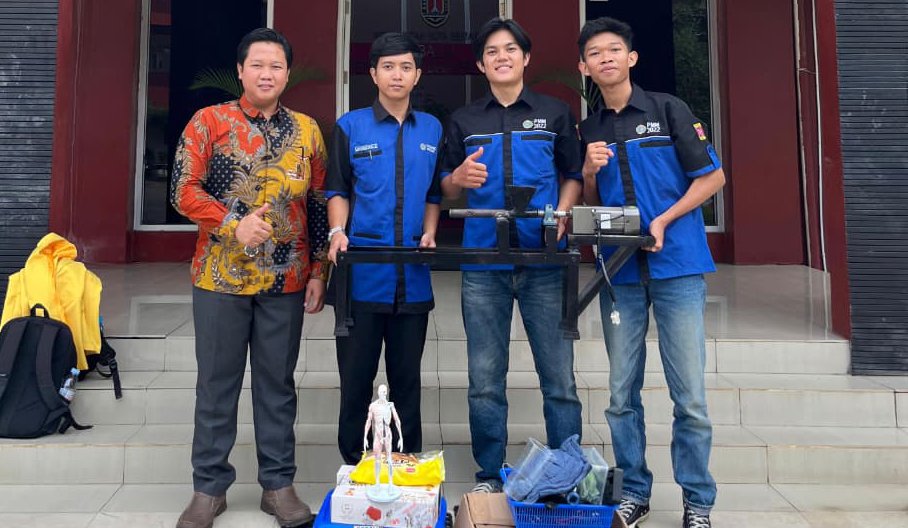
To address this challenge, three students from the Mechanical Engineering Study Program at Universitas Negeri Semarang (UNNES) presented an innovation called “Development and Application of 3D Printing Products Using Recycled PET-Based Filament with Natural Fiber Reinforcement.” The three students are Dimas Eka Firmansyah, Lorensius Bima Atmaja, and Fadil Nur Hidayat.
This technology was developed to process PET bottle waste into environmentally friendly 3D printing filament, enriched with natural fibers that provide high mechanical strength while maintaining environmental sustainability.
This innovation is considered to provide a real solution to reducing plastic waste and reducing the use of synthetic fibers.
The use of natural fibers not only improves the mechanical properties of filaments but also saves production energy and reduces carbon emissions. This achievement earned the UNNES Mechanical Engineering Team first place in the prestigious 2025 Creativity and Innovation Competition (Krenova) organized by the Semarang City Regional Research and Innovation Agency.
Looking ahead, this research has broad prospects. In addition to contributing to the circular economy by opening business opportunities based on recycling technology, its application is also expected to raise public awareness of the importance of creative waste management.
The research team plans to develop a more efficient production process and explore partnerships with manufacturing industries to expand the use of this environmentally friendly filament across various sectors.